

























































The Silent Commute: How a Grassroots Volunteer Network Became a Lifeline for Minneapolis Child Care

This report was produced by The Hechinger Report, a nonprofit, independent news organization focused on inequality and innovation in education.
MINNEAPOLIS — On a frigid February afternoon, the routine at a Spanish-immersion child care center in Minneapolis felt deceptively normal. Toddlers, bundled in oversized puffy coats, scrambled toward their cubbies, their parents helping them secure mittens and hats before heading out into the biting Minnesota air.
Yet, in a small office tucked down the hall, the atmosphere was anything but typical. Michael, the husband of the center’s director, sat with his eyes locked on a computer monitor, streaming live footage from the facility’s security cameras. His task was not to monitor the children, but to scan the parking lot and surrounding streets for vehicles associated with U.S. Immigration and Customs Enforcement (ICE). Since January, when federal agents descended upon the Twin Cities as part of a massive enforcement effort known as "Operation Metro Surge," Michael has left his own professional duties early every afternoon to volunteer as a lookout.
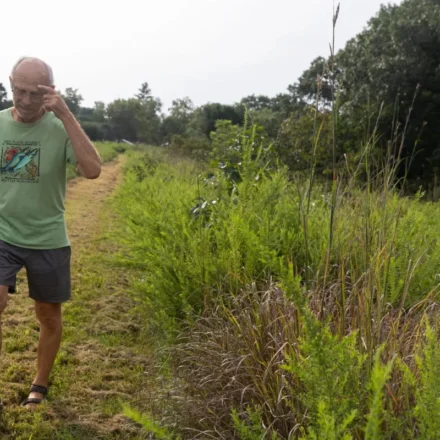
He is not alone. As the final children are picked up, a rotating cast of volunteers arrives. Most are in their 70s, possessing a quiet resolve that has earned them the affectionate nickname “abuelitas”—grandmothers—among the staff, despite having no personal ties to the children attending the center. Their mission is both simple and perilous: to drive the center’s immigrant staff members home safely, serving as observers and, if necessary, translators, should they be confronted by federal agents.
The Anatomy of a Grassroots Lifeline
The staffers at this center are all authorized to live and work in the United States. However, the aggressive nature of Operation Metro Surge—fueled by viral, misleading claims of widespread fraud—has created an environment of pervasive fear. Many employees were left too terrified to drive themselves to work, fearing that a routine traffic stop could escalate into a life-altering encounter with ICE.
"I’m just doing what I can do," said Sarah, a 71-year-old volunteer driver. "And I obviously feel less vulnerable than she would be. I’m white, I’m 71. I think I would not be treated like she might be treated."
The logistics of this operation are staggering. What began as a desperate measure has transformed into a well-oiled, albeit time-consuming, daily grind. Approximately 60 volunteers, many commuting from the suburbs, work in shifts to ensure the center’s staff can reach their homes safely. It is a testament to the power of mutual aid in a vacuum left by state and federal inaction.
Chronology of a Crisis: From Viral Rumors to Federal Freeze
The tension currently gripping the Twin Cities’ child care sector did not emerge in a vacuum. It was the result of a calculated political firestorm.
November 2025: Rumors began circulating among immigrant communities that federal agents were detaining individuals regardless of their legal status. The anxiety was palpable. Diana, the center’s director, reported that her staff began limiting their movements, venturing out only for work. "They are not respecting due process," Diana said. "We had to cancel our holiday party because they were afraid to go out at night."
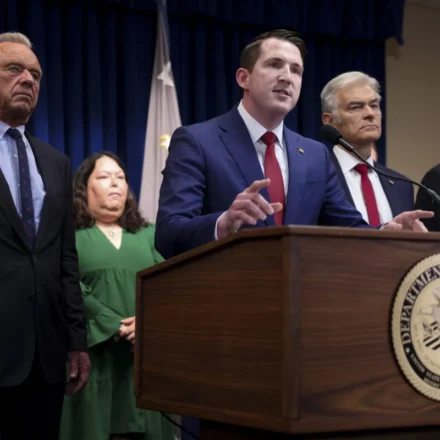
December 26, 2025: The situation took a sharp turn for the worse when Nick Shirley, a right-wing influencer, posted a YouTube video alleging widespread fraud in Somali-run daycares in Minneapolis. The video—rife with claims later debunked by local media and investigative reports—went viral. It was amplified by high-ranking political figures, including Vice President JD Vance and Attorney General Pam Bondi.
Late December 2025: The Trump administration responded to the viral claims by freezing federal child care payments for low-income families in Minnesota. While a federal judge would later order these funds unfrozen in February 2026, the temporary freeze sent shockwaves through the industry, threatening the financial viability of hundreds of centers.
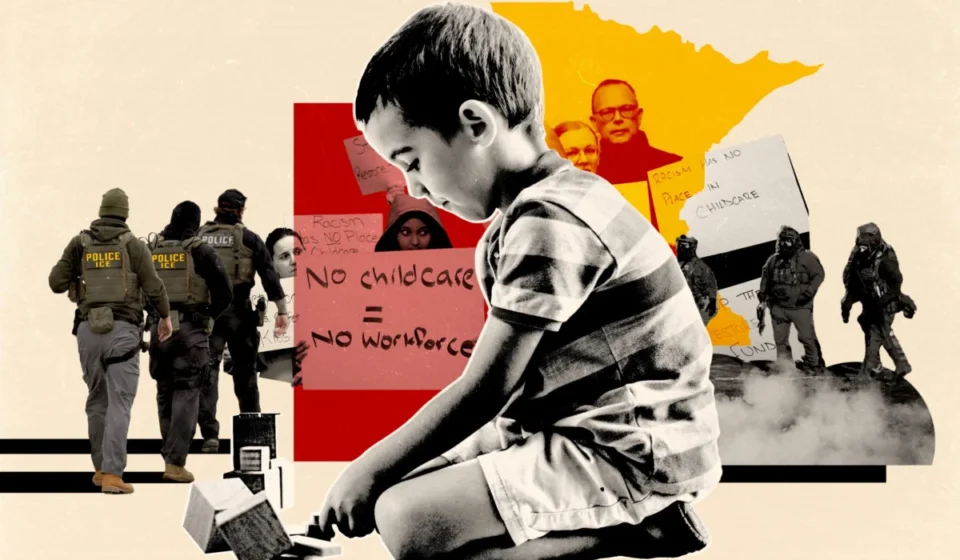
January 5, 2026: Citing the debunked video as justification, the administration announced a massive expansion of Operation Metro Surge, adding 2,000 ICE and Border Patrol agents to the region. The total force in the Twin Cities reached approximately 3,000 officers—a ratio three times the size of the combined police forces of Minneapolis and St. Paul.

January 7, 2026: Tragedy struck when ICE agent Jonathan Ross shot and killed Renee Macklin Good, a resident who had volunteered as an observer during the enforcement surge. The killing shattered the community’s sense of security, leading to the temporary closure of many centers, including Diana’s, for nearly a week.
The Fragility of the Child Care Sector
The impact of this surge on the child care industry is not merely a local issue; it is a national warning. According to the American Immigration Council, one in five child care workers in the United States is an immigrant. When these individuals are targeted, the entire infrastructure of early childhood education—an industry already stretched to its breaking point—threatens to collapse.
In St. Paul, Lily Crooks, another center director, has been active in coordinating support. Recognizing that bus stops were being monitored by federal agents, Crooks organized a fundraiser that secured $5,000 in Lyft gift cards for her staff and the families they serve.
"It’s both really amazing to see the way that people are sticking up for their neighbors and supporting them," Crooks observed. "And then it also kind of feels bleak realizing that there isn’t going to be some saving entity coming."
Official Responses and Political Rhetoric
The Trump administration has consistently defended the surge as a necessary measure to combat fraud and enforce immigration law. However, the discrepancy between the administration’s claims and the reality on the ground remains a point of intense friction. While authorities initially claimed to be targeting "criminal elements," reports from the ground indicate that the enforcement actions have cast an indiscriminate net, targeting lawful workers and creating a climate of terror for thousands of children and their families.
For the volunteers like Sarah, the political justifications offered by the administration are irrelevant when measured against the human cost. She speaks of her involvement not as a political statement, but as a moral imperative. "I was a teenager during the Civil Rights Movement," she noted, "and this feels like a similar moment for our generation to stand up against oppression."
Implications: A Sustainable Resistance?
As the spring of 2026 arrives, there are signs that Operation Metro Surge is beginning to wane in its intensity. Yet, the psychological scars remain. Many volunteers and center directors are now asking a difficult question: How long can this grassroots system be sustained?
The "drivers" are already looking for signs that the environment is safe enough to wind down their efforts. By early March, most of Diana’s staff felt comfortable enough to resume driving themselves to work, though some, like P., a substitute teacher who has been a primary beneficiary of the program, still require the escort.
For P., the necessity of the volunteer network is a source of both gratitude and deep-seated frustration. "It’s not OK that someone feels unsafe in a safe country," she said, using air quotes to highlight the irony of her situation. "I’m ‘free,’ but I can’t do anything. It’s very hard."
The word that keeps surfacing in conversations with the center’s staff is “resistir.” In Spanish, it carries a double meaning—a blend of resistance and endurance. It is a philosophy that has defined the last few months for the Minneapolis child care community.
"It means that you don’t give up, you keep fighting," Diana explained. "We are going to get through it. This is going to pass."
Yet, even as the immediate threat appears to recede from the headlines, the lesson remains clear: when the state fails to provide protection, the community steps in. Whether this model of mutual aid can survive a long-term, systemic campaign of enforcement is a question that many across the nation are now watching with baited breath. For now, the "abuelitas" remain on call, the security monitors remain active, and the children continue to play, shielded by a network of neighbors who refuse to look away.