























































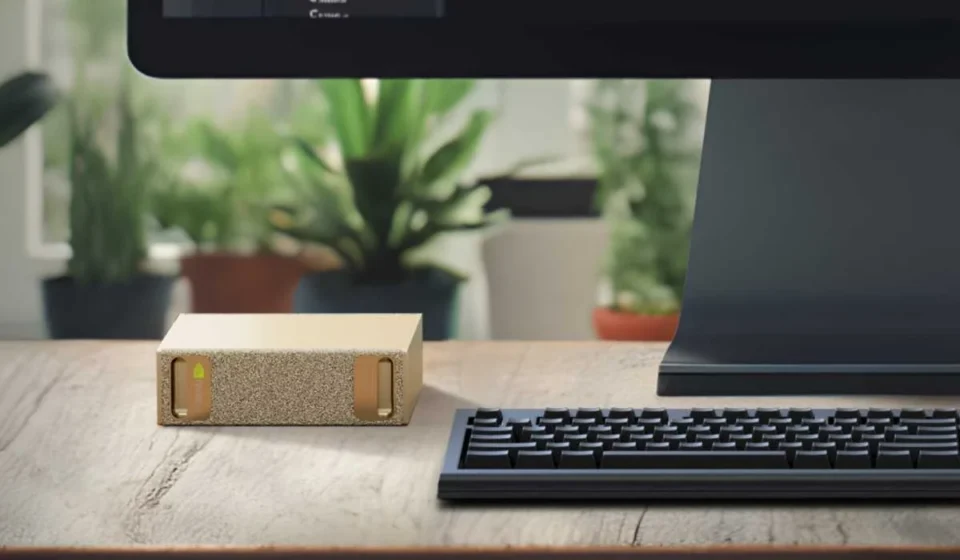

In a strategic maneuver that bridges the gap between consumer-grade hardware and enterprise-level AI infrastructure, Nvidia has officially unveiled its Personal AI Router (PAIR). Currently available in beta, this free-to-use software platform allows users to aggregate the computing power of disparate PCs—running Windows, macOS, or Linux—into a unified, private AI inferencing cluster.
While Nvidia’s marketing highlights the utility of PAIR for home enthusiasts looking to run large language models (LLMs) or complex generative tasks across multiple home devices, the architecture suggests a much broader potential. By enabling a single interface to manage and distribute AI workloads across a network of connected hardware, Nvidia has effectively created a blueprint for enterprises to monetize or leverage their vast reserves of idle desktop compute capacity.
Main Facts: The Mechanics of the PAIR Ecosystem
The core value proposition of Nvidia PAIR lies in its ability to abstract hardware complexity. Historically, running sophisticated AI models required either high-end, centralized server clusters or a single, high-performance workstation equipped with enterprise-grade GPUs. PAIR dismantles this bottleneck by introducing a software-defined layer that treats the entire local area network (LAN) as a singular, distributed compute resource.
Key Capabilities:
- Cross-Platform Interoperability: Unlike many AI tools that are strictly tied to specific operating systems, PAIR functions across Windows, macOS, and Linux environments. This inclusivity ensures that organizations with heterogeneous IT ecosystems can integrate PAIR without requiring a complete overhaul of their hardware fleet.
- Unified Interface: Users interact with the cluster through a centralized dashboard. Behind the scenes, the PAIR orchestrator manages task scheduling, workload distribution, and memory management across the participating nodes.
- Private Inferencing: Because the processing occurs locally within the user’s network, sensitive data never leaves the premises. This is a critical feature for industries—such as legal, healthcare, and finance—that require strict data sovereignty.
- Scalability: The system allows for dynamic scaling. As more devices are added to the network, the available compute capacity for AI inferencing increases linearly, provided the network bandwidth can support the data throughput.
Chronology: The Path to Distributed AI
The development of PAIR represents the culmination of Nvidia’s multi-year pivot toward becoming a comprehensive "AI-first" infrastructure company.
Phase 1: The Consumer AI Boom (2022–2023)
Following the explosion of generative AI, Nvidia focused heavily on optimizing its RTX GPU lineup for local inferencing. Technologies like TensorRT-LLM and ChatRTX were designed to bring AI power to the individual desktop. However, these tools remained confined to single-machine performance limits.
Phase 2: The Infrastructure Gap (Early 2024)
As models grew in size, the "VRAM wall" became a significant issue for consumers and mid-sized enterprises. Many users found that a single GPU lacked the memory capacity to run high-parameter models effectively. The industry began searching for ways to "shatter" these models across multiple devices.
Phase 3: The PAIR Beta Launch (Current)
Nvidia’s release of PAIR marks the formal entry of distributed, consumer-accessible clustering. By moving from single-GPU optimization to networked orchestration, Nvidia has effectively democratized the type of cluster computing that was previously the domain of high-performance computing (HPC) centers.
Supporting Data: The Case for Distributed Compute
The logic behind PAIR is supported by the stark reality of modern IT efficiency. According to recent industry benchmarks, the average enterprise desktop remains idle for approximately 60% to 70% of a standard workday. When accounting for after-hours and weekends, a significant portion of an organization’s hardware investment sits dormant.
Hardware Utilization Metrics:
- Idle Compute Cycles: In a standard 500-workstation enterprise environment, the aggregate GPU power—if harnessed—could rival the throughput of a small-scale data center.
- Latency vs. Throughput: While PAIR introduces slight overhead due to network transit, the trade-off is massive gains in throughput. For inferencing tasks where real-time response is secondary to batch processing or complex model execution, this distributed model is highly efficient.
- Cost Efficiency: By utilizing existing assets, companies can avoid the substantial capital expenditure (CapEx) associated with purchasing specialized AI servers, which are currently in high demand and short supply.
Official Responses and Strategic Positioning
Nvidia has been characteristically careful in its messaging, positioning PAIR as a tool for "home use" and "private experimentation." This framing is designed to avoid disrupting the market for its high-margin enterprise data center hardware (such as the H100 and Blackwell series).
"We are empowering the individual user to reclaim their hardware," an Nvidia representative noted during the soft-launch briefing. "By creating a bridge between disparate machines, we are making the power of large-scale AI accessible without the need for a dedicated server room."
Industry analysts, however, interpret this differently. "Nvidia is playing a long game," says Sarah Jenkins, a lead analyst at TechMarket Dynamics. "By putting this software in the hands of the public, they are creating a standard for distributed AI. If the enterprise sector adopts PAIR, they are essentially training their workforce on Nvidia’s proprietary ecosystem, creating a massive barrier to entry for competitors."
Implications: The Future of Distributed Infrastructure
The release of PAIR has profound implications for how IT departments will manage compute resources over the next decade.
1. The Rise of the "Micro-Cloud"
PAIR allows organizations to build "micro-clouds" within their existing office networks. Instead of relying solely on public cloud providers—which come with ongoing subscription fees and data security concerns—companies can keep their inferencing workloads internal, private, and free of recurring operational expenses (OpEx).
2. Democratizing Large-Model Execution
Previously, running a 70B parameter model required hardware costing tens of thousands of dollars. With PAIR, a network of mid-range workstations can pool their VRAM, allowing a company to run professional-grade AI tools on hardware that was originally purchased for simple office productivity tasks.
3. Challenges in Network Bottlenecks
While the software is revolutionary, it is not without hurdles. The primary bottleneck for PAIR will be network bandwidth. For high-speed inferencing, standard 1Gbps Ethernet may prove insufficient, pushing organizations to upgrade their internal infrastructure to 10Gbps or fiber-optic backbones to fully realize the benefits of a distributed cluster.
4. Security and Management
From an IT management perspective, PAIR introduces new challenges. Orchestrating a cluster of dozens of desktops requires rigorous security protocols to ensure that no individual machine becomes a vector for compromise. IT administrators will need to treat these desktop "nodes" with the same security rigor as they do centralized servers.
Conclusion: A New Era of Decentralized Intelligence
Nvidia’s Personal AI Router (PAIR) is more than just a convenience tool for home AI enthusiasts; it is a strategic disruption of the infrastructure market. By enabling the seamless aggregation of desktop compute capacity, Nvidia is providing a viable alternative to the centralized AI server model.
For the home user, it offers the ability to run models that were previously out of reach. For the enterprise, it offers a path to sustainability and efficiency, turning idle assets into high-performance AI engines. As the beta period progresses and the software matures, we are likely to see the emergence of a new category of "distributed infrastructure management," where the power of AI is no longer defined by the single most powerful machine in the room, but by the collective capacity of the entire network.
As organizations grapple with the rising costs of AI adoption, tools like PAIR provide a pragmatic solution: look inward at the hardware you already own. If Nvidia’s track record is any indication, this "beta" is the first step toward a future where distributed, private, and powerful AI is the standard, not the exception.