























































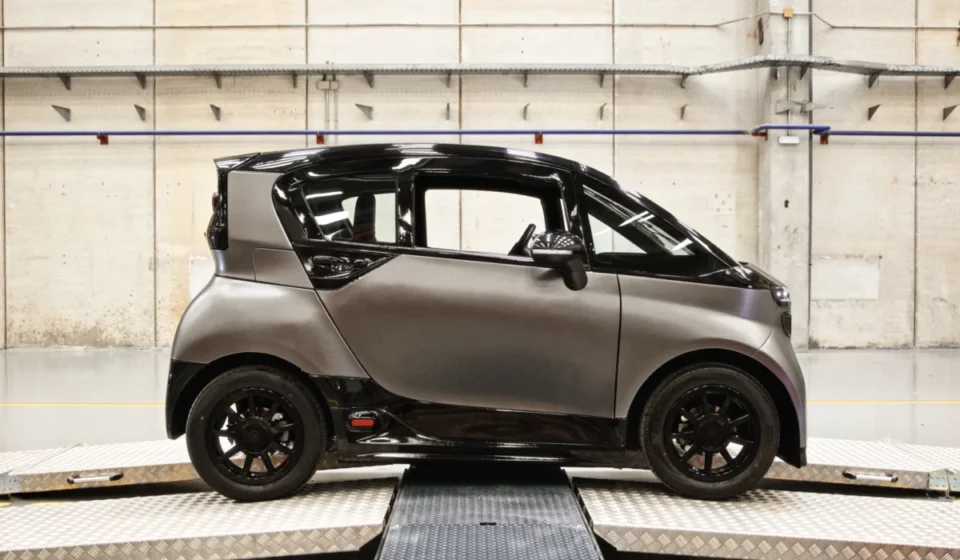

The landscape of European city streets is undergoing a seismic, albeit quiet, shift. As metropolitan areas move toward stricter emission zones and limited parking, the era of the gargantuan SUV is being challenged by a return to the "microcar." However, this modern resurgence is not a nostalgic revival of the classic Italian pot de yaourt (yoghurt pot); instead, it has been largely dominated by an influx of affordable, efficient electric vehicles (EVs) from Chinese manufacturers. Even stalwarts like Smart have migrated their production bases to China, leaving a void in the European manufacturing identity.
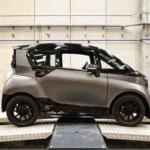
Into this crowded and highly competitive space steps Liux, a Spanish startup with ambitions that far outweigh the dimensions of its flagship vehicle. With the upcoming launch of the "Liux Big"—a name that serves as a tongue-in-cheek nod to its compact stature—the company is attempting to prove that a European-made, sustainable microcar can thrive on home turf.
The Genesis of an Ambitious Startup
The story of Liux is one of pivoting and pragmatism. Founded by Antonio Espinosa de los Monteros and David Sancho, the company emerged from a shared vision of circularity and high-performance engineering. Espinosa, a former co-founder of the B Corp Auara—known for its socially conscious mineral water brand—brought a deep-seated commitment to environmental ethics. Sancho, conversely, provided the technical backbone, having previously garnered acclaim for engineering the Bóreas, a hybrid supercar that turned heads at the 2017 24 Hours of Le Mans.
The duo initially launched with "the Animal," an ambitious, plant-based five-seater SUV. While the prototype garnered significant media attention, the founders quickly realized that the path to large-scale automotive manufacturing was fraught with regulatory and financial hurdles. In a strategic maneuver that would define their future, they opted to shift focus. By pivoting to the microcar segment, Liux found a niche where they could achieve homologation faster and disrupt the market with a product that prioritizes sustainability without compromising on urban utility.
Chronology: From Concept to Production
The evolution of Liux has been remarkably rapid by automotive standards:

- 2017–2021: Foundations are laid. Sancho’s expertise in high-performance hybrids and Espinosa’s experience in circular business models converge.
- 2022: The company unveils the "Animal" prototype, testing the waters of plant-based materials and sustainable automotive design.
- 2023–2025: Strategic pivot to the microcar segment. The team secures funding and begins the grueling process of European-wide homologation.
- 2026: Liux secures full homologation for the Liux Big. The company establishes its production base in Azuqueca de Henares, becoming the first new car plant to open in Spain in over three decades.
- Early 2027 (Projected): Commercial launch of the Liux Big, with initial sales rollouts via European dealership partnerships.
Sustainability as a North Star
For Liux, "sustainability" is not merely a marketing buzzword; it is a structural imperative. Recognizing that a fully sovereign European supply chain is an unrealistic goal in the current globalized economy, the founders have focused on what they can control: the lifecycle of the vehicle.
The Liux Big is engineered with circularity in mind. Its bodywork utilizes a pioneering linen-based biocomposite, a material that is not only lightweight but also designed for easy extraction and recycling at the end of the vehicle’s life. Unlike many modern vehicles that fall victim to rapid obsolescence cycles, the Liux Big is designed for modular maintenance.
"When you build something, you have to try to preserve the integrity of the material and the components so that a second life is possible," Espinosa noted during a showroom discussion. This philosophy extends to the battery systems, which, while sourced globally, are designed to be easily recharged at home, including through seamless integration with solar power systems.
Data-Driven Strategy and Market Positioning
The Liux Big is categorized under the L7e EU classification, a tier for heavy quadricycles. While this category has historically been associated with stripped-back, bare-bones vehicles, Liux has leveraged its engineering prowess to elevate the user experience. By focusing on safety—testing the vehicle’s handling in slalom and braking maneuvers—the company aims to bridge the gap between a fragile urban runabout and a robust, reliable car.
The company’s data gathering has been equally deliberate. With a waiting list of over 7,500 prospective buyers, Liux has identified its primary demographic: urban dwellers aged 55 to 60 who are likely seeking a second household vehicle. This insight has allowed the team to tailor the vehicle’s features to the daily requirements of city life, such as the inclusion of a surprisingly spacious 260-liter trunk.

Financial and Operational Snapshot
- Total Funding Secured: €16 million (approx. $18.5 million), including European grants.
- Projected Price Point: Under €18,000 (approx. $21,000), excluding potential government EV incentives.
- Workforce: 65 employees and growing.
- Manufacturing Capacity: Initial operations in Azuqueca de Henares, with a roadmap to reach 20,000 units annually by 2030.
Official Perspectives: The Lean Management Approach
The Azuqueca facility is a testament to "lean management." Under the guidance of Head of Production Beatriz Belda González, a veteran of BMW, the plant focuses on the final assembly stages. By keeping the facility footprint small and the process streamlined, Liux avoids the massive overheads that typically sink automotive startups.
"The idea of a ‘European car’ does not exist in the traditional sense of total isolation," Espinosa admitted. However, he argues that by controlling the design, the material science, and the final assembly, Liux is carving out a new identity for the European automotive industry—one that is decentralized, agile, and environmentally responsible.
Broader Implications: Can Europe Reclaim the Microcar?
The emergence of Liux raises a pivotal question for the continent: Can local manufacturers compete with the scale and cost-efficiency of Chinese EVs?
Liux is betting that the answer lies in differentiation. Their approach—using textile-based aesthetics, 3D-modeled color customization, and an emphasis on circular material integrity—is a direct challenge to the "disposable" nature of some imported competitors. By positioning the Liux Big as a "lifestyle" vehicle that is both a practical urban tool and an aesthetic statement, the brand is targeting a segment of the market that values provenance and long-term sustainability.
Furthermore, the company’s openness to B2B fleet partnerships and autonomous integration suggests a long-term strategy that transcends simple retail sales. By keeping the door open to these collaborations, Liux is positioning itself as a platform for urban mobility, not just a manufacturer of steel and linen.

Conclusion: The Road Ahead
As the Liux Big prepares for its commercial debut, the startup faces the inevitable challenges of scaling production and proving its reliability to a skeptical market. However, the progress made thus far—from a failed SUV prototype to a homologated microcar—demonstrates a level of resilience that is rare in the automotive world.
Whether the Liux Big becomes the default choice for the European urbanite remains to be seen. What is clear, however, is that the company has succeeded in sparking a dialogue about what a "European car" actually means in the 21st century. It is no longer about the size of the engine or the prestige of the brand; it is about the efficiency of the design, the sustainability of the materials, and the ability to adapt to the tight, complex, and evolving geography of the modern city. Perhaps, as Espinosa suggested, the idea of a European car does exist after all—it’s just much smaller, much greener, and much more intentional than we ever imagined.