
























































Beyond the Shire: How Zephyr Theatre’s ‘The Hobbit’ Reinvents Fantasy for a Modern Age

In an era defined by global instability and an increasingly fractured social landscape, the enduring appeal of mythic escapism has never been more pronounced. As audiences flock to cinematic epics like Christopher Nolan’s The Odyssey, a parallel hunger for intimate, community-driven storytelling has emerged closer to home. Enter the Zephyr Theatre’s latest production: an outdoor, minimalist reimagining of J.R.R. Tolkien’s The Hobbit. Set against the rustic backdrop of Aamodt’s Apple Farm in Stillwater, this production offers more than just a diversion; it provides a profound meditation on courage, community, and the choice to step out of one’s comfort zone.
The Artistic Vision: Why This Show, Why Now?
At the heart of this production is the creative direction of Reed Sigmund. A familiar and celebrated figure from his extensive tenure at the Children’s Theatre Company, Sigmund’s transition to artistic director at Zephyr has been marked by a deliberate attempt to ground fantasy in the realities of the present.
In the show’s program notes, Sigmund reflects on the quintessential question that guided his creative process: “Why this show, why now?” The answer, he suggests, lies in the character of Bilbo Baggins. Bilbo is the archetype of the reluctant hero—a creature of comfort and predictability who is forced to reconcile his desire for domestic safety with the undeniable moral necessity of taking a stand.
This theme of “community mobilization” is not merely a narrative beat; it is a conscious reflection of the regional spirit. Sigmund draws a direct line between Bilbo’s journey and the collective efforts of Minnesotans during the recent winter’s Operation Metro Surge. The production posits that in a world where “a wrong that is silently seen will not fix itself,” the decision to participate in a struggle that is not one’s own becomes the ultimate act of heroism.
A Chronology of Creative Choices
The production, adapted for the stage by Greg Banks, eschews the sprawling, CGI-heavy sensibilities of Peter Jackson’s cinematic trilogy in favor of a brisk, character-focused aesthetic.
The Minimalist Approach
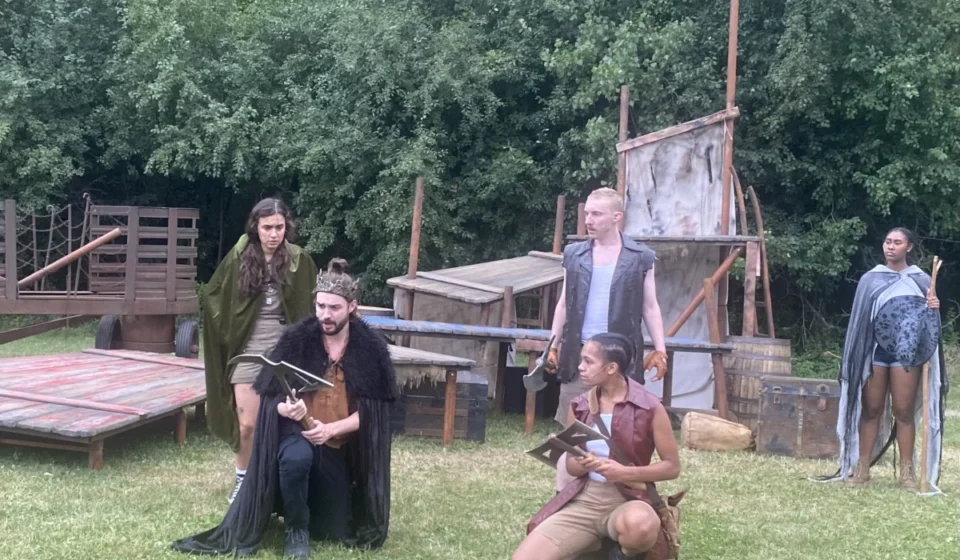
Rather than attempting to replicate the grand spectacle of Middle-earth through traditional sets, Sigmund and Banks rely on a "clipped" style of storytelling. A small, five-person ensemble handles a multitude of roles, utilizing the physical theater tradition to create illusions. Horses are not seen but felt through the rhythmic mimicry of the actors; the perils of the wood-elves’ escape are captured through the clever use of plain wooden cylinders. This economy of production forces the audience to engage their imagination, turning the performance into a collaborative act between the stage and the spectator.
Gender Dynamics and Modern Casting
Perhaps the most striking departure from Tolkien’s original text is the gender-bending of key roles. Bilbo Baggins is portrayed by Grace Hillmyer with a poignant, empathetic vulnerability, while the wizard Gandalf is played by Antonisia Collins, who imbues the character with a savvy, calculated calm. Balin, typically depicted as a rugged, bearded dwarf, is played with nuanced sweetness by Anya Naylor.
This is not merely a stylistic choice; it serves to open the doors of high-fantasy narratives to a broader range of performers. Hillmyer’s delivery of the line, “I’m here because right now it’s the right time to do what’s right,” serves as the play’s thematic anchor, repositioning the narrative as a call to action that resonates across traditional gender lines.
Supporting Data and Production Details
The production succeeds largely through its commitment to an ensemble spirit. Jeffrey Nolan, who shoulders the heavy lifting of portraying the dwarf Kili, the iconic Gollum, and the formidable dragon Smaug, serves as a masterclass in theatrical versatility. His Gollum pays respectful homage to the physicality established by Andy Serkis, while his Smaug is rendered with an impish, devilish silliness that keeps the production grounded in its lighthearted, playful tone.

However, the production is not without its minor discordant notes. The musical choices—comprising folk standards from the likes of Simon and Garfunkel, John Denver, and Peter, Paul and Mary—often struggle to find cohesion with the high-fantasy setting. While “Puff the Magic Dragon” provides a thematic link to the dragon Smaug, the songs often feel like a distraction rather than a narrative enhancement, suggesting that future iterations might benefit from a more curated, era-appropriate soundscape.
The Broader Implications: Fantasy and Ethics
The choice of The Hobbit as a vehicle for contemporary discourse also carries weight regarding the current state of fantasy media. As audiences become increasingly cognizant of the political stances of creators—most notably the ongoing controversies surrounding J.K. Rowling and the Harry Potter franchise—many viewers are seeking alternatives that align with more inclusive values.
By centering women in these roles and emphasizing a communal, non-exploitative narrative, Zephyr Theatre offers a “welcoming alternative” for those who wish to enjoy the genre without compromising their ethical stance. This production suggests that the future of fantasy theater lies in its ability to reclaim classic stories as vessels for empathy and progressive representation.
A Destination Experience: The Setting at Aamodt’s
The choice of venue further enhances the production’s atmosphere. Located at Aamodt’s Apple Farm in Stillwater, the theater provides a sensory experience that extends well beyond the stage. The performance space is nestled in a secluded area overlooking a wooded expanse, offering an immersive, naturalistic backdrop that perfectly complements the woodsy, pastoral themes of the Shire.
Visitors are encouraged to arrive early, turning the theater trip into a full-day outing. From picking fresh apples to enjoying refreshments at Saint Croix Vineyards and Thor’s Hard Cider, the integration of local commerce with the arts creates a community-centered event. The availability of apple-themed treats—ranging from bakery delights to apple brats and the popular Honeycrisp apple salsa—reinforces the production’s commitment to the local Minnesota experience.
Official Performance Information
For those looking to attend, the production runs through early August.
- Location: Aamodt’s Apple Farm & Saint Croix Vineyard, 6428 Manning Ave N., Stillwater.
- Dates: Thursday, July 30th (7 p.m.), Friday, July 31st (7 p.m.), Saturday, August 1st (2 p.m. and 7 p.m.), and Sunday, August 2nd (2 p.m.).
- Pricing: $42 for a chair seat; $37 for bring-your-own-chair (adults); $21 for bring-your-own-chair (10 and under).
- Further Details: Available at Stillwater Zephyr Theatre.
Appendix: An Alternative for the Discerning Diner
For those whose appetites for culture and cuisine extend into the city, the Guthrie Theater offers a compelling companion piece. The recent opening of Sean Sherman’s Indígena by Owamni on July 4th marks a significant return to high-quality dining within the theater district.
Paired with the current production of Noël Coward’s Private Lives, which runs through August 23rd, the experience offers a study in contrasts. While The Hobbit explores the whimsy of the hero’s journey, Private Lives—a sharp, dark farce—dives into the complexities of human relationships and the problematic, yet alluring, nature of domestic friction. The menu at Indígena—featuring maple and sumac glazed venison skewers and smoked whitefish tostadas—provides a sophisticated, locally-rooted culinary experience that serves as a perfect post-show palate cleanser.
In sum, whether one chooses the pastoral fantasy of Stillwater or the urban wit of the Guthrie, the current Minnesota theater season is proving that the intersection of art, community, and personal choice is exactly where we need to be.