




































Bridging the Digital Divide: How ASL Translation is Transforming Media Accessibility

For over fifty years, the standard for accessibility in television and film has been static: text-based closed captioning. Since its inception in the 1970s, captioning has served as the primary bridge for the Deaf and hard-of-hearing community to engage with broadcast media. However, as technology has advanced, so has our understanding of its limitations. A growing movement, led by innovators like Signup Media and passionate translators like Minneapolis-based Everett Glenn, is now challenging the text-centric status quo by introducing American Sign Language (ASL) directly into the viewing experience.
The Evolution of Accessibility: Beyond Text
While closed captioning is a monumental achievement in accessibility, it is not a universal solution. For the approximately 34 million Deaf children globally—many of whom are still in the process of acquiring literacy—deciphering rapidly scrolling text while trying to follow complex visual narratives can be a daunting, if not impossible, task. Furthermore, for adults with limited English literacy, the reliance on text creates an exclusionary barrier that prevents full engagement with the arts.
The statistics highlight a sobering reality: research indicates that the median literacy rate for Deaf high school graduates has stagnated at approximately a 4th-grade level for over a century. This systemic issue, often linked to "language deprivation"—the lack of consistent exposure to an accessible language during early childhood—underscores why the integration of ASL into digital media is not merely a convenience, but a necessary evolution in inclusive design.
Chronology of a Movement: From Three Titles to Global Impact
The push for visual-first accessibility gained significant momentum in 2021 with the founding of Signup Media by Mariella Satow. At just 17 years old, Satow recognized that the existing infrastructure for the Deaf community was insufficient. Her platform launched with a modest library of three translated titles, but the response was immediate and overwhelming.
By 2023, the platform had scaled to serve over 25,000 monthly active users. This growth caught the attention of major streaming giants, leading to a landmark collaboration with Netflix. Today, this partnership provides in-screen ASL translations for more than 70 movies and television shows, primarily focusing on family-friendly content where the need for intuitive access is most critical.
The Art of Translation: Inside Everett Glenn’s Process
Everett Glenn, a social worker and aspiring mental health therapist, has become a pivotal figure in this technological shift. His work on Pokémon Horizons—a 45-hour project—serves as a case study for the nuance and skill required to translate high-energy, character-driven media into ASL.
Glenn’s methodology is far from a simple word-for-word interpretation. It begins with a comprehensive review of the material. "I just try to have some background," Glenn explains. "I figure out how I want to sign something, and what the meaning is behind some of the vocabulary."
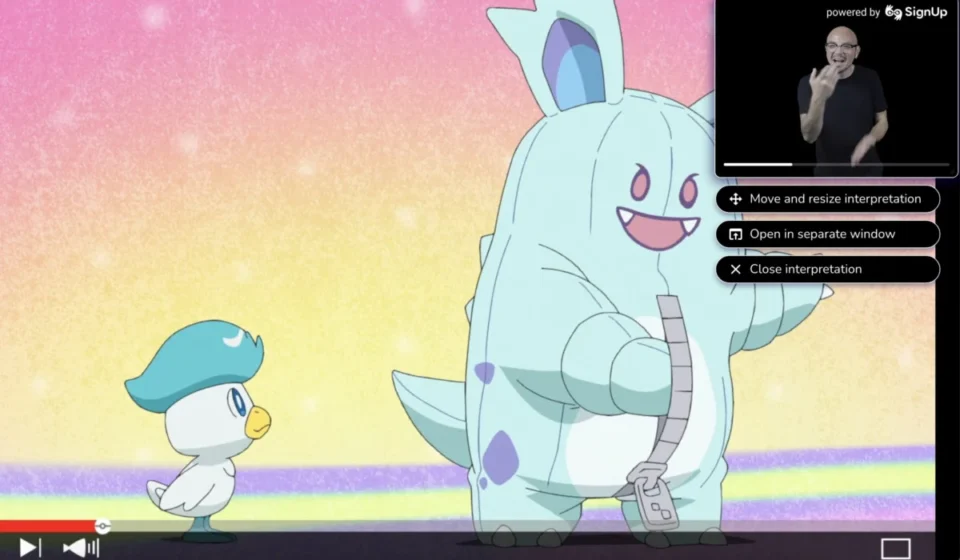
When watching Glenn work, the distinction between reading text and watching ASL becomes clear. He uses expressive facial movements, shifting posture, and precise hand gestures to convey not just the dialogue, but the emotional tone and character identity. For a native ASL user, this visual format is vastly more efficient and natural than processing English text, which can often fail to capture the cadence or "soul" of a scene.
Supporting Data: Why ASL Matters
The data supporting the shift toward sign language as a primary media format is rooted in the cognitive load theory. Following captions requires the viewer to simultaneously track text and the action on screen, often resulting in "caption fatigue."

- Global Reach: There are more than 430 million Deaf people worldwide.
- The Literacy Gap: The persistent 4th-grade median literacy rate among Deaf students suggests that textual accessibility is failing a significant portion of the population.
- User Adoption: Signup Media’s expansion to over 25,000 active monthly users demonstrates a clear market demand for visual-first content.
- Early Intervention: Providing ASL content helps mitigate the effects of language deprivation, ensuring children are exposed to fluent, sophisticated language structures from a young age.
Official Perspectives and Professional Advocacy
The advocacy surrounding this project goes beyond simple entertainment. For professionals like Glenn, this work is a form of social justice. "There are a lot of problems in the Deaf community with language deprivation and Deaf kids not having the access to language that they need," Glenn notes. By providing a platform that offers accessible language, these partnerships are helping to normalize the use of ASL for both Deaf and hearing audiences.
The collaboration with Netflix has allowed for a level of scale that was previously impossible. By integrating the translator directly into the screen—often in a dedicated box in the corner—the viewer’s gaze remains focused on the narrative. It removes the "reading barrier," allowing children to experience the magic of storytelling in a way that respects their native language.
The Challenge of Creative Translation: The Pokémon Case Study
Translating a franchise as vast as Pokémon presents unique linguistic challenges. One of the most significant aspects of ASL is the use of "sign names"—shorthand signs that identify people or characters, much like a nickname.
"Coming up with appropriate name signs to give those characters identity is very important for Deaf kids because they’re associating the names and the characters the same way that a hearing kid would be when they hear the name of a character," Glenn explains.
For Pikachu, one of the most recognizable figures in pop culture, Glenn didn’t just spell out the name. He developed a specific sign that incorporates the character’s signature dimples. This level of creativity turns the act of translation into an act of cultural contribution, cementing the characters in the minds of Deaf viewers with the same depth and personality as their hearing counterparts.
Implications for the Future of Media
The implications of this partnership extend far beyond Pokémon or Netflix. It signals a shift in the corporate understanding of accessibility. As technology continues to evolve, the expectation for "universal design" is growing.
- Normalization: As ASL becomes more prevalent on mainstream platforms, the stigma often associated with sign language in hearing spaces may continue to erode.
- Educational Tool: Hearing viewers are increasingly using these platforms to learn ASL, viewing it as an enjoyable, immersive way to acquire a second language.
- Future-Proofing: "Every generation figures out a way to do it better," says Glenn. As AI and motion-capture technologies improve, the speed and affordability of creating these translations will likely increase, potentially opening the door for live-streamed ASL interpretation in news and sports.
The work being done by Signup Media and translators like Everett Glenn represents a crucial step toward true equity in media. By recognizing that accessibility is not a one-size-fits-all endeavor, the industry is finally beginning to provide the Deaf community with the tools they need to engage with the world on their own terms.
As we look toward the future, the integration of ASL into our daily media diet is likely to become not just an "extra" feature, but a standard expectation. The "caption-only" era is slowly giving way to a more inclusive, visual, and expressive future, one where every child—regardless of hearing ability—can see themselves represented in the stories they love.