


























































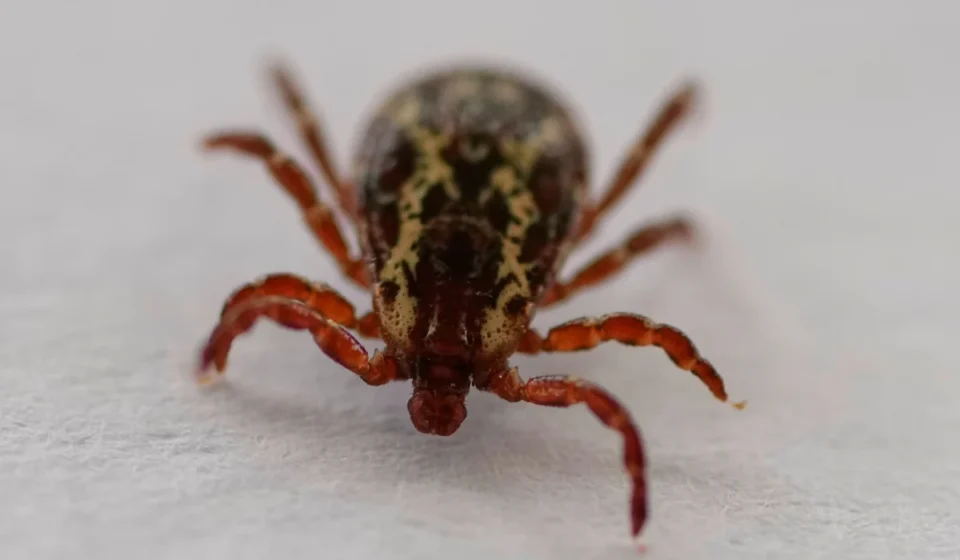

As spring arrives, the warming temperatures serve as an invitation to enjoy the outdoors. However, this seasonal shift also signals the start of a period of increased vigilance, as rising temperatures and shifting climate patterns create a "perfect storm" for tick populations. Public health officials are sounding the alarm: the 2026 tick season is not just active—it is surging.
According to data released on April 23 by the Centers for Disease Control and Prevention (CDC), emergency room visits related to tick bites have reached their highest levels since 2017. This spike suggests that the United States is bracing for a severe season, not only for Lyme disease but for a host of other debilitating tick-borne illnesses.
The Magnitude of the Crisis: Main Facts
Lyme disease, first identified in the town of Old Lyme, Connecticut, in 1975, has evolved from a localized medical curiosity into a nationwide public health challenge. It is caused by the Borrelia group of bacteria, most commonly Borrelia burgdorferi, which is transmitted through the bite of infected deer ticks (also known as black-legged ticks).
While state health departments officially recorded more than 89,000 cases in 2023, these figures are widely considered a significant undercount. Epidemiologists and infectious disease experts estimate that the true burden of the disease in the United States approaches 500,000 cases annually. The discrepancy exists because many cases go undiagnosed, are misidentified, or occur in patients who never recall the initial tick bite.
The primary mechanism of transmission is as precise as it is dangerous: a tick must typically remain attached to a human host for 24 to 48 hours to successfully transmit the bacteria into the bloodstream. This window provides a crucial opportunity for prevention, yet the small size of the tick—often no larger than a poppy seed—means the bite frequently goes unnoticed.
A Chronological Perspective: The Evolution of a Disease
The history of Lyme disease in the U.S. is one of expansion and adaptation. Since the mid-1990s, the incidence of reported Lyme disease has nearly doubled. This trend is not accidental; it is the result of a confluence of environmental and ecological shifts.
- 1975: The first cluster of cases is identified in Connecticut, linking mysterious childhood arthritis to tick exposure.
- 1980s–1990s: The disease spreads across the Northeast and Upper Midwest, as deer populations—the primary hosts for adult ticks—begin to climb in suburbanizing areas.
- 2000s–2010s: Climate change begins to alter the geography of the disease. Shorter, milder winters allow tick larvae to survive in regions that were previously too cold, facilitating a northward and westward expansion.
- 2023–2026: Data shows a record-breaking surge in emergency room visits. The combination of fragmented forest habitats, increased human encroachment into wild spaces, and climate-driven range expansion has pushed tick encounters to an all-time high.
Supporting Data: Why the Numbers Are Climbing
The geography of Lyme disease is no longer limited to the classic "Northeast corridor." While approximately 90% of U.S. cases remain concentrated in the Northeast, the mid-Atlantic, and the Upper Midwest (including Wisconsin, Michigan, and Minnesota), the map is changing.
The Ecological "Perfect Storm"
Climate change is a primary driver of this trend. Warmer temperatures mean the tick season is extending on both ends—starting earlier in the spring and lasting deeper into the autumn. In regions where freezing temperatures are becoming a rarity, ticks are increasingly active year-round.
Furthermore, human behavior has exacerbated the risk. As residential development encroaches upon woodland areas, the lines between human habitats and the natural habitats of deer, mice, and birds have blurred. This proximity creates an environment where the tick-host-human cycle is easily completed. Deer populations, bolstered by the lack of natural predators and the availability of human-landscaped food sources, act as the primary "taxi" for ticks, moving them into our backyards and parks.
Official Responses and Medical Insights
As an infectious disease specialist, I have witnessed the clinical reality of what happens when Lyme disease is ignored. Early symptoms—fever, chills, fatigue, and muscle aches—often mimic common viral infections, leading many to dismiss the illness until it is too late.
The Diagnostic Challenge
A classic indicator is the erythema migrans, or "bull’s-eye" rash, which appears at the site of the bite in roughly 70% to 80% of patients. However, relying on this rash is a mistake; its absence does not rule out infection. Blood tests for antibodies can confirm a diagnosis, but they are notoriously unreliable during the first few weeks of infection, often producing false negatives because the immune system has not yet mounted a measurable response.
Current Clinical Standards
If a bite is discovered or symptoms appear, healthcare providers generally treat the infection with a two- to four-week course of antibiotics. In the majority of cases, this regimen is effective. However, for those who miss this window, the consequences can be permanent.
The Vaccine Frontier
There is a glimmer of hope on the horizon. In March 2026, Pfizer and its partner, Valneva, reported promising results from a late-stage clinical trial for a new Lyme disease vaccine. The candidate demonstrated a 70% efficacy rate in preventing the disease. While this is not yet a panacea, it represents the most significant breakthrough in Lyme prevention in decades.
The Long-Term Implications: Beyond the Acute Phase
The most daunting aspect of Lyme disease is its potential for long-term morbidity. If left untreated, the bacteria can disseminate throughout the body, affecting the joints, heart, and nervous system.
Arthritis and Neuro-Lyme
Approximately 60% of untreated patients will eventually develop Lyme arthritis, a condition that can result in chronic joint pain and damage. In more severe, though rarer, instances, the bacteria can trigger neuro-Lyme—inflammation of the brain and meninges that leads to debilitating headaches, neck pain, cognitive impairment, and nerve damage characterized by numbness or muscle weakness.
The Mystery of Lingering Symptoms
A central question in the medical community is why some patients continue to suffer from symptoms even after the bacteria have been eradicated by antibiotics. Researchers are currently investigating several theories:
- Residual Bacterial Debris: Studies have suggested that remnants of the bacteria’s cell wall may persist in joints, acting as a "trigger" that maintains chronic inflammation long after the infection is gone.
- Autoimmune Triggers: The infection may act as a catalyst for the body’s immune system to begin attacking its own tissues, resulting in an autoimmune-like state.
- Nervous System Sensitivity: Because the nervous system is highly sensitive to the inflammation caused by Borrelia, the healing process can be exceptionally slow, or in some cases, the damage may be permanent.
Essential Precautions: How to Stay Safe
Until a vaccine is widely available, personal responsibility remains the most effective line of defense.
- Strategic Dressing: When venturing into wooded or grassy areas, wear long sleeves and pants tucked into socks. Light-colored clothing makes it easier to spot ticks before they attach.
- Repellent Efficacy: Utilize EPA-approved insect repellents, such as those containing DEET, picaridin, or IR3535. For clothing and gear, permethrin is highly effective and can withstand multiple washings.
- The "Tick Check" Routine: Upon returning indoors, conduct a full-body scan. Pay close attention to warm, hidden areas: the scalp, behind the ears, the armpits, the groin, and the back of the knees.
- Prompt Removal: If a tick is found, use fine-tipped tweezers to grasp the tick as close to the skin as possible and pull upward with steady pressure. Do not twist or squeeze the body, as this can force infected fluids into the skin.
- Environmental Management: Keep your lawn mowed, remove leaf litter, and create a wood-chip or gravel barrier between your lawn and wooded areas to create a "no-go zone" for ticks.
As we move deeper into 2026, the data is clear: the threat of Lyme disease is expanding. By staying informed, conducting rigorous checks, and acting quickly if a bite occurs, we can mitigate the risks of this persistent and evolving threat. Stay vigilant, enjoy the outdoors, but respect the microscopic dangers hidden in the brush.