
























































WASHINGTON D.C. – As the political landscape in Minnesota’s fiercely contested 2nd Congressional District braces for a pivotal Democratic primary on August 11, the departing incumbent, Representative Angie Craig, has declared her neutrality, refusing to endorse any of the three hopefuls vying for her seat. Despite her official hands-off approach, Craig’s formidable legacy and unique political brand continue to cast a long, complex shadow over the race, shaping strategies and influencing voter perceptions in one of the state’s most unpredictable "purple" districts.
Craig, a four-term Democrat, is embarking on a new challenge, running for the U.S. Senate seat currently held by retiring Senator Tina Smith. Her departure leaves a vacuum in a district she painstakingly wrestled from Republican control in 2018 and has defended with a distinct moderate appeal, attracting a broad coalition of voters across suburban and rural areas. Now, three prominent Democrats – former state House member and Lakeville Mayor Matt Little, state Senator Matt Klein, and state Representative Kaela Berg – are locked in a spirited contest to inherit her mantle, each navigating the complexities of their predecessor’s non-endorsement and the district’s evolving ideological currents.
The Main Facts: A District in Flux
The 2nd Congressional District, encompassing the southern Twin Cities suburbs and significant rural farm areas, is a microcosm of Minnesota’s political diversity. Its "purple" designation underscores its swing-district status, making every election a battleground. Craig’s success hinged on her ability to bridge partisan divides, a strategy that brought her four consecutive victories and cemented the district in Democratic hands. However, this moderation, while electorally successful, has recently clashed with an energized progressive base, particularly following controversies surrounding her legislative votes.
The three Democratic contenders represent different facets of the party’s ideological spectrum. Matt Little, the most progressive of the trio, has secured the crucial DFL Party endorsement, signaling strong grassroots support. State Senator Matt Klein positions himself as a moderate, explicitly aligning with Craig’s political mold. State Representative Kaela Berg, also identifying as a progressive, has actively sought Craig’s backing and emphasizes her gender and working-class background as key assets.
Craig’s decision to remain neutral is framed as a respect for the democratic process, stating that the choice "belongs to 2nd District voters." However, this neutrality carries different weight for each candidate, reflecting their strategic positioning within the primary and their understanding of Craig’s complicated legacy.
Chronology: Craig’s Ascendance and Recent Challenges
Angie Craig’s political journey in the 2nd District has been one of consistent electoral success built on a carefully cultivated moderate image. First elected in 2018, she broke a long-standing Republican hold on the district, then successfully defended it in 2020, 2022, and 2024. Her ability to appeal to a wide range of voters, from suburban independents to rural Democrats, was a hallmark of her tenure. She consistently out-fundraised her opponents, a testament to her political machine and broad donor base. In her last re-election bid in 2024, she secured a nearly 14-percentage-point victory over Republican Joe Teirab, raising an impressive $8.3 million.
However, Craig’s moderate stance has faced increasing scrutiny from the left flank of her party, particularly in the lead-up to her Senate run. She has come under fire for occasionally voting in favor of GOP-sponsored legislation, including bills supporting law enforcement and, prior to the widespread disruption caused by "Operation Metro Surge," stronger border security measures. These votes, while aimed at broadening her appeal, have alienated some within the progressive movement.

The most significant point of contention arose from her support of the Laken Riley Act. This federal legislation, which allows the Department of Homeland Security to detain and deport noncitizens charged with – not just arrested for or convicted of – offenses such as burglary, shoplifting, or assault on a law enforcement officer, drew sharp criticism from progressive groups. Craig has since expressed regret for her vote, acknowledging the backlash and attempting to recalibrate her image. This episode highlights the tightrope walk moderate Democrats often undertake in increasingly polarized political environments and directly impacts the dynamics of the current primary.
The Democratic Field: Ideological Divides and Strategic Plays
The August 11 primary presents voters with a clear choice between different Democratic approaches, each candidate hoping to craft a winning coalition.
Matt Little: The DFL-Endorsed Progressive
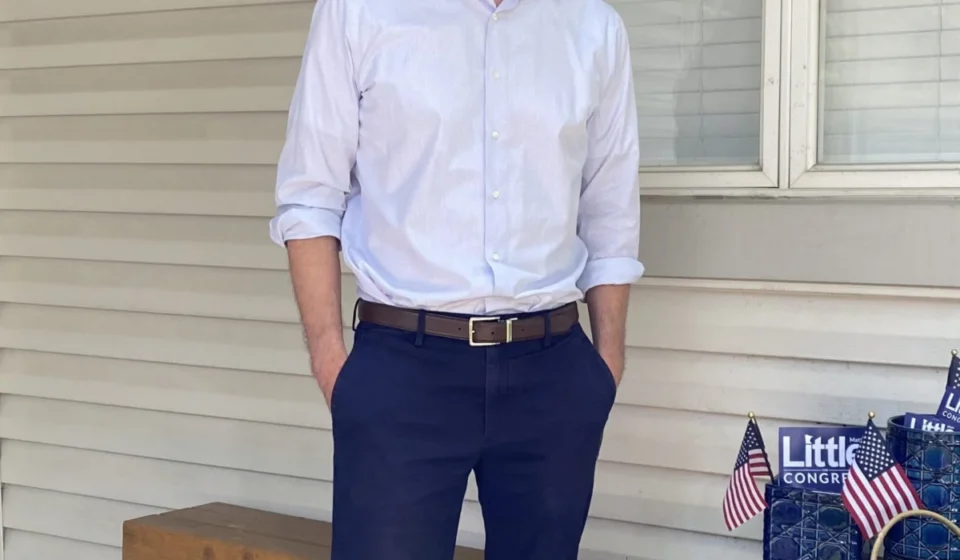
Matt Little, a former state House member and mayor of Lakeville, has positioned himself as the leading progressive in the race. He has successfully secured the DFL Party’s endorsement, a significant achievement that often provides organizational and fundraising advantages. Little’s campaign has not actively sought Craig’s endorsement, a decision he attributes to her clear declaration of neutrality. "It’s not something we’ve sought because she’s made it very clear she will not endorse," Little stated, indicating a strategic distance from the outgoing representative.
Hamline University political science professor David Schultz notes that Little is "trying to run as the candidate furthest to the left." Schultz suggests that Little’s reluctance to seek Craig’s endorsement might stem from a concern that her backing, particularly given her controversial vote on the Laken Riley Act, could alienate the very progressive voters he needs to energize. This highlights the delicate balance candidates must strike when navigating an incumbent’s legacy, especially one that has become a lightning rod for different factions within the party.
Matt Klein: The Moderate Standard-Bearer
State Senator Matt Klein, a physician who practices at the Mayo Clinic in Rochester, is openly vying to be seen as Craig’s ideological successor. He describes himself as a moderate Democrat and readily admits to having sought Craig’s endorsement. "I would be honored to have it," Klein affirmed, emphasizing his desire to continue the moderate tradition that has proven successful in the 2nd District.
Klein’s campaign narrative revolves around the district’s "swing" nature. "This is the last swing district in Minnesota," he asserts. "To hold it, you have to bridge a (partisan) divide." This mirrors Craig’s own successful strategy and suggests a belief that a centrist approach is essential for long-term Democratic viability in CD-2. Klein’s hope is that the presence of two progressive candidates, Little and Berg, will split the progressive vote, thereby clearing a path for his moderate candidacy to prevail in the primary. University of Minnesota political science professor Larry Jacobs agrees this is a plausible scenario, noting that it could "open a path for Klein" to win the nomination. Klein, who represents a suburban district in the state Senate and lives in Mendota Heights, has a track record of appealing to unaffiliated voters and even moderate Republicans, a formula that closely aligns with Craig’s past successes. He consistently reminds voters that the eventual Democratic nominee will need to pivot to the center to win the general election against Republican state Senator Eric Pratt. "We need a Democrat who can win every cycle," Klein argues, questioning whether a progressive candidate can secure victory in the less progressive parts of the district.
Kaela Berg: The Progressive Woman of Labor
State Representative Kaela Berg, who represents Burnsville in the Legislature and works as a flight attendant, is the third Democratic contender. Like Klein, she has actively sought Craig’s endorsement, despite her progressive leanings. Berg is keen to highlight her close working relationship with Craig, citing collaborative efforts such as securing funding to rebuild a dangerous intersection, as evidence of their shared commitment to the district.
Berg also champions her gender as a significant asset in the race, suggesting that voters, having been represented by a woman for several terms, might view the seat as inherently female. "I’m the only woman in the Blue Collar Brigade, and the only woman in the race," Berg stated, referencing her affiliation with a national group of working-class House candidates. "That matters right now. I love an ally and a great dude, but women’s voices are needed right now." Professor Schultz echoes this sentiment, observing that because of Craig’s tenure, "many voters in the 2nd District view it now as a female seat." He adds that while a direct endorsement from Craig might risk alienating progressive voters, Berg’s emphasis on keeping the seat in a woman’s hands "won’t hurt her."
Berg’s campaign has garnered significant external support, notably from Emily’s List, a prominent organization that backs pro-choice female candidates. Emily’s List provides financial contributions, strategic campaign advice, and has produced ads promoting Berg, underscoring the national interest in retaining a female voice in this competitive district. Her ties to organized labor through the "Blue Collar Brigade," a joint fundraising effort involving other working-class candidates like firefighter union chief Bob Brooks (Pennsylvania), teacher’s union member Randy Villegas (California), ironworker Brian Poindexter (Ohio), and union leader Sam Forstag (Montana), further define her appeal to a specific demographic.

Supporting Data: The Money Trail and External Influences
Campaign finance reports offer a crucial glimpse into the perceived viability and organizational strength of each campaign. While Angie Craig was renowned for her ability to raise "massive amounts of campaign cash," her successor faces a different fundraising landscape.
According to the latest Federal Election Committee filings as of June 30, the fundraising totals for the Democratic primary candidates are:
- Matt Klein: Over $1 million, indicating strong donor confidence in his moderate platform.
- Matt Little: Nearly $900,000, which includes a personal loan of $155,000 to his campaign, demonstrating personal investment but also potentially highlighting a need for self-funding.
- Kaela Berg: Just $355,000, significantly trailing her primary opponents, which could impact her ability to reach voters through advertising and field operations.
These figures starkly contrast with Craig’s $8.3 million in her last campaign, underscoring the challenge for any candidate to replicate her fundraising prowess. The disparity among the Democratic contenders also suggests that Klein is currently perceived as the strongest fundraiser, which could translate into a greater capacity to run a competitive primary and general election campaign.
On the Republican side, state Senator Eric Pratt, who represents a district including much of Scott County and lives in Prior Lake, has raised approximately $462,000. While less than Klein and Little, his fundraising demonstrates a credible challenge and indicates the general election will be hard-fought, regardless of the Democratic nominee.
Beyond individual fundraising, external groups play a vital role. Little’s DFL endorsement provides access to party resources and volunteer networks. Berg’s backing from Emily’s List not only brings financial contributions but also the strategic expertise and national profile of a powerful advocacy organization, which can compensate for some of her lower individual fundraising.
Official Responses: The Nuance of Non-Endorsement
Craig’s official position is clear: she will not endorse. This stance is rooted in a desire to let the voters decide, a common practice for outgoing incumbents. Professor Jacobs notes that it’s "not unusual for an incumbent to avoid endorsing a possible successor."
However, the candidates’ responses to this neutrality reveal their strategic calculations:
- Little: Respects Craig’s decision and has not sought her endorsement, aligning with his progressive base who might view a Craig endorsement critically after the Laken Riley Act controversy.
- Klein: Actively sought Craig’s endorsement and would be "honored to have it," reinforcing his image as the natural successor to her moderate legacy.
- Berg: Also sought Craig’s endorsement, aiming to leverage their past collaborations and the shared gender identity, while carefully balancing this with her progressive platform and the backing of groups like Emily’s List.
The fact that Little, the DFL-endorsed candidate, is the one not seeking Craig’s endorsement is particularly telling. It suggests a calculated risk to appeal to a newly energized progressive base that has grown wary of Craig’s past compromises, especially in the wake of "Operation Metro Surge" and the Laken Riley Act. This ideological tension within the party creates a complex environment where an incumbent’s endorsement, even from a successful one, might be a double-edged sword.

Implications: The Road Ahead for CD-2
The outcome of the August 11 primary will have profound implications for the general election and the future political trajectory of Minnesota’s 2nd Congressional District.
The Progressive vs. Moderate Divide: The primary is a test of strength between the DFL’s progressive wing, represented by Little and Berg, and its moderate faction, embodied by Klein. If the progressive vote splits between Little and Berg, Klein’s path to victory could indeed materialize, as suggested by Professor Jacobs. This would be a victory for the moderate approach, signaling that the district still favors a centrist Democrat to hold off Republican challenges. Conversely, if one progressive candidate consolidates the left-leaning vote, it would indicate a shift in the district’s Democratic base.
General Election Challenges: Regardless of who wins the Democratic primary, the nominee will face a formidable opponent in Republican state Senator Eric Pratt. The 2nd District, while leaning Democratic according to analysts, remains "purple," meaning the general election will demand a candidate capable of attracting independent and moderate crossover votes. Klein explicitly warns against underestimating this need to pivot to the center. "The question is, ‘Can a progressive candidate win in parts of the district that are not progressive?’" he asks, echoing a concern about electability that resonates with Craig’s own history.
Craig’s Legacy of Hard Work and Relationships: Whoever succeeds Craig will also face the challenge of matching her defining characteristics: a reputation as a "hard worker" and her "extensive relationships with people in the district," as noted by Professor Jacobs. These intangible assets, cultivated over years, contributed significantly to her electoral success and will be difficult for any newcomer to replicate instantly. The ability to connect with diverse constituents across the district, from its suburban centers to its rural farming communities, will be crucial.
The "Woman’s Seat" Factor: Kaela Berg’s emphasis on the district being a "woman’s seat" after Craig’s tenure is a compelling narrative. The backing from Emily’s List further amplifies this message, suggesting that gender identity and reproductive rights will be significant themes in her campaign. Whether this appeal is strong enough to overcome the fundraising gap and unite the progressive vote remains to be seen.
The August 11 primary is more than just a contest for a congressional seat; it’s a referendum on the Democratic Party’s direction in a critical swing district and a test of whether the moderate coalition built by Angie Craig can endure, or if the district’s progressive energy will chart a new course. The voters of Minnesota’s 2nd Congressional District will ultimately decide not just who represents them, but what kind of Democratic leadership they desire for the years to come.