













































The Green Horizon: Navigating the Complex Rollout of Minnesota’s Legal Cannabis Market

Introduction
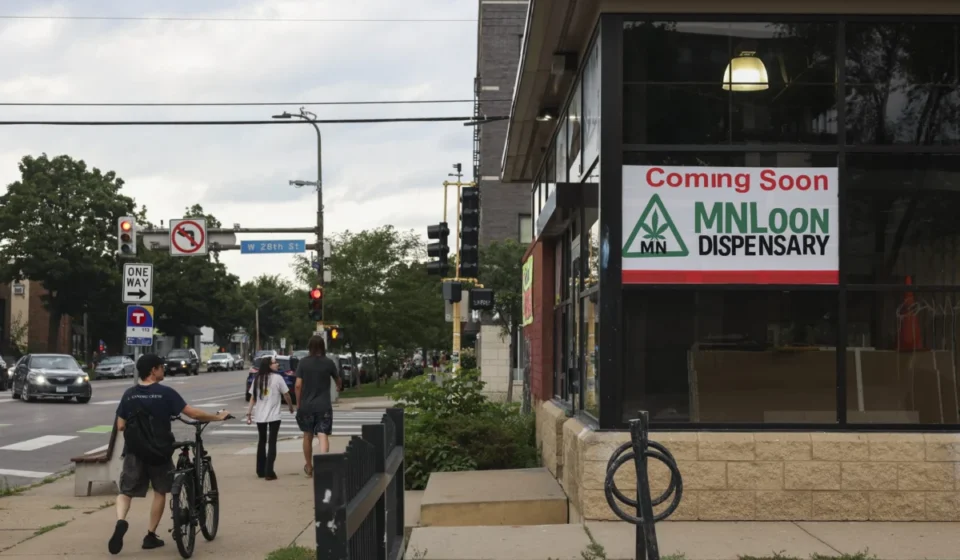
At the intersection of West 25th Street and South Lyndale Avenue in Minneapolis, the Loon Smoke Shop serves as a neighborhood fixture. It is a place where the air is often thick with the scent of tobacco and vape clouds, and where a steady stream of regulars congregates late into the evening. However, this familiar scene is on the verge of a historic transformation. Just a few blocks south, the shop’s new dispensary is entering the final stages of the state’s rigorous cannabis licensing process. The business is already actively recruiting "budtenders" and managers—pioneers for an industry that has been legally authorized for a year but is only now beginning to take physical shape on Minnesota’s street corners.
When Governor Tim Walz signed the landmark legislation to legalize recreational cannabis in 2023, the state set an ambitious goal: a fully functional retail market by 2025 at the latest. For many observers and aspiring entrepreneurs, the journey toward that target has felt agonizingly slow. Yet, according to state officials and industry analysts, the "bottleneck" phase of the rollout is finally giving way to a period of rapid expansion.
Main Facts: The First Wave of Non-Tribal Licensing
For the past year, the only places to legally purchase recreational marijuana in Minnesota were on tribal lands. This changed in the early summer of 2024. The Minnesota Office of Cannabis Management (OCM) recently reached a pivotal milestone by granting final approval to five non-tribal entities to begin operations. These businesses represent the vanguard of the state’s emerging private sector.
The newly licensed businesses include:
- Herb-Quest: Authorized to operate a cultivation center in Pine County.
- Concentrate Labs (Roots and Resin Farm): Approved for a cultivation site in Chisago County.
- The Smoking Tree: A retail dispensary located in Albert Lea.
- Loon Lab Extracts and Research: Based in Isanti.
- Fairwater Farm: A retail operation in Plainview.
Eric Taubel, the interim director of the OCM, suggests that these five are merely the beginning. He projects that up to 150 non-tribal marijuana businesses could be operational by the end of the year. This shift marks a transition in the narrative of Minnesota’s cannabis rollout; the primary challenge is no longer state-level bureaucracy, but rather the ability of individual entrepreneurs to secure local permits, financing, and real estate.
Chronology: From Legislation to the First Retail Sale
The timeline of Minnesota’s cannabis journey is marked by historic legislative action followed by a series of administrative hurdles and unique tribal leadership.
- May 2023: Governor Tim Walz signs the cannabis legalization bill into law, making Minnesota the 23rd state to legalize recreational use. The law allows for the possession and home growth of marijuana starting in August 2023 but requires a state-regulated system for retail sales.
- August 2023: While the state works to build the OCM from scratch, tribal nations exercise their sovereignty. The Red Lake Nation opens the state’s first legal recreational dispensary, followed shortly by the White Earth Nation.
- Late 2023 – Early 2024: The OCM faces leadership instability. A "botched hire" for the permanent director position leads to a review by the Office of the Legislative Auditor. Leadership passes through a series of interim directors, including Charlene Briner and eventually Eric Taubel.
- May 2024: The first regulatory compact is signed between the state and the White Earth Nation. This agreement allows the tribe to operate dispensaries off-reservation, leading to new storefronts in St. Cloud and Moorhead.
- June 2024: The OCM conducts its first social equity lottery. Out of hundreds of applicants, 249 are selected to move forward in the licensing process.
- July 2024: A second lottery is held for general applicants, with 75 winners selected from a pool of 569. Simultaneously, the first five non-tribal licenses are finalized.
Supporting Data: The Mechanics of the Market
The Minnesota model is distinct from other states that have legalized cannabis. Unlike many jurisdictions that allowed existing medical marijuana dispensaries to transition immediately into recreational sales, Minnesota opted for a "social equity first" approach. This was designed to prevent a monopoly by large, established corporations and to provide opportunities for those disproportionately affected by previous drug prohibitions.
The Lottery System
The OCM utilized a lottery system to manage the high volume of interest. The criteria for "social equity status" are specific, including:
- Military veteran status.
- Previous convictions for marijuana-related offenses.
- Residency in high-poverty areas or neighborhoods with historically high rates of drug arrests.
In the June lottery, 249 applicants won the right to proceed. In the July general lottery, the odds were significantly tighter, with only a 13% success rate (75 winners out of 569).

The Tax Burden
One of the most contentious data points in the rollout is the tax structure. During a 2024 special session, Minnesota lawmakers increased the cannabis excise tax from 10% to 15%. When combined with state and local sales taxes, consumers can expect to pay a total levy exceeding 20%.
Comparatively, Minnesota sits in the middle of the national spectrum. According to the Tax Foundation, Connecticut imposes a low 3% excise tax, while Washington state charges a staggering 37%. However, industry consultants warn that a 20%+ total tax could make it difficult for legal retailers to compete with the illicit market, where prices remain lower.
Official Responses: Leadership Under Pressure
The delay in opening retail stores has been a point of political friction. Governor Tim Walz has been candid about the difficulties of the implementation, describing legal weed as the most difficult of the myriad laws passed in 2023 to put into practice.
"There really was not a model of how to do it," Walz stated, noting that all 22 states that legalized before Minnesota faced similar struggles. Despite the criticism over the OCM’s leadership turnover, Walz has expressed confidence in Eric Taubel’s current performance, though he has stopped short of naming him the permanent director.
From the OCM’s perspective, the "slow" rollout was a deliberate choice to ensure fairness. Eric Taubel emphasizes that the state has now done its part. "We’ve transitioned to the point where the onus is on the applicant and a prospective business owner," Taubel said. He characterizes the current stage as a "checkerboard" of local requirements. While cities and counties cannot legally ban cannabis businesses, they can impose strict zoning laws—such as distance requirements from schools or parks—that can delay a shop’s opening by months.
Leili Fatehi, a partner at the consulting firm Blunt Strategies, notes that the tribal head start was an unexpected but positive outcome of the state’s respect for tribal sovereignty. "I don’t think it was anticipated that the tribal program and operations would start so far ahead of non-tribal licenses," Fatehi said. She believes this has allowed the state to observe market demand before the full retail explosion occurs.
Implications: A New Economic Landscape
The implications of Minnesota’s cannabis rollout extend far beyond the availability of the product. The state is attempting to engineer an entirely new sector of the economy with social justice at its core.
The Tribal Advantage
The early entry of tribal nations has given them a significant market advantage. By the time many non-tribal shops open their doors, tribal cultivators will likely be the primary suppliers. This creates a unique economic ecosystem where tribal nations act as the foundational "wholesalers" for the broader state market.
Local Governance Challenges
As the 150 projected businesses seek to open, the focus will shift from St. Paul to local city councils. For example, Jacob Schlichter, founder of The Smoking Tree in Albert Lea, must still navigate a final city council meeting on July 28. While such steps are often formalities, they represent the final hurdle in a "nuanced regulatory landscape." If local municipalities are slow to grant zoning permits, the 2025 retail target could still be at risk for many entrepreneurs.
Social Equity vs. Market Viability
The decision to prioritize social equity applicants is a bold social experiment. The implication is a market filled with small, local entrepreneurs rather than "Big Weed" conglomerates. However, without the deep pockets of national corporations, these small business owners are more vulnerable to the high 15% excise tax and the costs of compliance. The success of the Minnesota model depends on whether these "passionate" entrepreneurs—like those being hired at the Loon Smoke Shop’s new dispensary—can survive the thin margins of a highly taxed, highly regulated industry.
Conclusion
Minnesota is currently in the "quiet before the storm" phase of legalization. While the storefronts are currently few and far between, the infrastructure is now firmly in place. As the first five non-tribal licenses transition into active sales, the state will finally see if its "slow and steady" approach produces a more equitable and stable market than the rapid, corporate-led rollouts seen in other parts of the country. For the loiterers at the Loon Smoke Shop and the entrepreneurs in Albert Lea, the wait is almost over.