














































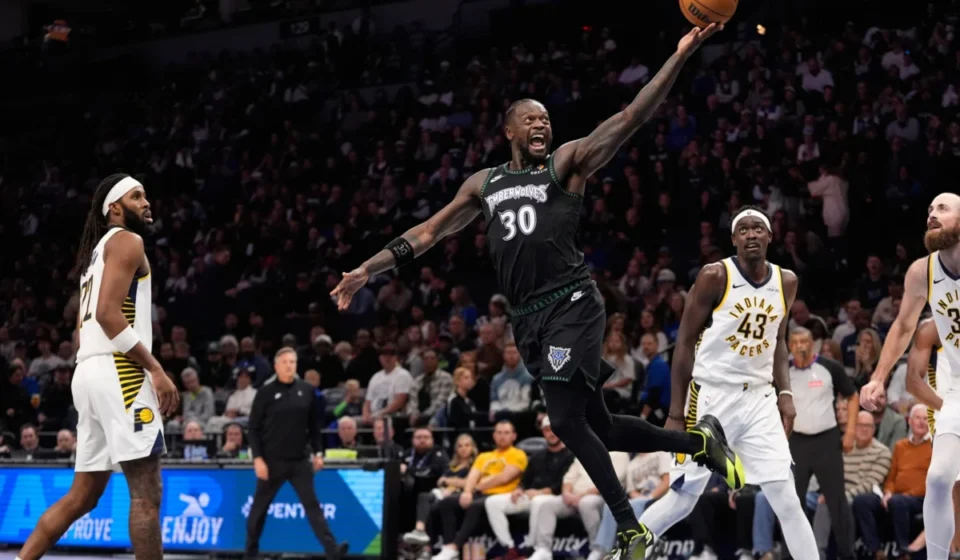

In the unforgiving ecosystem of the NBA, there exists a specific archetype of player that fans inevitably turn on. They are not the lazy, nor are they the inherently selfish. They are the "teasers"—the athletes who, for three consecutive possessions, look capable of bulldozing their way through a championship run, only to spend the subsequent eight minutes drifting into the periphery, spinning aimlessly into triple-teams, or reacting to defensive rotations a critical half-second too late.
Julius Randle has officially become that player in Minnesota. Following an underwhelming postseason exit, the simmering frustration of the Timberwolves faithful has curdled into something far more biting. The critique has moved beyond mere analysis; it has become an exhaustion. The missed assignments, the stalled offensive possessions, the tell-tale slumped body language—it all paints a portrait of a player whose presence seems to cause the team’s playoff aspirations to collapse inward like a structural sinkhole.
The Statistical Reality of a Postseason Collapse
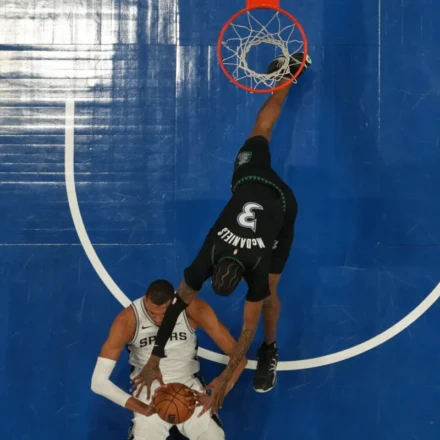
The numbers from Minnesota’s recent playoff campaign offer little shelter for the embattled forward. In the opening round, Randle averaged a pedestrian 15.5 points, shooting a lackluster 43% from the field and a stagnant 30% from beyond the arc. As the competition stiffened in the second round against the San Antonio Spurs, the efficiency plummeted further.
The nadir of this performance came in Game 6—a season-ending blowout where Randle contributed a meager three points in under 24 minutes of play. To observers, it was not merely an "off night"; it was a public unraveling, a final act that crystallized the fears of a fanbase that had spent months hoping for a different outcome. However, the vitriol currently aimed at Randle threatens to obscure a more nuanced truth: Julius Randle is not a useless player; he is an overextended one. That distinction is the key to understanding his tenure in Minnesota.
The "Riddle" of Randle: A Career Chronology
To understand the current tension, one must look at the decade-long attempt by the NBA to solve the "Randle Riddle." His career has been defined by flashes of brilliance that consistently trick organizations into believing they can build a championship infrastructure around him.
- The Laker Years (Raw Potential): Drafted as a high-lottery pick, Randle arrived in Los Angeles as a raw, physically gifted prospect. He possessed the rare combination of size and handle, yet lacked the polish to make it functional at the highest level.
- The New Orleans Evolution: Under the tutelage of Chris Finch—then an assistant coach—Randle underwent his first major metamorphosis. He became a dynamic offensive hub, posting the most efficient season of his career to that point. It was here that the blueprint for the "Point Forward" Randle was born.
- The Knicks Era (Savior and Scapegoat): In New York, Randle became a polarizing figure. He dragged a starving franchise back into the postseason, earning All-NBA honors and becoming the face of the team’s resurgence. Yet, as the Knicks hit a ceiling, he became the symbol of their limitations, a pattern that has now migrated to the Twin Cities.
- The Minnesota Experiment: Inheriting the volatile mix of Randle’s power and history, the Timberwolves—led by Finch—bet on the belief that familiarity would yield better results.
The Finch Factor: Trust vs. Tactical Necessity
The relationship between Julius Randle and head coach Chris Finch is perhaps the most significant, yet least understood, variable in this equation. Finch, who coached Randle during his breakout year in New Orleans, has been the forward’s staunchest defender in the Minnesota locker room. Randle has publicly acknowledged that Finch’s support "means everything" to him, pointing to a deep well of professional trust and personal rapport.
This bond is likely the primary reason why Randle’s role remained elevated even as his playoff inconsistencies became impossible to ignore. Finch sees the "ideal" version of Randle: the bruising, downhill force who can relieve pressure from Anthony Edwards, or the veteran capable of stabilizing the offense when the floor spacing inevitably clogs. Yet, the luxury of that trust often blinds the coaching staff to the reality of playoff basketball, which is notoriously cruel to players who rely on rhythm and isolation in an era that demands ball movement and defensive agility.
Analytical Breakdown: Why the Fit Fails
Beyond the narratives, the tactical data suggests a fundamental mismatch. The postseason strips away the ambiguity of the regular season; weaknesses that are masked during an 82-game slog become amplified under the bright lights of the playoffs.
Randle’s flaws—his tendency to hold the ball too long, his inconsistent defensive engagement, and his reliance on difficult, contested isolation scoring—create a gravitational pull that acts against the Timberwolves’ identity. Minnesota thrives when the game is played at pace, with ball movement and the explosive, improvisational chaos of Anthony Edwards. When Randle is on the floor, the ecosystem slows down. Possessions become "sticky." Defensive intensity drops. The momentum that makes Minnesota a lethal regular-season squad leaks out of the building.
Humanizing the Narrative: The Professional Beyond the Box Score
It is a common error to conflate professional performance with personal character. While fans are justified in their frustration with the basketball output, there is a distinct lack of fairness in the personal vilification of Randle. He did not draft himself; he did not negotiate his own contract; he did not orchestrate the trade that brought him to Minnesota. He is, in many ways, a product of an NBA culture that is addicted to the "illusion of size and self-creation."
Off the court, those within the organization speak highly of his character. In recent interviews, including a notable feature in GQ, Randle has spoken candidly about the challenges of aging in a high-pressure environment, the importance of mental clarity, and his dedication to his family. He is a professional who works hard, yet the intensity of the playoff spotlight often incinerates any empathy for the human behind the jersey.
Implications for the Timberwolves’ Future
The harsh reality for the Timberwolves’ front office is that they do not need Julius Randle to be "terrible" to conclude that he is the wrong fit. He has become a weight the team is dragging uphill.
The future of the Timberwolves rests solely on the shoulders of Anthony Edwards. Every roster decision must now be filtered through the lens of maximizing Edwards’ potential. If a player—no matter how talented—impedes that growth or clogs the offensive flow, the "fit" is broken.
The anger directed at Randle is essentially a displacement of the frustration fans feel regarding the team’s lack of championship-level chemistry. Randle is not the sole architect of Minnesota’s failure; he is merely the most visible symbol of a roster that, while talented, lacks the cohesive geometry required to win a title.
Conclusion: The Burden of Expectation
Julius Randle remains the player he has always been: talented enough to dazzle, flawed enough to disappoint, and human enough that the current, unrelenting pile-on feels increasingly disproportionate to his actual role. The crisis in Minnesota is not that Randle failed to become a superstar; it is that the league, the media, and the front offices collectively convinced the public to expect him to be one.
As the Timberwolves look toward the offseason, the lesson of the Julius Randle experiment is clear: talent is not interchangeable, and fit is not optional. For Minnesota, the path forward requires a cold-eyed assessment of their roster construction—a process that must begin by separating the player from the impossible expectations placed upon his shoulders.