























































The Science, History, and Care of Curly-Coated Canine Breeds: An In-Depth Analysis of Unique Ear Morphology and Grooming Requirements

The domestic dog (Canis lupus familiaris) exhibits some of the most diverse morphological variations of any mammalian species. Among these traits, coat texture and ear structure stand out as primary defining characteristics of specific breeds. Dogs with curly coats and curly-furred ears represent a unique intersection of genetic selection, functional evolutionary history, and specialized husbandry requirements.
While these animals are highly prized for their distinctive, often plush-like appearance, their unique coats demand rigorous maintenance. This comprehensive report examines the main facts surrounding curly-eared breeds, the historical chronology of their development, the genetic and veterinary data supporting their care, expert perspectives on their maintenance, and the broader implications of owning these specialized companions.

1. Main Facts: Profiles of Key Curly-Coated and Curly-Eared Breeds
The presence of curly hair extending to a dog’s ears is not merely an aesthetic quirk; it is a structural feature shared by several distinct breeds spanning toy companions, specialized water retrievers, and agile herders. Below is an analytical overview of thirteen prominent breeds characterized by this distinct morphology.
The Water Dogs and Retrievers
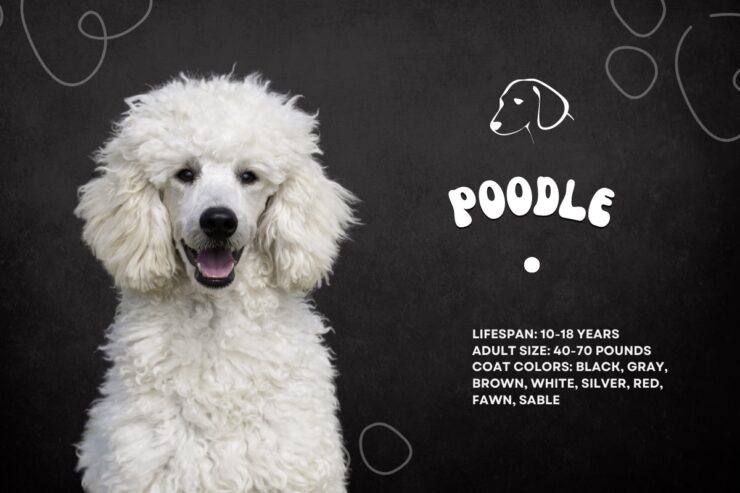
Standard, Miniature, and Toy Poodles
- Lifespan: 10–18 years
- Adult Weight: 40–70 lbs (Standard); 10–15 lbs (Miniature); 4–6 lbs (Toy)
- Coat Spectrum: Black, gray, blue, silver, brown, cafe-au-lait, apricot, cream, white
Historically utilized as duck retrievers in Germany, the Poodle is highly intelligent and easily trained. Its dense, single-layer curly coat is virtually non-shedding and hypoallergenic, making it a benchmark breed for curly-haired genetics.
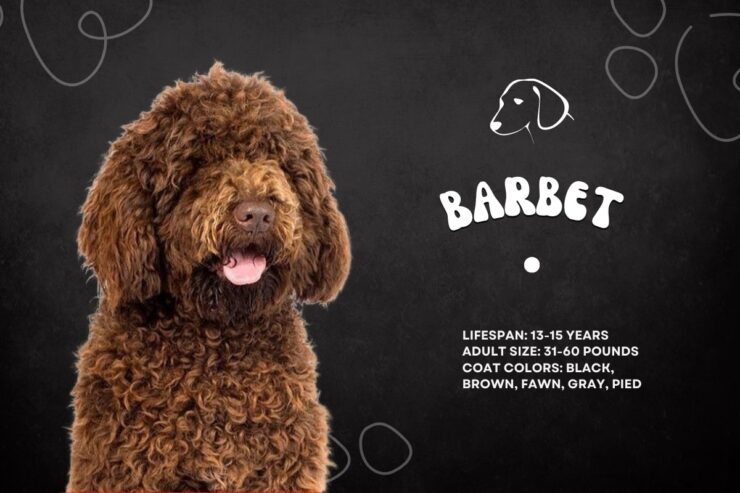
Barbet
- Lifespan: 13–15 years
- Adult Weight: 31–60 lbs
- Coat Spectrum: Black, brown, fawn, gray, pied
The Barbet is an ancient French water dog from which many modern curly-coated breeds descend. Possessing a thick, woolly coat and heavily feathered ears, this breed requires extensive grooming to prevent severe matting, particularly after swimming.
Portuguese Water Dog
- Lifespan: 11–13 years
- Adult Weight: 35–60 lbs
- Coat Spectrum: Black, white, brown, or combinations thereof
Bred to assist fishermen by herding fish into nets and retrieving lost gear, these dogs possess webbed feet and a single-layered, water-resistant coat of tight curls or waves, including on their drop ears.
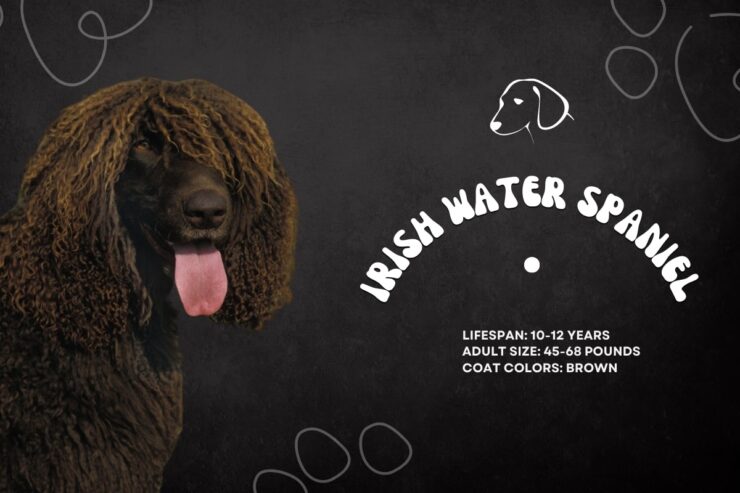
Irish Water Spaniel
- Lifespan: 10–12 years
- Adult Weight: 45–68 lbs
- Coat Spectrum: Deep liver/brown
Distinguished by its curled coat, long curly ears, and a contrastingly bald "rat tail," this breed is the largest of the spaniels. It is an enthusiastic water retriever with a double coat designed to withstand cold aquatic environments.
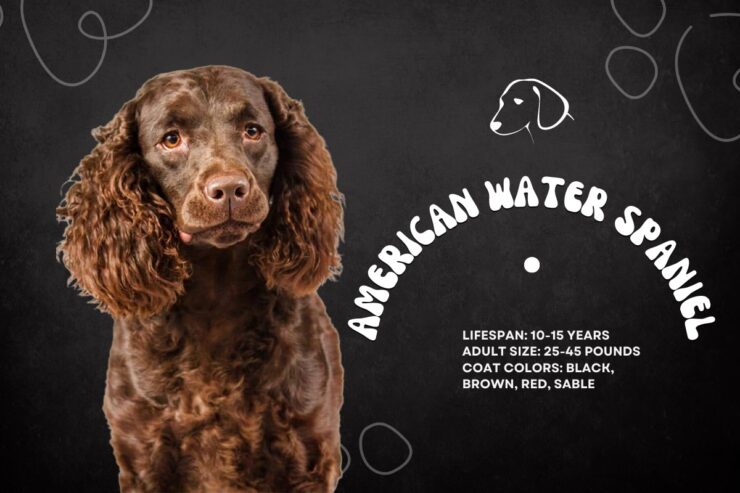
American Water Spaniel
- Lifespan: 10–15 years
- Adult Weight: 25–45 lbs
- Coat Spectrum: Solid liver, brown, or dark chocolate
Developed in the Great Lakes region of the United States, this versatile gundog features a dense, water-resistant double coat. Its ears are heavily padded with curls, providing insulation against icy water.
Spanish Water Dog
- Lifespan: 10–14 years
- Adult Weight: 31–49 lbs
- Coat Spectrum: Black, brown, beige, white, or bicolor
An ancient rustic breed used for both herding and water retrieval. If left untrimmed, its curly coat naturally forms tight cords. The ears are similarly covered in curly, corded hair.
Curly-Coated Retriever
- Lifespan: 10–12 years
- Adult Weight: 60–95 lbs
- Coat Spectrum: Black, liver
One of the oldest retriever breeds, it features a body covered in a mass of small, tight, water-resistant curls, presenting a distinct silhouette where the curly ears blend seamlessly into the head contour.
The Herding and Working Breeds
+-----------------------------------------------------------------------------+
|                               THE PUMI                                      |
|  Origin: Hungary  |  Lifespan: 12-13 Years  |  Weight: 22-29 lbs            |
|  Coat: Silver, Gray, Black (wavy/curly combination)                         |
|  Ear Carriage: Semi-erect, highly mobile, covered in intense curls         |
+-----------------------------------------------------------------------------+
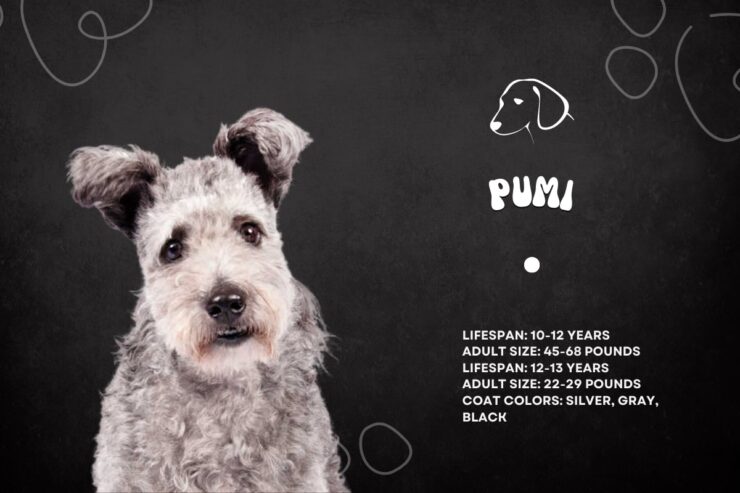
Pumi
- Lifespan: 12–13 years
- Adult Weight: 22–29 lbs
- Coat Spectrum: Silver, gray, black, white, sandy
This Hungarian herding dog is characterized by its whimsical appearance, driven by semi-erect ears that stand alert but are covered in rich, curly hair. They are energetic, vocal, and highly agile.
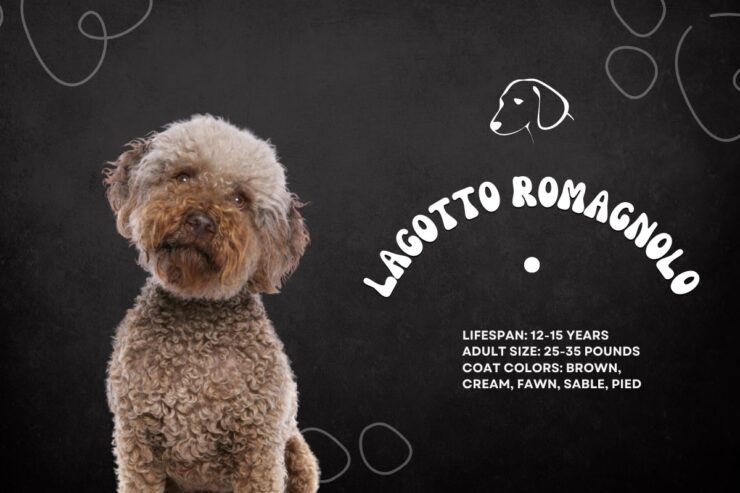
Lagotto Romagnolo
- Lifespan: 12–15 years
- Adult Weight: 25–35 lbs
- Coat Spectrum: Off-white, orange, brown, sable, pied
Hailing from the Romagna sub-region of Italy, this breed was historically a waterfowl retriever but is now globally renowned as the world’s premier truffle-hunting dog. Its dense, curly coat is highly water-repellent.
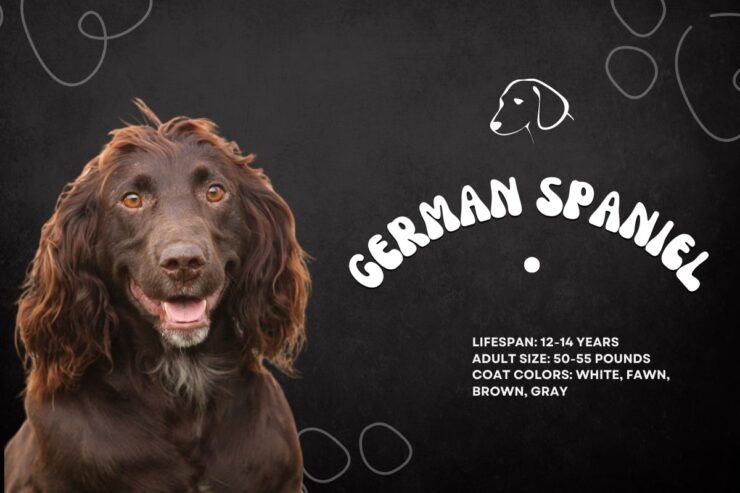
German Spaniel (Deutscher Wachtelhund)
- Lifespan: 12–14 years
- Adult Weight: 50–55 lbs
- Coat Spectrum: Brown, red, often with white ticking or roan patterns
A thick, wavy-to-curly coated forest gundog from Germany. It possesses remarkable tracking abilities and requires regular brushing to keep its long, feathered, wavy ears free of forest debris.
The Companion and Terriers
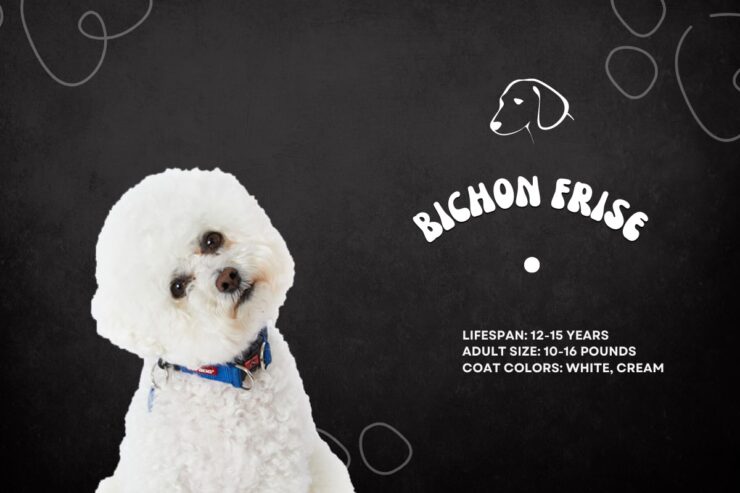
Bichon Frise
- Lifespan: 12–15 years
- Adult Weight: 10–16 lbs
- Coat Spectrum: Solid white, cream
A small companion dog featuring a powder-puff appearance. The breed has a soft, dense undercoat and a coarser, curly outer coat, giving the ears a soft, rounded look that merges with the head.
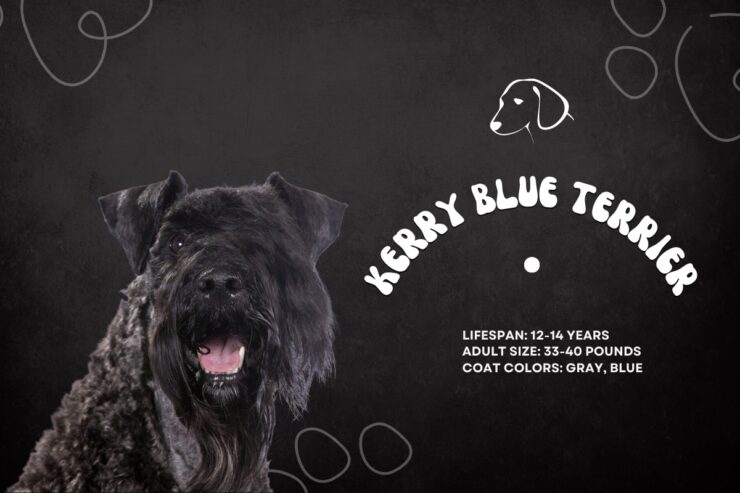
Kerry Blue Terrier
- Lifespan: 12–14 years
- Adult Weight: 33–40 lbs
- Coat Spectrum: Slate blue, silver-blue, deep gray
A robust, multi-purpose working terrier from Ireland. The Kerry Blue is born black, with its coat fading to its signature blue-gray hue by 18 months. Its soft, wavy-to-curly coat lacks an undercoat and covers the ears entirely.
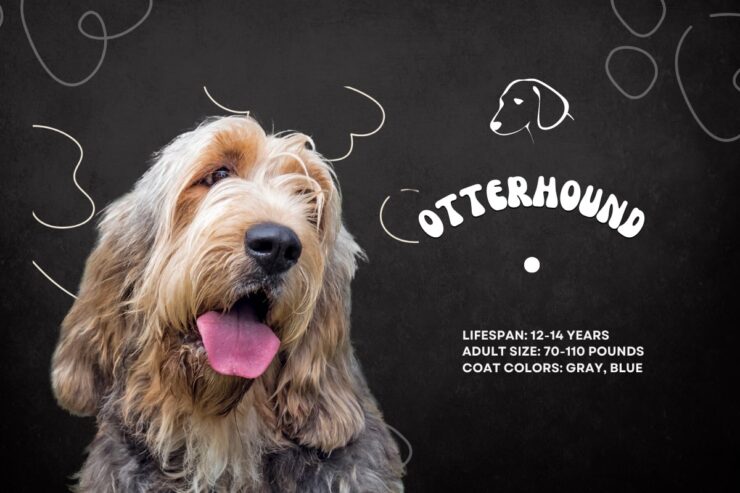
Otterhound
- Lifespan: 12–14 years
- Adult Weight: 70–110 lbs
- Coat Spectrum: All hound colors (grays, blues, sandy, wheaten, black-and-tan)
An exceptionally rare, large British breed developed for hunting otters. It features a rough, double coat with an oily underlayer and long, folded, curly ears that are highly prone to trapping moisture.
2. Chronology: The Evolution and Rise of Curly-Coated Breeds
The emergence of curly-coated dogs follows a distinct timeline linked to human agricultural, maritime, and domestic shifts.
[Antiquity] --------------------> [16th - 18th Century] -------------> [19th Century] -------------> [20th - 21st Century]
Early water dogs                  Divergence of specialized           Establishment of             Hypoallergenic boom,
(ancestors of Barbet/Poodle)      retrievers & land spaniels          official breed standards     designer crossbreeding
used for maritime work.           for hunting and herding.            by modern Kennel Clubs.      and modern vet science.
Ancient Foundations (Pre-1500s)
Genetic evidence suggests that the mutation for curly hair arose early in canine domestication. Ancestral water dogs, often referred to broadly as Barbet types, were documented across the Mediterranean basin. These dogs were selected for maritime work because their tight curls trapped air, providing buoyancy and insulation in cold waters, while protecting the skin from brambles on land.
Agrarian and Sporting Divergence (1500s–1800s)
As hunting methods evolved from falconry and netting to firearms, the demand for specialized retrievers grew.
- 1600s: The Poodle (derived from the German Pudelhund) emerged as a distinct aquatic retriever, while the ancestors of the Irish Water Spaniel were refined in the British Isles.
- 1700s: The Lagotto Romagnolo transitioned from water retrieval to land-based truffle hunting as the marshlands of Romagna were drained.
- 1800s: Systematic dog breeding began. The Curly-Coated Retriever was exhibited in England in 1860, representing one of the first breeds classified under the newly established Kennel Club rules.
The Modern Companion Era (1900s–Present)
The late 20th century saw a dramatic shift in the role of these dogs. No longer primarily working animals, breeds like the Poodle and Bichon Frise became urban companions. This era also saw the rise of "designer" crossbreeds (such as the Labradoodle and Goldendoodle), which sought to replicate the curly, low-shedding coat and curly-eared look of the Poodle, leading to a surge in demand for specialized pet grooming services.
3. Supporting Data: Genetics, Anatomy, and Health Risks
To understand the maintenance and health profiles of these breeds, it is necessary to examine the underlying genetic mechanisms and anatomical vulnerabilities associated with curly coats and ear structures.
The Genetics of the Curly Coat
Canine coat variation is largely governed by three major genes: FGF5 (length), RSPO2 (furnishings/wire hair), and KRT71 (curly hair).
The curly phenotype is primarily caused by a missense mutation in the Keratin 71 (KRT71) gene. This mutation alters the structural integrity of the inner root sheath of the hair follicle. Instead of growing straight, the hair shaft emerges with asymmetrical structural support, causing it to bend and curl. In breeds like the Poodle, Irish Water Spaniel, and Lagotto Romagnolo, this mutation is homozygous, meaning they pass the curly trait to all offspring.
Comparative Breed Metrics
| Breed | Average Weight (lbs) | Lifespan (Years) | Coat Type | Primary Historical Function |
|---|---|---|---|---|
| Bichon Frise | 10–16 | 12–15 | Double (Soft/Curly) | Companion / Performing |
| Pumi | 22–29 | 12–13 | Double (Wavy/Curly) | Herding |
| Lagotto Romagnolo | 25–35 | 12–15 | Single (Dense/Curly) | Truffle Hunting / Water Retriever |
| Poodle (Standard) | 40–70 | 10–18 | Single (Dense/Curly) | Water Retriever |
| Kerry Blue Terrier | 33–40 | 12–14 | Single (Soft/Wavy-Curly) | Farm Guarding / Hunting |
| Otterhound | 70–110 | 12–14 | Double (Rough/Oily) | Otter Hunting |
Comparative Ear Anatomy in Canines
While curly-eared dogs are defined by their hair texture, canine ears are classified by their structural carriage. The FAQs in the source text highlight several distinct variations:
  [ Erect Ear / Bat Ear ]          [ Rose Ear ]                [ Drop Ear / Curly Ear ]
     /             /               _..---.._                       .===.       .===.
    /             /              .'         '.                    /          /
   |    |         |    |          /   _     _                     |  (O)  |   |  (O)  |
   |____|         |____|         |   (o)   (o)   |                 |       |   |       |
   (Base is wide & upright)      '._   __*__   _.'                        /          /
                                    '---------'                     '====='     '====='
(Folds back & outward) (Pendant style, traps moisture)- Drop/Pendant Ears (e.g., Poodle, Spaniels): These ears hang down alongside the head. When covered in dense curls, they restrict airflow to the ear canal, trapping humidity.
- Bat Ears (e.g., French Bulldog, Chihuahua): Broad at the base, erect, and facing forward, resembling a bat’s wing.
- Butterfly Ears (e.g., Papillon): Erect ears fringed with long hair, resembling the outspread wings of a butterfly.
- Rose Ears (e.g., Greyhound, Whippet, Pug): Small ears that fold back and outward, keeping the burr (canal opening) partially visible.
Pathological Risks: Otitis Externa and Aural Hematomas
The combination of a drop-ear structure and curly, fast-growing hair creates a microenvironment highly susceptible to pathological conditions.
- Otitis Externa (Ear Infections): Curly-coated dogs often grow hair deep inside their external auditory meatus (ear canal). This hair traps cerumen (earwax), moisture, and debris. According to epidemiological studies in veterinary medicine, drop-eared, hairy-eared breeds have a significantly higher incidence of otitis externa compared to erect-eared breeds. The lack of air circulation allows opportunistic pathogens like Malassezia pachydermatis (yeast) and Pseudomonas bacteria to proliferate.
- Aural Hematoma ("Pillow Ear"): When a dog experiences chronic itchiness or pain due to an ear infection, it will shake its head violently. This head shaking can rupture the delicate blood vessels within the pinna (ear flap). Blood accumulates between the cartilage and the skin, causing the ear flap to swell like a fluid-filled pillow. This condition is painful and typically requires surgical drainage and stabilization to prevent permanent scarring (deformity known as "cauliflower ear").
4. Official Responses and Veterinary Guidance
To maintain the health of curly-eared dogs, veterinary dermatologists and professional groomers emphasize preventive care regimens.
Veterinary Care Standards
The American Veterinary Medical Association (AVMA) recommends routine ear inspections for all drop-eared breeds, particularly those that swim.
"Moisture is the primary catalyst for ear pathogens," states clinical guidance on canine otology. "Any dog with heavy, curly ear feathering must have their ears dried thoroughly after bathing or swimming. Weekly cleaning with a veterinarian-approved, astringent (drying) ear cleaner is highly recommended."
The "Plucking vs. Trimming" Debate
A long-standing debate exists within the professional grooming and veterinary communities regarding the management of hair inside the ear canal:
- Plucking (Epilation): Historically, groomers routinely plucked the hair from the ear canals of Poodles and similar breeds using hemostats and ear powder. The argument was that removing the hair entirely maximized airflow. However, modern veterinary dermatologists often advise against routine plucking of healthy ears. The act of pulling the hair can cause micro-trauma to the delicate skin lining the canal, leading to inflammation and serum exudation, which can actually trigger an infection.
- Trimming/Clipping: Many professionals now advocate for carefully trimming the hair as short as possible at the entrance of the canal, reserving plucking only for dogs that have established patterns of chronic infection directly linked to hair blockage.
       [PLUCKING]                              [TRIMMING]
       - Pulls hair from root                  - Cuts hair close to canal entrance
       - Maximizes airflow                     - Minimizes skin trauma
       - Risk of micro-tears & inflammation    - Leaves root intact, safer for healthy ears
5. Implications: The Realities of Ownership and Market Demands
The visual appeal of curly-eared dogs has driven a significant increase in their market share, but this popularity carries notable implications for animal welfare and owner responsibility.
The Cost of Maintenance
Owning a curly-coated dog is a long-term financial and time commitment. Unlike double-coated shedding breeds (such as Huskies or Retrievers), whose coats naturally cycle out, curly hair grows continuously.
- Grooming Cycles: Most curly breeds require professional grooming every 4 to 6 weeks. A typical grooming session involves bathing, blow-drying with high-velocity dryers to stretch the curls, precision clipping, and ear canal maintenance.
- At-Home Care: Owners must commit to daily or bi-weekly line brushing using a slicker brush and a metal greyhound comb. Neglecting this routine leads to matting. When mats form close to the skin, they restrict blood flow, cause discomfort, and can harbor bacterial skin infections. In severe cases, the only humane option is to shave the coat entirely.
The "Hypoallergenic" Misconception
A major driver behind the popularity of curly-coated dogs is the belief that they are "hypoallergenic." While it is true that curly coats trap dander and shed hair within the coat matrix rather than releasing it into the environment, no dog is completely hypoallergenic.
Canine allergens (such as Can f 1) are present in saliva, dander, and urine. Because curly dogs must be bathed and groomed frequently, the ambient dander in their homes is often lower, but highly sensitive individuals may still experience allergic reactions.
Ethical Breeding and Selection
Prospective owners must seek out responsible breeders who screen for breed-specific genetic conditions. Many curly-coated water dogs are prone to hip dysplasia, progressive retinal atrophy (PRA), and specific cardiac anomalies.
Furthermore, buyers must be wary of breeders who prioritize extreme coat volume or exaggerated ear lengths at the expense of structural soundness and general health.
6. Summary: Key Takeaways for Prospective Owners
For individuals willing to invest the necessary time and resources, a curly-eared dog can make an exceptional, highly intelligent companion. However, success requires a clear understanding of the breed’s needs:
- Commitment to Grooming: Regular professional and home grooming is non-negotiable to prevent matting and pain.
- Vigilant Ear Hygiene: Weekly inspections and drying are essential to prevent otitis externa and the painful development of aural hematomas.
- Active Lifestyles: Many of these breeds (especially the Spaniels, Retrievers, and Herders) possess high working drives and require ample physical exercise and mental stimulation.
By balancing an appreciation for their unique aesthetics with a dedicated approach to their specialized care, owners can ensure these distinctive, curly-coated companions live healthy, comfortable, and active lives.