












































The Ink-Stained Pulse of Campus Life: Why Student Journalism Still Matters in a Digital Age

By [Your Name/Journalistic Byline]
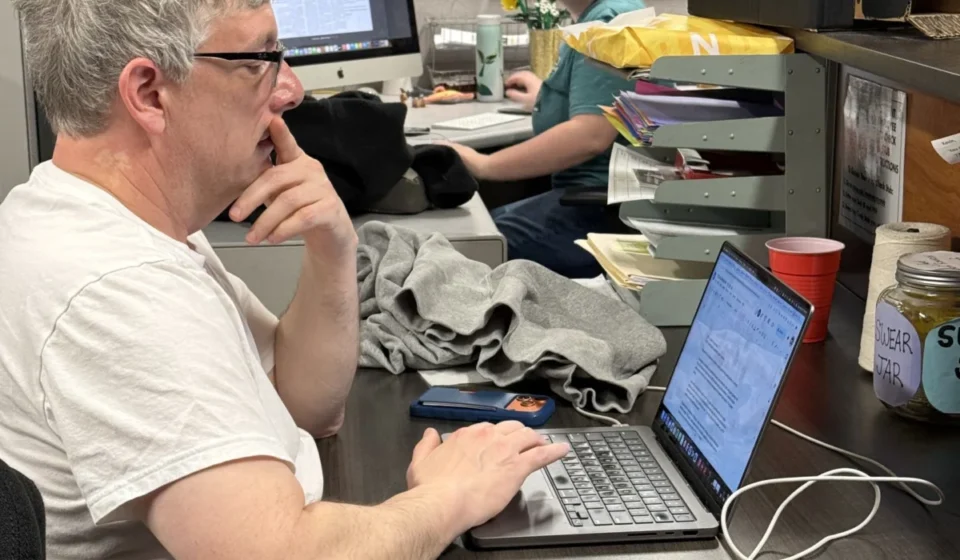
MANKATO, Minn. — The clock on the wall of The Reporter newsroom at Minnesota State University (MSU) reads 8:00 p.m. on a Monday. For most of the student body, the week is just beginning, but for editor-in-chief Anahi Zuniga and her staff, the most critical hour of the week is underway. In sixty minutes, the digital files for the week’s print edition must be transmitted to the local printing press.
Despite the looming deadline, the atmosphere is controlled, punctuated only by the rhythmic clicking of keyboards and the occasional murmur of editorial deliberation. Zuniga, a veteran of the newsroom, remains calm. She knows that by tomorrow morning, her work—and the work of her peers—will be sitting on newsstands across campus, documenting the life, grievances, and triumphs of the university community.
For Zuniga, this isn’t just about meeting a production quota; it is about the tangible preservation of history. "It’s a satisfying feeling," she says, gesturing toward a physical copy of the paper. "It keeps history alive."
The Chronology of a Deadline
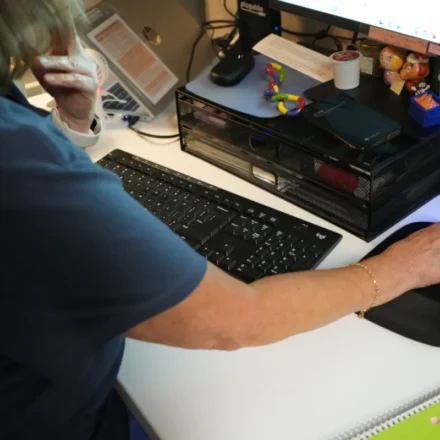
The workflow at The Reporter is a masterclass in organized chaos. By the time Monday morning arrives, the heavy lifting of reporting is already done. Articles have been vetted, interviews conducted, and photos color-corrected. The afternoon is dedicated to the final polish: sub-editing, headline writing, and the painstaking process of pagination.
As the 9:00 p.m. deadline nears, the tension shifts from the field to the newsroom floor. Editors Addie Larson, Alexis Darkow, Isaac Rozwadowski, and Logan Schlosser work in tandem, ensuring that every comma is in place and every fact is cross-checked. Once the final layout is approved, Zuniga oversees the digital transmission to the printer.
This process is a ritual that has repeated for a century. The Reporter recently celebrated its 100th anniversary, a milestone that underscores its status as a bedrock of campus life. Yet, as the ink dries on the latest edition—featuring a headline on a proposed 7% tuition hike—the team cannot rest. The moment the files are sent, the cycle resets. The editors retreat to Zuniga’s office, not to celebrate, but to map out the next edition. They are, in the purest sense, professional journalists in training, bound by the relentless rhythm of the news cycle.
Supporting Data: The State of Campus Media
The survival of The Reporter is particularly notable given the current landscape of student media in Minnesota. As traditional newspaper industries face headwinds—marked by shrinking ad revenues and the migration of readers to algorithmic social feeds—student publications are navigating a precarious transition.
The data reveals a fragmented landscape across the state’s higher education system:
- The Transition to Digital: The Minnesota Daily at the University of Minnesota, once a staple of print culture, has pivoted to a digital-first, daily-update model. Similarly, The Advocate at Minnesota State Moorhead has shifted primarily online, with print editions reduced to once per semester.
- Alternative Formats: Some institutions have abandoned the traditional newspaper format entirely. Bemidji State University’s Northern Student now operates as a quarterly magazine, while other campuses, such as Minneapolis College, currently lack a student-run publication altogether, though student government leaders are exploring options to revive one.
- Resilient Print Holdouts: Despite these shifts, several institutions maintain a robust print presence. The Winonan at Winona State University continues to publish bi-weekly, while private institutions—including the University of St. Thomas (The Crest News), Gustavus Adolphus College (The Gustavian Weekly), and Macalester College (The Mac Weekly)—continue to produce regular, often weekly, content.
Perhaps most surprising is the persistence of these papers at institutions that lack formal journalism departments. The Olaf Messenger (St. Olaf College) and The Carletonian (Carleton College) demonstrate that the desire to report, edit, and publish is an inherent academic interest that exists independently of a degree program.
Expert Perspectives: The Value of the Newsroom
For advisors like Doug Westerman, who guides the team at The Winonan, the value of a student newspaper extends far beyond the production of a weekly broadsheet. Westerman views the newsroom as a laboratory for ethical development.

"Every college paper has natural attrition," Westerman explains. "Through graduations and new students stepping in, the paper has been fortunate to have good student leaders over the years." When asked if he would ever consider hiring back his former student journalists, he laughs, noting that their departure is the ultimate sign of success.
Westerman emphasizes that the fundamentals of journalism—research, source verification, and objective storytelling—are more critical now than ever in the digital age. "You still have to check sources, you still need to do research, whether it’s going on a printed page or going on a post," he says.
This sentiment was echoed by Myron Medcalf, a veteran ESPN writer and Star Tribune columnist, during the centennial celebration of The Reporter. Medcalf, who served as the paper’s first African-American editor-in-chief in 2003, noted that the newsroom was his primary classroom.
"I learned the ins and outs of actually being on deadline, the accuracy that’s necessary in your reporting, the fact that you are communicating to an audience that’s much bigger than you are," Medcalf said. "It’s not about you. It’s about the people who are going to pick up your story and read it."
The Implications for Student Identity
The role of the student newspaper is as much about the development of the reporter as it is about the information provided to the reader. For Zuniga, the transformation has been personal. She admits that upon arriving at MSU, she lacked confidence in her own voice. The newsroom provided the structure and the necessity to speak up.
"I feel so sure of myself now and who I want to be after graduation," she reflects. "I can use my words as a way to express what I feel and think is necessary."
This empowerment is a recurring theme among student journalists. By engaging with the university administration, covering campus controversies, and holding institutional power to account, students are granted a "different lens" through which to view the world. They are not merely observers of their college experience; they are active chroniclers of it.
Looking Forward: A Century and Beyond
As the sun rises in Mankato and the latest edition of The Reporter hits the stands, the cycle of institutional accountability continues. While the medium may evolve—shifting from traditional newsprint to web-based archives—the necessity of the work remains unchanged.
The student newspaper serves as the institutional memory of the university. As Medcalf poignantly noted during his keynote, "One-hundred years from now, all of us are gone and what we will have left is what we contributed to this world. A big part of that, no matter what anyone tells you, will be the written word. It’ll be the archives from the MSU Reporter and all of these publications."
In an era of information overload and fragmented media, the humble college paper stands as a bastion of local, relevant, and verified news. Whether they are operating out of a dedicated journalism school or a small, cramped office with a few passionate volunteers, these students are doing the essential work of democracy: keeping their peers informed, holding their institutions accountable, and finding their own voices in the process.
For Zuniga and her staff, the work is never truly done. The next assignment is waiting, the next interview is to be scheduled, and the next deadline is already approaching. In the newsroom of The Reporter, the wheels are always in motion—and the ink is still very much wet.