



























































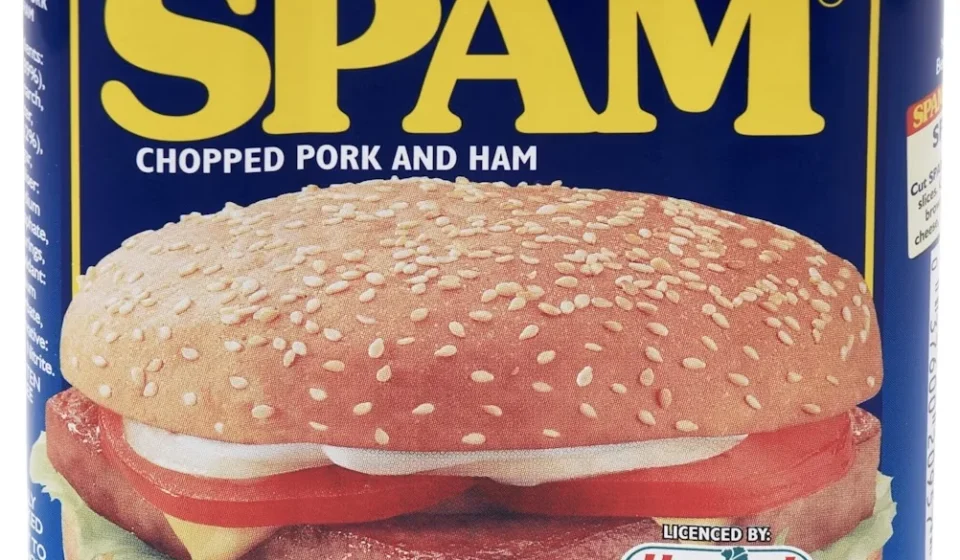
The Canned Icon: How Spam Transcended Its Humble Origins to Become a Global Phenomenon

In the pantheon of iconic American exports—alongside Coca-Cola, Levi’s, and the Golden Arches of McDonald’s—there sits a modest, rectangular blue-and-yellow can. It is a product that has been mocked, parodied, and elevated to the status of high-end culinary delicacy. Since its inception in 1937, Spam, the flagship canned pork product from Hormel Foods Corporation, has sold over eight billion cans across 44 countries. To understand the trajectory of Spam is to understand the evolution of 20th-century consumerism, military history, and the power of branding to turn a simple processed meat into a cultural touchstone.
Main Facts: The Anatomy of an Icon
Spam’s birthday, July 5th, arrives with poetic timing, falling just one day after the celebration of American independence. Much like the nation that birthed it, Spam has become a symbol of resilience and ingenuity. At its core, the product is a blend of pork shoulder and ham, salt, water, sugar, and sodium nitrite. While its basic composition remained remarkably stable for decades, a 2009 reformulation introduced potato starch to combat the accumulation of gelatin—a byproduct of the canning process that had long been a point of contention for consumers.
The product’s initial competitive advantage was purely logistical: it was the first canned meat on the market that required no refrigeration. In an era before the universal ubiquity of the household refrigerator, this "shelf-stable" nature was revolutionary. It offered families an affordable, protein-rich staple that could be stored in a pantry for months, providing a sense of security and preparation that resonated with the American middle class during the tail end of the Great Depression.
A Chronological Journey: From Pantry Staple to Global Soldier
The history of Spam is a roadmap of the 20th century. When Jay Hormel sought a name for his new product, he launched a contest that eventually crowned actor Kenneth Daigneau as the winner. While skeptics often point to the fact that Daigneau was the brother of a Hormel vice president as evidence of corporate cronyism, the name "Spam"—a portmanteau of "spiced" and "ham"—nonetheless became one of the most recognizable trademarks in history.
The World War II Catalyst
The true turning point for the brand occurred during World War II. As the United States military scrambled to feed troops in every theater of the global conflict, Spam became a cornerstone of the ration system. Over 150 million pounds of the meat were distributed to soldiers, ensuring that the brand was introduced to nearly every corner of the planet.
The utility of Spam on the front lines went beyond nutrition. Veterans have famously recounted using the meat’s grease to waterproof their boots and even to lubricate the mechanisms of their rifles. This unintended versatility cemented the product’s reputation as an indispensable, if sometimes unglamorous, tool of survival. When soldiers returned home, they brought with them a familiarity with the brand, while the populations they encountered abroad were introduced to a product that would eventually become a staple of their own local diets.
The Post-War Branding Machine
Following the war, Hormel realized that utility alone would not sustain a brand in a booming, competitive consumer market. Under the guidance of astute marketers, the company began to weave Spam into the tapestry of American life. The "Hormel Girls"—a troupe of female WWII veterans—traveled the nation, singing and promoting the product, effectively turning a canned meat into a household celebrity.
The latter half of the century saw a barrage of marketing ingenuity:
- 1976–2007: The "Spamarama" cooking festival, a whimsical celebration of the product.
- 1991: The opening of the official Spam Museum and the launch of massive recipe contests.
- 1995: Sponsorship of a NASCAR vehicle, linking the brand to the heart of American blue-collar sports.
- 2005: The debut of the Broadway hit Spamalot, which helped ironize the brand and introduce it to a younger, more urbane demographic.
Supporting Data: The Science of Brand Love
Marketing researchers, including Rajeev Batra, Aaron Ahuvia, and Richard P. Bagozzi, have long studied why certain brands command such intense loyalty. Their 2012 model of "brand love" suggests that consumers do not just buy products; they form emotional attachments to them through shared experiences. Hormel’s marketing strategy intuitively followed this model.
By positioning Spam not just as food, but as a symbol of American ingenuity and resourcefulness, Hormel transformed a simple product into a cultural icon. The introduction of new flavors—such as Spam with Bacon, Teriyaki, and Jalapeño—demonstrated a keen ability to listen to evolving consumer tastes. The company even introduced "Spam Spread," a calculated attempt to capture the market segment of those who preferred a spreadable consistency over a traditional slice.
Today, the success is quantified in both sales and social reach. In Hawaii, where the product is so culturally integrated that it is often referred to as "the Hawaiian steak," residents consume seven million cans annually. This is not merely a reflection of cost; it is a reflection of deep-seated cultural assimilation.
Official Responses and Culinary Adaptation
Hormel Foods has consistently maintained a stance of "embracing the irony." Rather than fighting against the jokes or the parodies, the company has leaned into the brand’s versatility. Whether it is a staple for a college student on a budget or a secret ingredient for a Michelin-starred chef, Hormel promotes the idea that "Spam hits the spot."
The global adaptation of Spam provides a fascinating look at cross-cultural culinary evolution:
- Hawaii: Spam Musubi (spam on rice wrapped in seaweed) has become a quintessential local snack found in every convenience store.
- South Korea: Spam is marketed as a high-end, premium gift, often sold in elaborate, expensive-looking tins during the Lunar New Year and Chuseok holidays.
- The Philippines: Spamsilog—a combination of Spam, fried rice, and a sunny-side-up egg—is a national breakfast favorite.
- United Kingdom: The "Spam fritter," a battered and fried slice of the meat, remains a comfort food staple in many traditional chip shops.
Implications: The High-End Irony of the 21st Century
Perhaps the most surprising evolution of the brand is its current status in the fine-dining world. Today, it is not uncommon to find Spam featured on the menus of high-concept restaurants. At the Liholiho Yacht Club in San Francisco, diners can order Spam fried rice elevated with seasonal mushrooms and uni. In Los Angeles, the restaurant Animal pairs the canned meat with foie gras, while New York’s Noreetuh serves Spam agnolotti with shaved burgundy truffles.
This movement toward the gourmet serves as the ultimate validation of the brand’s "brand experience." It suggests that the product has transcended its origins as a budget-friendly wartime ration to become a "blank canvas" for chefs. When a product is used by both the poorest consumer struggling to make ends meet and the wealthiest diner at a $40-per-entree restaurant, it has achieved a rare level of universality.
As we look toward the future, the longevity of Spam serves as a lesson for modern businesses. It proves that a product’s success is not solely dependent on its ingredients or its price point, but on the narrative woven around it. By consistently adapting to the times—whether through war, economic depression, or the rise of "ironic" gourmet dining—Hormel has ensured that Spam remains relevant. From the front lines of the 1940s to the white-tablecloth restaurants of the 21st century, the story of Spam is a testament to the enduring power of a brand that refuses to be ignored. It is, by all accounts, a slice of history that shows no sign of being served up for the last time.