

























































The Private Equity Paradox: Minnesota’s Legislative Battle Over the Future of Eldercare Transparency

ST. PAUL, MN — In the quiet corridors of the Minnesota State Capitol, a high-stakes debate is unfolding over who owns the beds in which the state’s most vulnerable citizens sleep. At the heart of the controversy is a legislative push to pull back the curtain on private equity’s growing footprint in the nursing home and assisted living industries—a move that proponents say is necessary for patient safety and that critics warn could destabilize a fragile sector.
Representative Liz Reyer (DFL-Eagan) is an unlikely crusader against corporate overreach. Before her election to the Minnesota House, Reyer spent decades in the trenches of market research, including a significant tenure at Blue Cross and Blue Shield of Minnesota. Her background is rooted in the intersection of healthcare and business; she is not a firebrand calling for the dismantling of capitalism.
“I don’t say ‘let’s ban private equity,’” Reyer stated in a recent interview. Yet, she is the chief House sponsor of a bill that seeks to impose some of the nation’s strictest disclosure and operational requirements on private equity firms looking to acquire eldercare facilities in the North Star State.
Main Facts: The Anatomy of the Proposed Legislation
The legislation, identified as HF 2771 in the House and SF 2772 in the Senate (sponsored by Sen. Alice Mann, DFL-Edina), represents a paradigm shift in how Minnesota monitors healthcare transactions. The bill is built on the premise that the "who" behind the ownership of a nursing home fundamentally dictates the "how" of the care provided.
The core of the proposal involves a series of rigorous hurdles for private equity firms:
- Mandatory 120-Day Notice: Before any sale of a nursing home or assisted living facility to a private equity firm can be finalized, the operator must notify the state four months in advance.
- Granular Transparency: The purchasing company would be required to submit a "bevy of disclosure statements," including a comprehensive and detailed map of the company’s corporate structure. This aims to pierce the veil of complex "shell" companies and subsidiaries that often obscure the ultimate owners.
- Past Performance Vetting: State regulators would be empowered to block a transaction if the private equity operator has been subject to adverse judgments or significant regulatory penalties within the previous ten years.
- Capital Investment Mandates: Perhaps most controversially, the bill would require new operators to prove they are investing sufficient capital to maintain and improve the facility’s physical infrastructure and staffing levels, rather than just extracting profit.
The bill is supported by a coalition of DFLers and consumer advocates who view private equity as a predatory force. Sen. Erin Maye Quade (DFL-Apple Valley) summarized this sentiment during a Senate Human Services Committee hearing: “Private equity’s sole purpose is to squeeze every single cent out of the function of whatever business they’ve glommed onto to ruin.”
Chronology: The Legislative Path and National Context
The push for this legislation did not happen in a vacuum. It follows a national trend where states are beginning to grapple with the "corporatization" of aging.
- 2015–2023: Nationally, private equity investment in healthcare surged. As traditional for-profit models faced tightening margins, private equity firms—driven by sophisticated institutional investors—saw an opportunity in the steady, taxpayer-funded revenue streams of Medicare and Medicaid.
- 2023–2024: States including California, Massachusetts, and Oregon passed similar transparency laws, responding to reports of declining care quality following private equity buyouts.
- Current Session (January–March 2025): The Minnesota bills were introduced and moved through the House and Senate Human Services Committees.
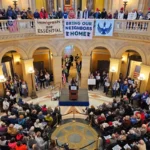
- This Week: Both committees held extensive hearings. Despite intense debate, neither committee moved to a formal vote. Instead, the bills were "laid over." In the lexicon of the Minnesota Legislature, this means the bills remain active and are likely being positioned for inclusion in a "gargantuan omnibus bill"—a massive, catch-all legislative package that is typically negotiated in the final weeks of the session.
- Simultaneous Action: Representative Reyer introduced a secondary, broader bill (HF 2779) that would require all healthcare facilities in the state to issue periodic reports on their ownership structure, moving beyond just the eldercare sector.
Supporting Data: Why Private Equity Raises Red Flags
To understand the urgency behind the bill, one must look at the data provided by healthcare economists and watchdog groups. Yashaswini Singh, a healthcare economist at Brown University, notes that private equity is distinguished not just by its corporate status, but by its "time horizon."
Unlike a non-profit or a family-owned business that may look at 30-year stability, private equity firms typically seek a return on investment within ten years or less. To achieve these rapid returns, Singh explains, firms often employ expedited cost-cutting measures. These include:
- Staffing Reductions: Trimming the number of Registered Nurses (RNs) or Certified Nursing Assistants (CNAs) to reduce the largest line item in a facility’s budget.
- Sale-Leaseback Agreements: A firm buys a nursing home, sells the real estate to a separate entity it also owns, and then forces the nursing home to lease the building back at a high price. This moves money from the "healthcare" side of the ledger to the "real estate" side, often making the facility appear broke while the parent company profits.
The impact on residents is measurable. A study led by Atul Gupta, a professor at Wharton Health Care Management, found that residents in private equity-owned nursing homes had a higher mortality rate compared to those in other for-profit or non-profit facilities. Gupta’s research also suggests these firms engage in "financial self-dealing" and tend to cherry-pick patients with lower health risks to maximize profit margins.
In Minnesota, the scope of the problem is currently a "known unknown." The Minnesota Department of Health (MDH) licenses 339 skilled nursing facilities and over 2,350 assisted living homes. While MDH knows if a facility is a non-profit or a business, it lacks the statutory authority to see the intricate corporate webbing of private equity.
“Private equity ownership is not identifiable from standard licensing types,” said Kelly Asche, a senior researcher at the Center for Rural Policy and Development. This lack of data is what Rep. Reyer calls being “thrust into dealings with complex and impersonal business identities,” where families may not even know who is ultimately responsible for their loved one’s care.
Official Responses: The Industry and Political Blowback
The legislation has met with stiff resistance from the Long Term Care Imperative, a powerful lobbying partnership representing Minnesota senior care providers.
The group argues that the industry is already drowning in oversight. A spokesperson for the Imperative noted that state regulators already have the power to request specific information and that "more paperwork and regulation" will only increase costs for seniors. They contend that the bill creates a "burden" that could ultimately harm "affordability and access to care."
Republicans in the legislature have expressed a mix of cautious agreement and outright alarm. Rep. Jeff Backer (R-Browns Valley), co-chair of the House Human Services Finance and Policy Committee, admitted he agrees with the goal of transparency. However, his colleague, Rep. Natalie Zeleznikar (R-Fredenberg Township), offered a more dire warning.
Zeleznikar, a former nursing home executive, pointed out that the number of nursing facilities in rural Minnesota is already declining. “There are not a lot of people waiting to buy nursing homes,” she said, citing the crushing expenses of 24-hour staffing. Her fear—and the fear of many in the GOP—is that by making it harder for private equity to invest, the state might inadvertently cause more facilities to close their doors, leaving seniors with nowhere to go.
Implications: The Future of Aging in Minnesota
The debate over HF 2771 is more than a technical dispute over corporate filings; it is a preview of the "Silver Tsunami" hitting Minnesota’s infrastructure. As the state’s population ages, the demand for long-term care will only intensify.
If the bill passes, Minnesota will join the ranks of "high-transparency" states, potentially setting a standard for the rest of the Midwest. It would signal to the private equity world that Minnesota is no longer a "buyer beware" environment, but a highly regulated market where care quality must be proven before profits are extracted.
However, the "laid over" status of the bill suggests a period of intense negotiation. Lawmakers must weigh the very real risks of private equity—higher mortality and lower staffing—against the risk of "capital flight." If private equity investors are scared away, the state may need to find alternative ways to subsidize the aging infrastructure of rural nursing homes, a cost that could run into the hundreds of millions of taxpayer dollars.
As the legislative session moves toward its crescendo in May, the "complex and impersonal business identities" Rep. Reyer spoke of will remain in the spotlight. For now, the conversation continues, with the state’s elderly population caught in the balance between the need for investment and the necessity of protection.
“We’re just going to keep the conversation going,” said Sen. John Hoffman (DFL-Champlin), chair of the Senate Human Services Committee. In the world of St. Paul politics, that conversation is often the prelude to a very large, and very significant, change in the law.