













































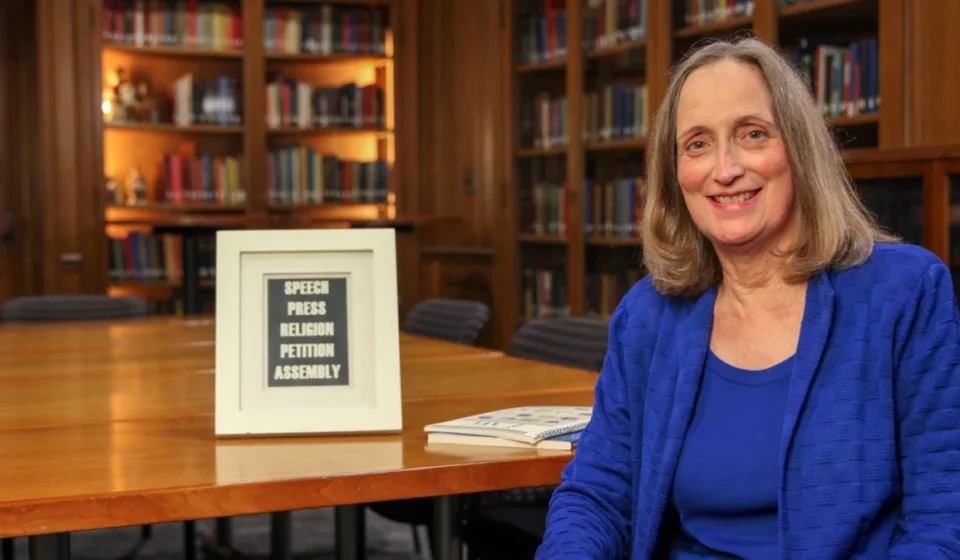

After more than two decades of defining the discourse on media ethics and the First Amendment, Jane E. Kirtley, the Silha Professor of Media Ethics and Law at the University of Minnesota’s Hubbard School of Journalism and Mass Communication, will officially retire on May 25. For generations of students, legal scholars, and journalists, Kirtley has served as the definitive voice on the constitutional protections that underpin American democracy. As she steps away from the podium, she leaves behind a landscape of journalism that is more perilous, technologically complex, and politically polarized than at any point in her distinguished career.
A Career Dedicated to the First Amendment
To understand the weight of Kirtley’s departure, one must look at the breadth of her influence. Her name has become synonymous with the defense of the First Amendment and freedom of information. Before joining the University of Minnesota faculty in 1999, Kirtley spent 14 years as the executive director of The Reporters Committee for Freedom of the Press in Arlington, Virginia—a critical period during which she became the primary advocate for journalists facing legal suppression. Prior to that, she honed her legal acumen during a five-year tenure as an attorney with a prominent law firm in New York and Washington, D.C.
Her retirement comes at a moment of profound introspection. Now 72, Kirtley reflects on a career defined by the pursuit of accountability. Her decision to step down was not reached lightly; she initially considered it in 2019 following the retirement of her husband, Stephen Cribari, a law professor at Notre Dame. However, the onset of the COVID-19 pandemic—and the resulting shift to remote learning—stalled those plans. Even more recently, she delayed her exit to monitor the potential legal challenges posed to media institutions during the second Trump administration.
"You just can’t take for granted you can keep doing the things you care about doing," Kirtley said, noting that she intends to prioritize her health and her passion for international travel, specifically citing a transformative five-month Fulbright teaching stint in Riga, Latvia, as a highlight she hopes to replicate in her post-academic life.
Chronology of a Shifting Legal Landscape
Kirtley’s career spans the transition from the post-Watergate "golden age" of journalism to the digital, algorithm-driven, and hyper-partisan environment of the 2020s. Throughout these decades, she has observed a steady erosion of the legal protections that once shielded the press from government retribution.
- The 1980s and 90s: A period marked by debates over the potential for the Supreme Court to revisit the New York Times v. Sullivan standard, which requires public figures to prove "actual malice" in libel suits. Despite fears that the court might weaken this protection, the precedent held firm.
- The Early 2000s: Kirtley joined the University of Minnesota, dedicating her work to the Silha Center for the Study of Media Ethics and Law, focusing on the intersection of privacy, intellectual property, and government transparency.
- 2016–Present: A period of unprecedented volatility. Kirtley identifies the weaponization of the legal system as the primary threat to the fourth estate. She notes that, unlike previous administrations, the current political climate has seen the adoption of novel legal theories—such as consumer fraud claims—to intimidate and silence media organizations.
The Weaponization of the Law: An Existential Threat
When asked about the biggest challenges facing the industry, Kirtley is blunt. She argues that the legal system is increasingly being utilized as a cudgel against independent media.
"I’ve been doing media law since the 1980s, so I have a long memory," Kirtley explained. "The biggest concern I have right now is the weaponizing of the law to go after the independent media. President Trump has been leading the charge on this."
She points to a shift in judicial philosophy that threatens the very foundation of free speech. For decades, the New York Times v. Sullivan standard has acted as a bulwark against frivolous libel suits meant to bankrupt newsrooms. Today, however, that protection faces significant jeopardy. With a Supreme Court that has shown a willingness to overturn long-standing precedents, Kirtley warns that the staying power of Sullivan is no longer a given. The potential loss of this standard represents, in her view, the greatest risk to the stability of American press freedom since 1964.
Ownership and the Public Interest
The crisis in journalism is not solely a legal one; it is also an operational one. Kirtley observes that the commercial model of journalism has undergone a fundamental transformation that prioritizes profit over the democratic function of the press.
"So many of the owners of media outlets today do not see them as vehicles for serving the public interest," she noted. "They see them as means for wielding power or maximizing profit or both."
She draws a distinction between the tycoons of the past, like William Randolph Hearst, who sought power but understood the necessity of a free press, and the current crop of venture capitalists and Silicon Valley owners. The latter, she suggests, lack the altruistic commitment to the watchdog function that was once the bedrock of the profession. This shift in ownership has fundamentally altered how newsrooms approach their coverage of the powerful.
The AI Dilemma: "The Devil’s Tool"
Perhaps the most visceral of Kirtley’s concerns involves the encroachment of artificial intelligence into the newsroom. Her disdain for AI is a primary driver behind her decision to retire; she feels she can no longer effectively train the next generation of journalists when the industry is embracing tools she views as fundamentally antithetical to accuracy and critical thinking.
"I hate AI. To me, it’s the devil’s tool," she stated. "Because of my negative feelings about it, I don’t feel able to train my students in how to use it. I would feel complicit in a plot to undermine so many values that matter to me."
Kirtley argues that AI lacks the ethical framework necessary for journalism. She highlights the trend of newsrooms using AI to rewrite or generate content, which she views as a disaster in the making. The removal of human copy editors—the individuals who hold reporters accountable for their sources and facts—signifies a decline in quality that AI cannot replicate. Even as institutions like The New York Times issue strict prohibitions against the use of AI in freelance work, Kirtley worries that the next generation, raised as "AI natives," will struggle to navigate the ethical pitfalls of these tools.
Regulatory Retaliation: The FCC and Beyond
Kirtley’s critique extends to the regulatory state, specifically targeting the actions of Federal Communications Commission (FCC) Chairman Brendan Carr. She describes the current administration’s approach to broadcast regulation as the most blatantly political interference she has witnessed in her career.
The attempt to target late-night entertainers and networks for their criticism of the President represents, for Kirtley, a violation not just of the First Amendment, but of the spirit of the Federal Communications Act of 1934. While the FCC has historically regulated "indecent speech," it has never been empowered to engage in viewpoint-based retaliation. By questioning whether talk shows qualify for the "equal time" exemption afforded to "bona fide news programming," the FCC is signaling a shift toward state-sanctioned censorship that could have chilling effects on political satire and commentary.
Implications for the Future of Journalism
The retirement of Jane Kirtley is more than just a faculty change at a university; it marks the passing of a torch in a profession currently fighting for its survival. The implications of the challenges she identifies are profound:
- A Credibility Gap: Decades of "fake news" rhetoric and the proliferation of information silos have made it difficult for legitimate journalism to break through. When the press is branded as an "enemy of the people," even the most robust fact-checking fails to persuade a skeptical public.
- The Loss of Human Oversight: As newsrooms lean into AI, the loss of human gatekeepers like copy editors and senior editors will likely lead to an increase in misinformation and a further decline in public trust.
- The Chilling Effect: The combined threat of regulatory retaliation from the FCC and the potential erosion of libel protections creates an environment where only the most well-funded outlets can afford to perform investigative journalism. Small, independent, and local newsrooms—the lifeblood of a functioning democracy—are the most vulnerable to these pressures.
As Kirtley prepares to leave the classroom, her legacy remains in the thousands of students she has equipped to fight for the truth. She admits that despite the "fear and uncertainty" that now characterizes the industry, she remains hopeful about the young people entering the field.
"I know there are still many young people who want and who need to do journalism," she said. "They want to hold government and other powerful institutions to account. They want to provide the public with information they need to make good, informed decisions."
Ultimately, Kirtley’s retirement serves as a stark reminder: a free press is not a static institution. It is a fragile one, requiring constant vigilance, a commitment to rigorous ethical standards, and a legal system that recognizes that the pursuit of truth is essential to the survival of a free society. As she departs, the challenge to uphold those values shifts to those she leaves behind.