























































By Jonny Evans | November 25, 2026
The boundary between cloud-based generative AI and the local operating system is dissolving. Anthropic, the developer behind the Claude AI model, has officially entered the next phase of the artificial intelligence revolution: the rollout of beta access for a feature that allows users to transform "Artifacts"—Claude’s standalone, interactive outputs—into live, installable applications on macOS and Windows.
This development marks a significant shift in how we interact with software. Rather than navigating to a browser to query a chatbot, users can now spawn persistent, functional mini-apps directly from a prompt. However, this convenience brings with it profound questions regarding data privacy, system integrity, and the future of the traditional application economy.
The Core Mechanics: What are Artifacts?
For the uninitiated, an "Artifact" is a distinct, modular output generated by Claude. Unlike a standard, fleeting chat response, an artifact is a standalone object—be it an interactive web page, a data-driven dashboard, a slide deck, or a functional design tool. Once generated, these artifacts reside in a dedicated sidebar within the Claude interface, allowing for iterative editing, sharing, and, now, deployment.
The process of building an artifact is deceptively simple. A user might provide a complex prompt—for instance, requesting a dynamic slide deck that visualizes global data center energy consumption against fluctuating consumer energy costs. Claude doesn’t just provide the text; it builds the environment. Once generated, the user can refine the visuals, tweak the underlying data models, and finalize the output.
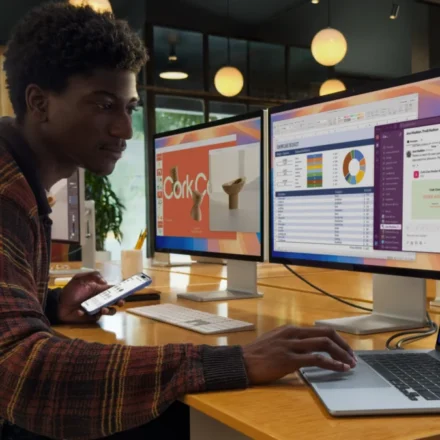
The transformative leap here is the "Install as App" functionality. By converting these AI-generated outputs into local applications, users gain the ability to run them in their own dedicated windows, complete with persistent icons and individual permission sets. These are not intended to be simple documents; they are designed for live, recurring tasks such as meeting preparation, automated order tracking, or real-time analytical workflows.
Chronology: The Evolution of AI Agents
The journey toward local, agentic AI has been rapid and aggressive:

- Early 2024: The emergence of LLM "chatbots" that function primarily as conversational interfaces.
- Mid-2024: Introduction of "Artifacts" by Anthropic, allowing for persistent, side-by-side editing of AI outputs.
- Late 2025: Growing industry focus on "Agentic AI," where models are given the capacity to perform actions rather than just providing text.
- November 2026: Anthropic announces the beta for installing Claude artifacts as standalone desktop applications, effectively moving AI from the web browser to the OS layer.
- Present Day: Apple and other OS providers move to implement stricter, user-controlled data silos, anticipating that AI agents will request deeper system access than ever before.
The "Sherlocking" Phenomenon: AI on Steroids
In the lexicon of tech history, "Sherlocking" refers to the practice where an operating system developer introduces a feature that renders a third-party application redundant—essentially absorbing the utility of that app into the OS itself.
Historically, this was a friction point between Apple and independent developers. Today, we are witnessing a new, more aggressive iteration of this: "AI Sherlocking." In this scenario, it is not a monolithic OS provider but AI companies themselves that are poised to make traditional app categories obsolete. If an AI can instantly generate a bespoke project management tool, a custom CRM, or a unique analytical dashboard on the fly, the need to purchase, install, and update specialized software from the App Store diminishes significantly.
This shift carries massive economic implications. The "App Economy," which has been the bedrock of digital commerce for nearly two decades, is built on the sale and taxation of software. If AI companies begin to replace these tools with ephemeral, generated applications, the traditional model of software acquisition—and the revenue streams derived from it—will face an existential threat.
Data Privacy and the Permissions Dilemma
With the power to run as local apps comes the necessity of system access. Anthropic has outlined a tiered permission structure, but the underlying risk remains: how much access should a user grant an AI-generated piece of code?
Apple has been preemptively responding to this landscape. Earlier this month, the company updated its macOS settings to provide users with granular control over data sharing. The message from Cupertino is clear: "Before granting an app such extraordinary access, users should understand that it puts all of the data on their Mac at risk."
This is not merely a bureaucratic hurdle; it is a fundamental security imperative. When you install an AI-generated artifact as an app, you are potentially granting that code the ability to read your files, track your inputs, and interface with your broader system. The ability for users to quickly rescind these permissions is a critical defensive measure in an age where the distinction between "helpful assistant" and "security vulnerability" is becoming increasingly blurred.
Implications: A Future of Trusted Agents
The move by Anthropic to turn artifacts into apps aligns with a broader industry trend: the commodification of AI. As AI models become ubiquitous, they must transition from being cloud-bound curiosities to integral parts of the local computing experience.

The Enterprise Perspective
For businesses, the promise of "on-the-fly" software is intoxicating. The ability for an employee to generate a custom tool to solve a specific, one-off operational bottleneck is a productivity dream. However, IT departments must now grapple with the governance of these artifacts. How do you secure data when an AI model can generate an app that might inadvertently leak sensitive information or bypass internal security protocols?
The Path for Apple and OS Providers
Apple’s strategy seems to be a bet on trust and privacy. By focusing on on-device AI and strict data retention policies, Apple is positioning its platform as the "safe" alternative to the wild west of third-party cloud-based agents. The company must continue to prove that it can offer the convenience of advanced AI while simultaneously acting as the custodian of the user’s digital life.
The real challenge for the next few years will not be which AI model is the "smartest," but rather which model is the most "trusted." As AI becomes capable of constructing the tools we use, the infrastructure that governs those tools must be robust, transparent, and—above all—under the user’s absolute control.
Conclusion: A Paradigm Shift
We are moving toward a computing environment where the software we use is as fluid as the conversations we have. The ability to install Claude’s artifacts as apps is a preview of a future where users no longer "buy" software, but instead "request" it.
This evolution requires a new level of digital literacy. As we embrace these new capabilities, we must be equally diligent in understanding the permissions we grant. The "Sherlocking" of the app economy is underway, and while it promises unprecedented efficiency, it also places the burden of security squarely on the shoulders of the individual user.
In this new era, the most valuable commodity is not the AI model itself, but the user’s trust—and the OS architecture that keeps that trust from being violated. As AI continues to "Sherlock" our digital lives, the battle for the desktop will ultimately be won by the platform that keeps the user, not the algorithm, in the driver’s seat.