

























































For more than four decades, the international community has been sounding the alarm on paraquat, a highly toxic, non-selective herbicide. Sweden led the charge in 1983, implementing a total ban as evidence of the chemical’s neurotoxic potential began to emerge. In the years that followed, over 70 nations—including the entirety of the European Union and, significantly, China, the primary home of paraquat manufacturer Syngenta—have moved to restrict or prohibit its use.
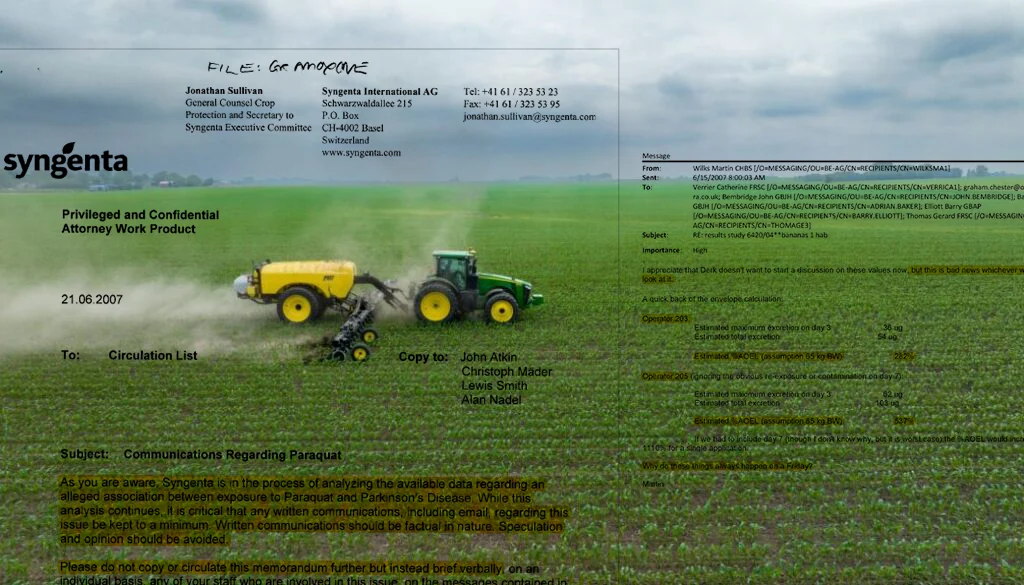
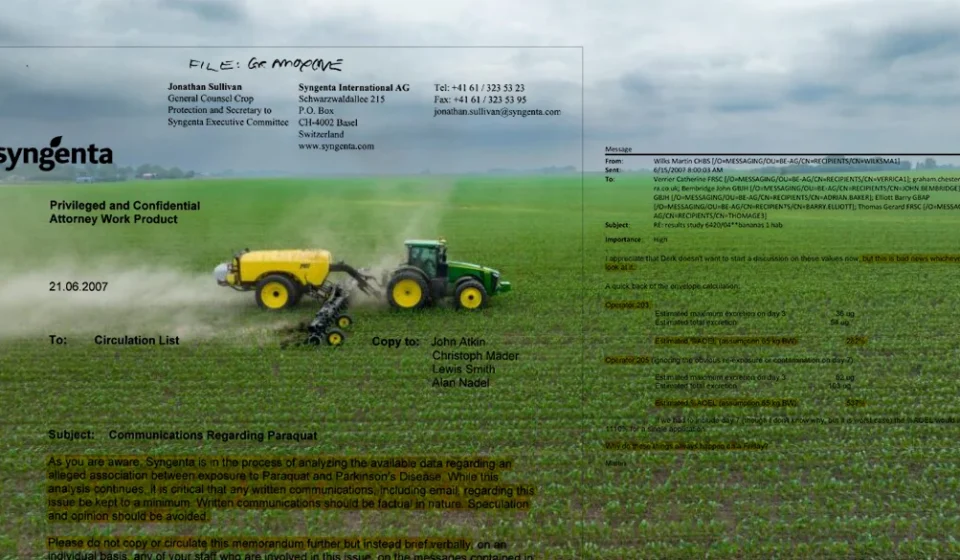
Yet, despite this global consensus, the United States has remained a defiant outlier. While the U.S. Environmental Protection Agency (EPA) has maintained that the chemical is safe when used according to label instructions, a staggering cache of 3,700 pages of internal Syngenta documents, recently unsealed in Pennsylvania state court litigation, suggests a different story. These records reveal a multi-decade campaign by the chemical giant to suppress critical safety data, manipulate scientific discourse, and lobby regulators to keep a "blockbuster" product on the market even as its own internal findings pointed toward dire health consequences.
A Chronology of Suppression: From Doubt to Strategy
The story of paraquat is not merely one of chemical exposure; it is a case study in corporate information control. The documents, which are part of more than 10,000 lawsuits filed by individuals suffering from Parkinson’s disease, paint a picture of a company acutely aware of the risks its product posed to the human brain.
The 1970s–1990s: Early Warnings and Internal Knowledge
As early as the 1970s, Syngenta’s predecessor entities were aware of the dangers associated with surfactants—additives used to help the herbicide penetrate plant tissue. Internal correspondence from 1975 reveals that company scientists explicitly identified the registration of a pre-mixed paraquat-surfactant product as "very undesirable due to increased toxicity." Data from animal studies conducted during this era confirmed that the addition of surfactants significantly increased the rate at which paraquat was absorbed into the bloodstream. Despite this, the company continued to market paraquat with instructions recommending that farmers mix it with surfactants, without disclosing the heightened absorption risks to the EPA.

The 2000s: The "Blockbuster" Defense
By the early 2000s, as independent researchers began to publish studies linking paraquat to Parkinson’s disease, Syngenta’s defensive strategy shifted from passive observation to active manipulation. A 2001 internal strategy document explicitly stated: "Our efforts will be to steer the focus of serious research away from paraquat and on to other agents."
The company embarked on a sophisticated effort to replace independent scientific consensus with "airtight" corporate-sponsored research. In a 2008 email, one Syngenta scientist went as far as to say, "What we want to do is brush aside 10 years of research by others and replace it with our own." To accomplish this, the company sought to hire top-tier researchers who could provide "impeccable data" that would stand up in court and before the EPA.
The 2010s–2020s: The Era of "Ghostwritten" Science
Perhaps most damning is the evidence of "independent" papers produced under the authorship of third-party consultants, such as epidemiologist Jack Mandel, who worked through the firm Exponent. In one instance, Syngenta employees discussed revising and improving a manuscript to ensure it appeared objective, noting that communications should ideally occur "verbally" so that the company could not be "seen to try to influence" the work.
When the government-funded "Farming and Movement Evaluation" (FAME) study—a gold-standard analysis—reported a significant association between paraquat and Parkinson’s, Syngenta commissioned its own internal analysis of the same data. While this internal review confirmed the "robustness" of the FAME study’s findings, the company marked the document as "Attorney-Client Work Product" and never shared it with the EPA.

Supporting Data: The Gaps in EPA Oversight
The Federal Insecticide, Fungicide, and Rodenticide Act (FIFRA) mandates that companies must report "factual information regarding unreasonable adverse effects" of their products to the EPA. However, the newly released records suggest that Syngenta systematically bypassed these requirements.
Among the critical information withheld from the EPA were:
- Studies regarding how quickly paraquat permeates protective clothing and human skin.
- Internal analyses of how paraquat’s toxicity is compounded by common surfactants.
- Internal reviews confirming the validity of independent studies that linked the herbicide to neurological decline.
- Data regarding inhalation toxicity that, had it been disclosed, might have altered the EPA’s risk assessments.
Critics, including Dr. Ted Schettler of the Science and Environmental Health Network, argue that the EPA’s reliance on industry-provided data creates an inherent conflict of interest. "This story illustrates the public health risks of allowing the US EPA to be the sole arbiter of pesticide safety," Schettler noted. "Untold numbers of people could have been prevented from developing Parkinson’s disease if the agency had done its job."
Official Responses: Denial and Regulatory Stasis
Syngenta has consistently rejected allegations of wrongdoing. In response to the unsealed documents, a company spokesperson stated that Syngenta has never "knowingly failed to provide regulators with relevant and required information." The company maintains that the withheld data was either irrelevant to U.S. regulatory standards or was superseded by other findings that minimized the risk. Regarding the decision to stop global production of paraquat earlier this year, the company insisted it was a purely commercial decision based on "market factors," and explicitly denied any admission of liability regarding the link to Parkinson’s.

The EPA, for its part, continues to stand by its position that there is "no clear link" between paraquat and Parkinson’s disease. In a statement, the agency noted that it bases its assessments on an "extensive database of information." When asked about the missing data, the EPA stated that it "cannot speculate on how this additional information would impact EPA’s assessment," but reaffirmed that "failure to comply [with reporting requirements] is a direct violation of federal law."
Implications: A Systemic Failure
The implications of these revelations extend far beyond a single company or a single chemical. The paraquat saga highlights a profound weakness in the American regulatory framework.
The Preemption Problem
The situation is further complicated by recent Supreme Court rulings that position the EPA as the preemptive authority for pesticide labeling. If the agency is deprived of accurate, honest data from the manufacturers, it cannot fulfill its duty to protect the public. Law professors like Wendy Wagner at the University of Texas argue that when companies "substitute their own judgment" for the legal requirement to report adverse effects, it creates "holes in our regulatory system with pretty obvious consequences for public health."
The Burden of Proof
The fact that China—the manufacturing hub of the product—conducted its own independent toxicity testing, while the U.S. EPA relied primarily on information funneled through the manufacturers, is a point of contention for health advocates. The "stealth nature" of China’s research was described as "alarming" by Syngenta insiders, precisely because it removed the company’s ability to influence the outcome.

A Call for Precaution
As the legal battle continues, the human cost remains mounting. Thousands of people are currently suffering from Parkinson’s, a progressive, incurable, and debilitating brain disease. For many, the evidence contained in these 3,700 pages is not just a collection of corporate memos; it is an indictment of a system that prioritized the longevity of a "blockbuster" chemical over the neurological health of the nation’s farmers and rural populations.
Tracey Woodruff, a professor of epidemiology at the Stanford University School of Medicine, summed up the sentiment of the scientific community: "When the pesticide companies know from their own studies that their pesticides are harmful and don’t tell the public or regulators, then they are knowingly contributing to people getting sick and dying."
As of late 2026, while Syngenta moves toward a global phase-out, the legacy of paraquat remains a stark reminder of the necessity for transparency, independent verification, and a precautionary approach to the chemical products that define modern agriculture. The "Paraquat Papers" serve as a definitive record of a failure that may take a generation to fully address.