



















































The Awakening of the North: Target’s Return-to-Office Mandate and the Revitalization of Downtown Minneapolis

MINNEAPOLIS — For years, the Monday morning rhythm at Corner Coffee in the heart of downtown Minneapolis was defined by a quiet, steady trickle of local residents and the occasional remote worker. That changed abruptly during the first week of September 2025. Mia Pariseau, the store’s manager, found herself facing a scene reminiscent of 2019: a line of five or more customers stretching toward the door, sustained for over an hour of frantic service.
“We got just slammed,” Pariseau remarked, reflecting on the sudden surge in foot traffic. “And it was just me and one other person here.”
The catalyst for this sudden caffeinated rush is located just down the street. Target Corporation, the city’s second-largest employer and a cornerstone of the downtown economy, officially implemented a new return-to-work policy for its commercial unit on September 2. The mandate requires employees to be in the office at least three days a week, ending an era of primarily remote work that had left the retailer’s massive headquarters—and the surrounding businesses—largely hushed for half a decade.
As the "Target effect" ripples through the Nicollet Mall and the skyway system, Minneapolis finds itself at a critical juncture. The city is attempting to transition from a post-pandemic "ghost town" into a modern, hybrid urban center, balancing the needs of a workforce that has grown accustomed to flexibility with the economic necessity of a vibrant downtown core.
Main Facts: A City in Transition
The return of Target’s commercial unit marks one of the most significant milestones in the Twin Cities’ post-pandemic recovery. According to the Minneapolis Downtown Council, in-person work has now climbed to nearly 75% of pre-pandemic levels. This figure is expected to rise further as the data from Target’s latest policy begins to stabilize and other employers follow suit.
Target is not alone in its push for physical presence. Of the top 15 employers in the downtown area, 12 have now instituted formal back-to-office policies. This includes industry giants such as Wells Fargo and Ameriprise Financial. While Hennepin Healthcare remains the largest employer in the district, its workforce has largely remained on-site due to the nature of medical care; it is the return of the "white-collar" corporate sector that is currently driving the visible shift in street-level energy.
The influx of workers is not just a boon for coffee shops. It represents a fundamental shift in the "vibrancy" of the city. Madelyn Dunn-Lammert, an associate designer for Target who has spent much of her three-year tenure working remotely, noted that the change is palpable.
“It’s more vibrant and exciting during the day,” Dunn-Lammert said. She emphasized that for creative professionals, the physical office offers benefits that Zoom cannot replicate. “Being able to grab lunch with co-workers or work through a project in-person helps build team connections and facilitate collaboration.”

Chronology: From "Ghost Town" to the September Surge
To understand the weight of the current revitalization, one must look back at the trajectory of the Minneapolis workforce over the last five years.
- 2020–2021: The Great Hushing. Following the onset of the COVID-19 pandemic, downtown Minneapolis saw a more dramatic exodus than many of its peer cities. Federal Reserve Bank of Minneapolis data shows that in 2021, Minnesota’s share of primarily remote workers stood at 21%, significantly higher than the national average of 17.9%. During this period, attorney Jenny Lissarrague, who has worked downtown since 2012, described the area as a "ghost town."
- 2022–2023: The Hybrid Experiment. As health concerns stabilized, Minnesota began to "catch up" with national trends. By 2022, the remote work share dropped to 16.9%. However, many major corporations remained hesitant to mandate a full return, opting instead for "voluntary" office days that left the skyways sparsely populated on Mondays and Fridays.
- June 1, 2025: The Public Sector Lead. A major shift occurred early in the summer of 2025 when Minnesota state government employees were required to spend at least 50% of their workdays in the office. This move was met with significant resistance, including strike threats from labor unions, but it served as a bellwether for the private sector.
- September 2, 2025: The Target Mandate. The arrival of the post-Labor Day "back-to-school" energy coincided with Target’s commercial unit return. This has been the most significant "shot in the arm" for downtown retail and service providers since the pandemic began.
Supporting Data: The Economic and Logistical Landscape
The recovery of downtown Minneapolis is a numbers game, and the data suggests a steady, albeit uneven, upward trend.
The Remote Work Gap
The Federal Reserve Bank of Minneapolis has closely tracked the evolution of Work From Home (WFH) in the Ninth District. Minnesota’s initial reliance on remote work was a double-edged sword. While it protected the state’s high concentration of professional services during the pandemic, it delayed the economic recovery of the urban core. The drop from 21% remote work in 2021 to the current levels reflects a massive migration of labor back into physical office spaces.
The Skyway Pulse
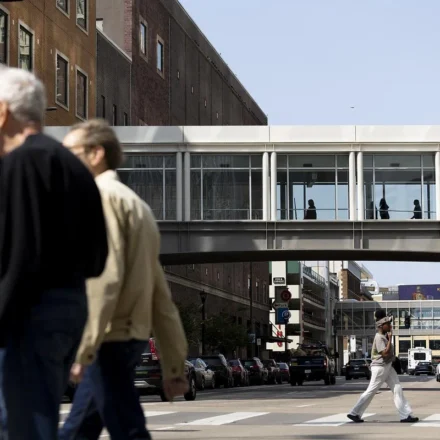
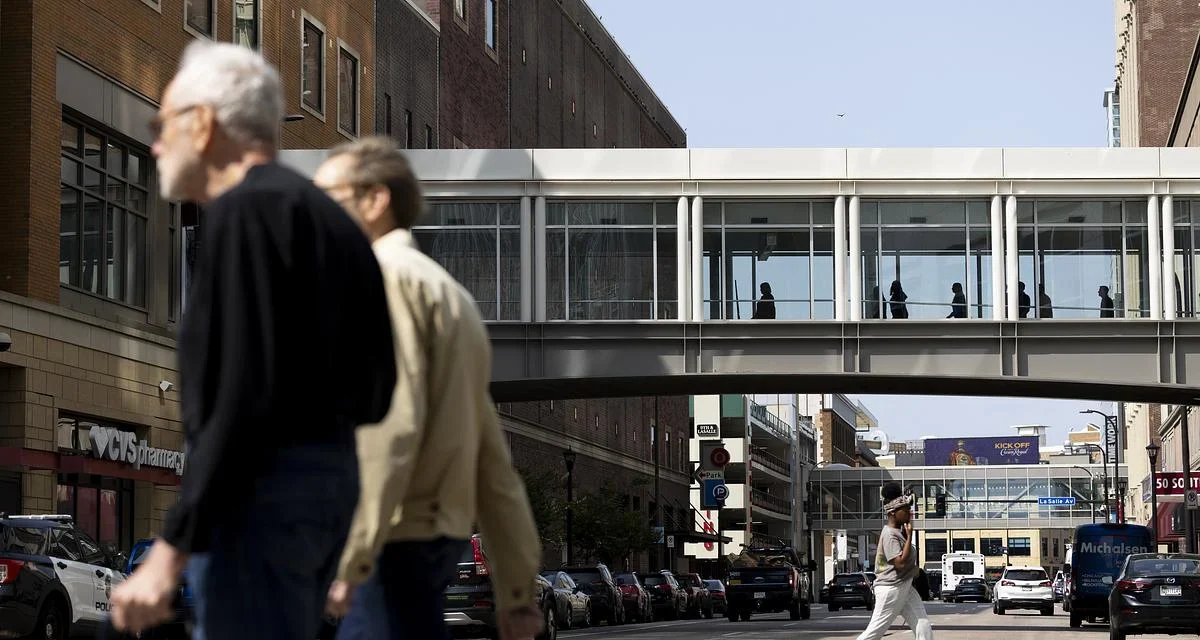
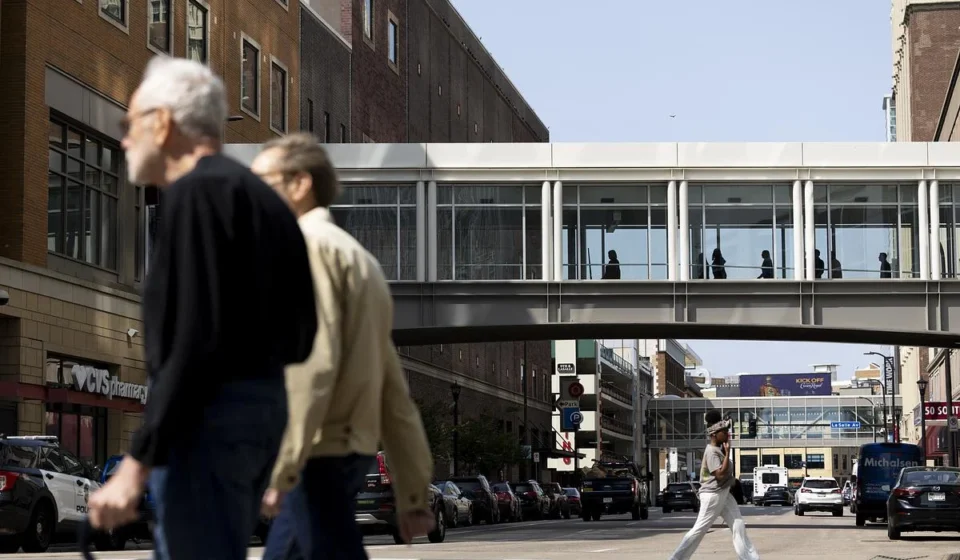
The Minneapolis skyway system—the largest contiguous system of enclosed second-level bridges in the world—serves as the city’s circulatory system. Observers note that while the street-level Nicollet Mall is seeing more activity, the skyways are where the 75% recovery is most visible. However, the "spread out" nature of the modern workday means that the traditional 8:00 AM rush has transformed into a more fluid movement of people, with many employees arriving closer to noon to avoid peak congestion or to accommodate hybrid schedules.
Corporate Alignment
The commitment of the "Top 15" employers is crucial. With 80% of these major players now requiring in-person attendance, the "critical mass" needed to sustain downtown restaurants and services is finally being reached. However, as Kittie Fahey of the Minneapolis Downtown Council points out, the quantity of people is only half the battle; the "stickiness" of their presence is the next challenge.
Official Responses: A Call for Community Re-Engagement
Kittie Fahey, senior director of advancement for the Minneapolis Downtown Council, is the primary advocate for this new era of urban life. While she celebrates the return of workers, she warns that a "9-to-5" mindset is not enough to restore the city to its former glory.
“Go out for lunch, stay after and go meet friends, go do some things,” Fahey urged. “Use all the resources we have.”
The Downtown Council’s vision is to bridge the gap between the professional sphere and the social sphere. Fahey notes that the city now boasts roughly 60,000 residents who live in the downtown core. The goal is to create an ecosystem where the 9-to-5 commuter and the 24/7 resident mingle in the same spaces, creating a self-sustaining economy.

However, Fahey acknowledges the hurdles. The "vibrancy" of a city is often measured by its nightlife, and in this regard, Minneapolis is still struggling. “You’d be hard-pressed to find, in the central business district, a restaurant open until 11 p.m.,” Fahey said. “That’s crazy different than pre-pandemic.” The lack of late-night options creates a "chicken and egg" problem: workers leave early because nothing is open, and businesses stay closed because workers leave early.
Implications: The Long Road to Full Recovery
While the mood at Corner Coffee is one of optimism, the long-term implications of the return-to-office movement reveal several systemic challenges that Minneapolis must address.
The Transit Hurdle
For many returning workers, the infrastructure of 2025 does not match the needs of the pre-pandemic commute. Jenny Lissarrague noted that getting downtown is more difficult than it used to be. As remote work spiked, Metro Transit and other providers reduced bus frequencies. Now that the demand is returning, the "transit desert" in certain suburbs is making the three-day-a-week mandate a logistical headache for employees.
The Evolution of the Workplace
The "Target effect" is not just about filling desks; it is about redefining what the office is for. As Madelyn Dunn-Lammert pointed out, the office is becoming a "collaboration hub" rather than a place for heads-down tasks. This shift may lead to a permanent change in downtown real estate, with more demand for meeting spaces and social lounges and less for traditional cubicle farms.
Economic Resilience
The survival of small businesses like Corner Coffee depends on the consistency of this return. The "slamming" of a shop on a Monday morning is a positive sign, but for the downtown economy to be truly resilient, it needs to weather the "Tuesday-Wednesday-Thursday" hump and the "Friday slump" that often accompanies hybrid models.
A Bright, if Different, Future
As the city moves further into the autumn of 2025, the "ghost town" labels of 2020 and 2021 are fading into memory. The return of Target’s workforce has acted as a catalyst, sparking a renewed sense of possibility in the central business district.
The revitalization of Minneapolis is no longer a question of "if," but "how." The city is not simply reverting to 2019; it is carving out a new identity—one that is more flexible, more residential, and perhaps more appreciative of the simple act of standing in a coffee line with five other people on a Monday morning.
As Mia Pariseau of Corner Coffee puts it, looking out over her busy storefront: “The future is bright.”