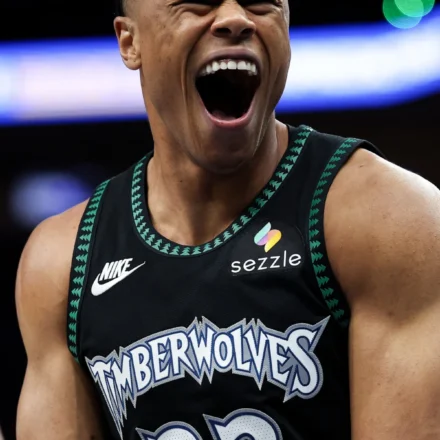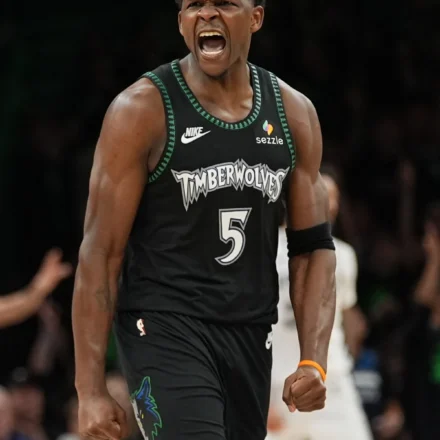



















































As the Minnesota Timberwolves prepare for the upcoming NBA season, the shadow of the previous campaign’s injury-plagued, inconsistent run looms large. Seeking to stabilize the rotation and reclaim their status as a Western Conference powerhouse, the organization’s front office took a calculated risk this summer, securing high-upside free agent Jonathan Kuminga.
In the third installment of an exclusive 80-minute interview with MinnPost, Timberwolves Head Coach Chris Finch sat down to discuss the delicate art of roster construction. From the tactical integration of Kuminga to the evolution of key bench contributors like TJ Shannon, Ayo Dosunmu, and the ever-enigmatic Jaylen Clark, Finch provided a granular look at the coaching staff’s philosophy as they attempt to assemble a cohesive unit.
The Kuminga Mandate: A "Prove It" Gamble
The most significant move of the Timberwolves’ offseason was the acquisition of Jonathan Kuminga, a player widely viewed as the missing piece at the power forward position. While Kuminga’s physical tools have never been in doubt, his role within a high-stakes team structure remains a focal point for the coaching staff.
"It is his job to lose," Finch stated clearly regarding the starting power forward slot. However, the coach was quick to temper expectations regarding individual statistics. While many observers equate a "prove it" contract with high point totals, Finch is looking for a different kind of production—one rooted in defensive versatility and rebounding.

"The way that he wins it most rapidly is by solidifying our defense into elite," Finch explained. "He’s going to fit right in because he has the same problem we all have: he fouls too much. So let’s get that under control teamwide."
Beyond the defensive end, the coaching staff is focused on how Kuminga functions within the team’s offensive flow. With playmakers like LaMelo Ball and Jaden McDaniels commanding significant usage, Kuminga is expected to operate primarily as an off-ball cutter and a transition threat. Finch drew a parallel to the team’s usage of McDaniels, noting that Kuminga might serve as a "barometer" for the offense—when he is getting touches within the flow of the game rather than forcing isolations, the team is functioning at its peak.
Learning from the Golden State Experience
A recurring theme in the conversation was the difficulty of Kuminga’s transition from the rigid, highly specialized system of the Golden State Warriors. Finch expressed a nuanced understanding of why that tenure may not have fully blossomed, noting that the expectations and the "unique brand of basketball" in San Francisco created a difficult environment for a young player to navigate.
"It is hard to come into something as a rookie like what was happening in Golden State," Finch said. "I don’t blame any of the parties who are scratching their heads about why that did or didn’t work. I do know that not every player can come in and play in that system."

In Minnesota, the goal is to provide a more collaborative environment. Finch is committed to allowing Kuminga the "license to be who he is," specifically in terms of leveraging his isolation ability when the matchup dictates, provided it remains within the context of the team’s overarching offensive structure.
Bench Dynamics: Shannon, Dosunmu, and the Playmaking Void
With the starting lineup taking shape, the focus shifts to the second unit, where TJ Shannon and Ayo Dosunmu are expected to share significant floor time. For Finch, the key to this pair is the development of their collective playmaking.
Shannon, known for his explosive athleticism, is currently in a phase of "self-regulation." Finch noted that while Shannon has a natural talent for attacking the heart of the defense, his tendency to tunnel-vision during finishing attempts must evolve. "He needs to self-regulate and, when we put that ball in his hands, have the mindset of making the right play," the coach added.
Ayo Dosunmu, conversely, offers a level of stability that allows Finch to sleep better at night. "He’s super-smart, his game is simple and repeatable," said Finch. "He is outstanding in transition, great finisher, his three-point shot has become real." While Dosunmu’s simplicity is his greatest strength, the coaching staff is challenging him to increase his reads to elevate the unit’s overall efficiency.

Defensive Nuance: The Clark and Hyland Factor
The conversation also turned to the fringe rotation players: Jaylen Clark and Bones Hyland. Each player represents a different challenge for the coaching staff as they vie for meaningful minutes.
For Bones Hyland, the directive is singular: defense and aggression. Finch believes the Western Conference has become a landscape of physical, downhill-attacking guards, and Hyland must develop the physical resilience to match that intensity. Offensively, Finch wants to see a "let-it-fly" mentality, noting that Hyland’s best performances often mirror his own confidence levels.
Jaylen Clark, a fan favorite of the coaching staff, represents a different developmental trajectory. Finch highlighted Clark’s innate ability to disrupt play during the "sliver of time" when a possession is in flux. "He makes a lot of plays out of nothing," Finch remarked. However, the hurdle for Clark is learning the nuance of defending elite-level scorers. As the coach pointed out, "You can’t guard them all the same," and Clark’s tendency to treat all matchups with a singular approach is an area he must master to move up the depth chart.
Roster Implications: Trey Lyles and the Small-Ball Future
Finally, the discussion touched upon the status of veteran Trey Lyles. While the Kuminga signing has naturally tightened the rotation at the four, Finch sees a distinct role for Lyles, particularly in small-ball lineups.

Despite acknowledging that a consistent 22-minute-a-night role is unlikely, Finch values Lyles for his veteran presence and his ability to attack close-outs. "What I really like is his attacking on close-outs. He can make good decisions out there," Finch noted. With the departure of Naz Reid, Lyles’ ability to stretch the floor as a big man provides a strategic cushion for the Timberwolves, even if his role remains situational.
Summary of Expectations
As the team moves into the preseason, the Timberwolves are clearly focused on building a "winning DNA" that prioritizes defensive accountability, efficient shot selection, and chemistry. Finch’s comments reveal a coach who is acutely aware of the talent on his roster but equally cognizant of the fact that talent alone is insufficient.
The integration of Kuminga, the maturation of the second-unit guards, and the tactical flexibility offered by players like Clark and Lyles will ultimately define whether the Timberwolves can transition from a team of potential to a legitimate contender. As the fourth and final part of this interview series approaches later this week, the picture of what this 2026-2027 roster looks like under pressure continues to come into sharper focus. The message from the top is clear: the bets have been placed, and now it is time to prove it on the court.