

























































The Silicon Shift: Why Enterprises Are Abandoning the Cloud for Local AI on Apple Hardware

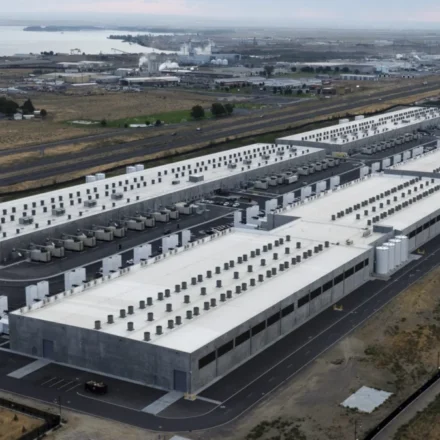
In a landscape dominated by the high-stakes, high-cost race for cloud-based artificial intelligence, a quiet but profound transformation is taking place within the enterprise sector. As businesses grapple with the ballooning expenditures of AI data center investments and the persistent specter of data privacy vulnerabilities, a new strategy is emerging: the move toward local inference.
Apple’s recent Q4 financial results, while highlighting a staggering $33 billion hit due to memory price inflation—a figure that underscores the unsustainable nature of current AI data center demand—also signaled a pivot point in the industry. For many organizations, the future of AI is not in a distant, expensive server farm; it is on the desktop, the laptop, and the mobile device.
The Economics of Inference: A Shift in Strategy
The narrative surrounding AI has long been focused on the "cloud-first" paradigm. However, the sheer cost of processing millions of tokens via third-party AI APIs has begun to weigh heavily on corporate balance sheets. Enterprises are increasingly viewing the cloud-based model as a "rent-forever" liability, whereas local deployment represents a capital investment that pays dividends over time.
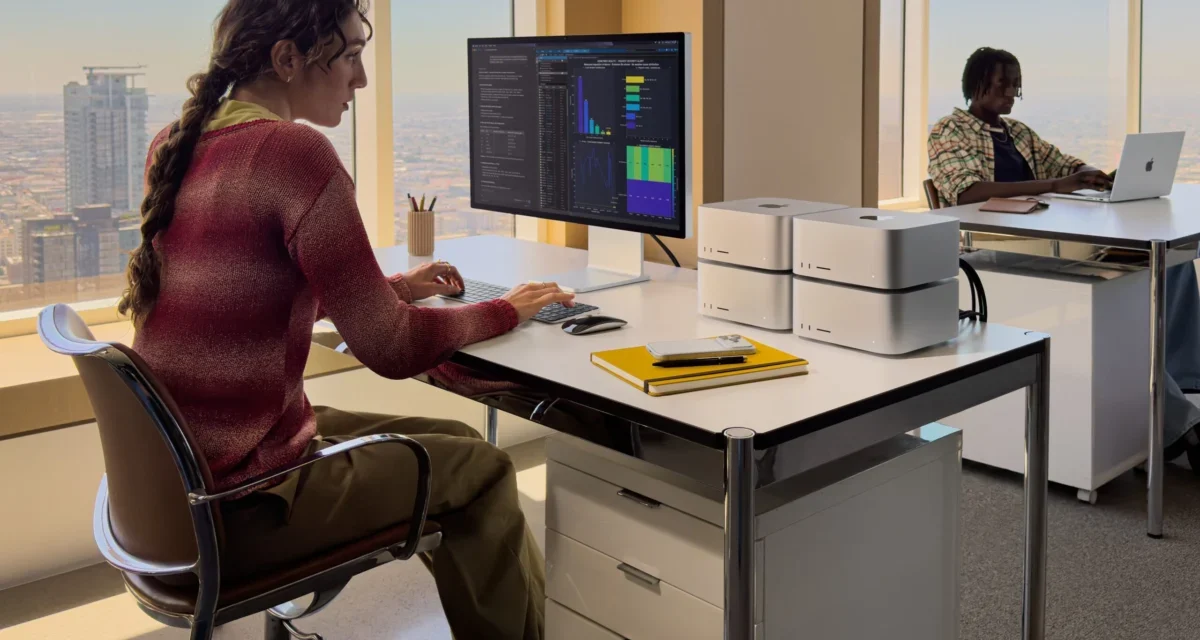
Apple’s latest financial disclosure serves as a bellwether for this trend. While memory costs have surged, the company is successfully marketing its high-performance silicon—the M-series and A-series chips—as a cost-effective alternative to cloud infrastructure. When a Mac Studio or a high-end Mac mini can handle the same inferencing tasks that would otherwise cost tens of thousands of dollars in cloud tokens annually, the hardware pays for itself in record time.
Real-World Adoption: Early Adopters Lead the Way
The trend is no longer theoretical. Apple confirmed that major enterprise players are already optimizing their operations by moving AI workloads to local hardware:
- Gap Inc. has transitioned its loss-prevention models to run entirely on Mac minis, effectively eliminating the per-token costs associated with cloud-based security monitoring.
- Christie’s, the world-renowned auction house, has deployed Mac Studio units to power its proprietary pricing estimate models, ensuring speed and data sovereignty.
These implementations represent a fundamental shift in IT strategy. By bringing the computation to the data—rather than sending the data to the computation—these firms are circumventing the latency, cost, and security risks inherent in public cloud environments.
Chronology of a Transformation
The rise of local AI did not happen in a vacuum. It is the result of a multi-year convergence of hardware evolution and enterprise necessity.
- 2023-2024: The Foundation of Silicon. Apple’s commitment to the Apple Silicon transition provided the necessary thermal efficiency and raw computational power to handle complex machine learning models on consumer-grade hardware.
- Mid-2026: The "Cloud Tax" Realization. As enterprises scaled their AI pilots, they encountered the "token tax." CFOs began questioning the long-term viability of cloud-based AI as invoices for API calls began to rival legacy software infrastructure costs.
- Q4 2026: The Enterprise Pivot. During its latest earnings call, Apple solidified its position as an AI hardware provider, announcing major enterprise deals that go beyond simple workstation deployment. These include 25,000 iPads for American Airlines’ fleet operations, 37,000 iPhone 17s for flight attendants, and a massive deal for 170,000 MacBook Neos within the Philippines’ Department of Education.
- Current State: The focus has shifted from "can we do this?" to "how do we scale this?" with Apple providing the necessary developer tools to make local, private AI a default choice for corporate environments.
Supporting Data: Why Hardware Wins
The technical argument for local AI rests on the performance-to-cost ratio of Apple’s current hardware stack. Unlike traditional x86 server racks that require massive cooling and dedicated electrical infrastructure, Apple’s M-series architecture offers high-throughput performance with minimal power draw.
The "Four-Mac" Strategy
Industry experts have noted that an organization can cluster four Mac Studio devices to create an on-premises AI inference cluster that rivals server-grade performance for a fraction of the cost. This "patchwork" approach to local infrastructure provides:
- Lower Latency: Data does not need to leave the local network, enabling near-instantaneous responses for time-sensitive applications.
- Privacy by Design: By keeping sensitive corporate data behind the office firewall, firms satisfy strict data governance and compliance requirements that often prohibit the use of public cloud LLMs.
- Predictable OPEX: Eliminating variable token costs transforms AI expenses from an unpredictable, usage-based cost into a fixed, manageable hardware depreciation schedule.
Official Perspectives: The View from Apple
Apple CEO John Ternus has been vocal about the company’s intent to dominate the AI ecosystem by serving as the primary platform for both creation and consumption.
"From Mac to iPhone to iPad, we are proud that our products are the best platforms in the industry for AI for both first-party and third-party applications," Ternus stated during the earnings call. He emphasized that the company is playing a "long game," where hardware sales are just the gateway to a more integrated, private AI experience.
The Monetization Strategy
Apple is not merely selling hardware; it is creating a tiered ecosystem for AI consumption:
- For Developers: To encourage the growth of local AI, Apple has eliminated token costs for developers with apps under two million downloads, effectively subsidizing the startup ecosystem.
- For Enterprises: The company has introduced a three-tiered system for its Private Cloud Compute (PCC) infrastructure, allowing businesses to balance local processing with secure, cloud-based bursts when necessary.
- For Consumers: Through iCloud+ tiers, Apple is formalizing a model where heavy server-side AI access becomes a value-add for subscribers, turning what was once a storage utility into a powerful AI-as-a-service platform.
Implications: The Future of AI Governance
The shift toward local AI has significant implications for the broader tech industry. If enterprises continue to move workloads to the "edge" (local devices), the reliance on massive, centralized data centers may plateau.
The Rise of Agentic AI
Perhaps the most intriguing development mentioned by Ternus is the evolution of Siri into an agentic AI. Current AI models are largely "request-based," but Apple’s modern orchestrator-driven architecture is designed to handle "agentic" workflows—where the AI performs multi-step tasks across apps on behalf of the user.
This shift presents both opportunity and risk. As Ternus noted, "We just want to make sure that users are aware of what they’re giving access to." This conservative approach to privacy is precisely what is attracting enterprise clients who are wary of the "black box" nature of public AI models.
A New Competitive Moat
By controlling the hardware, the operating system, and the deployment architecture, Apple is building a moat that its competitors—who largely rely on selling cloud services—cannot easily bridge. If the enterprise market decides that privacy and cost-efficiency are the two most important metrics for AI adoption, Apple is uniquely positioned to capture that demand.
The takeaway for CIOs and IT managers is clear: the era of blind investment in public cloud AI is nearing its end. We are entering an era of "local-first" intelligence, where the devices on our desks are not just terminals for the cloud, but the primary engines of the AI revolution. As the industry recalibrates, those who have invested in the hardware foundations of local inference will likely find themselves in a significantly stronger position than those tethered to the volatility of the cloud.
The battle for the future of AI is no longer just about who has the biggest data center; it is about who provides the most secure, efficient, and cost-effective platform for the AI of the individual and the enterprise. On that front, Apple’s strategy is not just gaining momentum—it is setting the standard.