


















































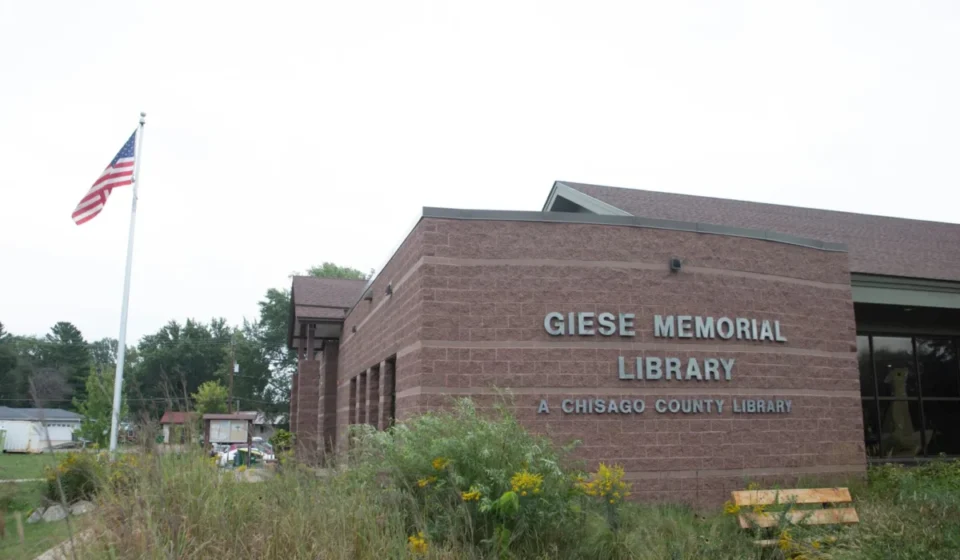
The After-Hours Evolution: How Rural Libraries Are Reimagining Access in an Era of Scarcity

For Michael Sayen, a resident of Forest Lake, Minnesota, the local library is far more than a repository for books. It is a vital sanctuary—a quiet place to draft a novel, a reliable environment for filing time-sensitive legal documents, and a climate-controlled refuge from the fluctuating Midwestern weather.
"We just had Labor Day, and the library was closed all day," Sayen remarked recently while working at the Wyoming, Minnesota, branch of the East Central Regional Library (ECRL). "But because of the extended access program, I can come in here, get my work done, and utilize the resources I need regardless of the calendar."
Sayen’s experience highlights a growing trend in the American library landscape: "Extended Access." As rural communities grapple with budget constraints and limited operating hours, library systems across the United States are deploying technology to bridge the gap between public need and operational reality. By allowing patrons to enter facilities when no staff are present, libraries are transforming from rigid, schedule-dependent institutions into flexible, community-centric hubs.
The Mechanics of Access: How It Works
Across the country, the concept goes by many names—Open+, Expanded Access, or simply Extended Access—but the core utility remains consistent. These programs empower registered patrons to enter library buildings using their existing library cards as digital keys.
The Enrollment Process
While the ultimate goal is convenience, the barrier to entry is designed with security in mind. At the ECRL branch in Wyoming, the process requires a 15-minute in-person orientation. During this session, new users are briefed on safety protocols, including the locations of automated external defibrillators (AEDs), first aid kits, and emergency exits.
The security infrastructure is significant. Once inside, users are monitored by security cameras, and every entry is logged via the individual’s unique library card. This traceability is a cornerstone of the system’s safety model. "If we have issues, because you have to sign in and are on camera, we are able to identify the individual and revoke their privileges quickly," says Carla Lydon, executive director of ECRL.
Similar programs in places like the Timberland Regional Library in Washington state, the Summit County Library in Utah, and the Independence Public Library in Kansas have mirrored this approach. While age requirements vary—ranging from 14 to 18 years old—the objective is universal: to provide a secure, self-directed environment for reading, research, and digital connectivity.
Chronology of a Digital Transformation
The adoption of unstaffed library access is not a sudden phenomenon but a calculated response to a decade of shifting fiscal landscapes.

- Pre-2020: The conceptual framework for "Open+" technology began to circulate in library planning circles, initially tested in European markets before gaining traction in the U.S.
- 2020–2023: The pandemic accelerated the need for touchless and flexible access. Libraries faced sudden, drastic reductions in operating hours due to health protocols and staff shortages.
- 2024–2025: Several regional systems, including ECRL and Timberland, transitioned from pilot programs to full-scale, permanent service models.
- September 2026: Usage data confirms that these systems have become a lifeline for rural populations, with thousands of swipes recorded annually by patrons utilizing the facilities outside of traditional 9-to-5 windows.
Data-Driven Growth: The Numbers Behind the Trend
The statistics suggest that the public appetite for after-hours access is significant. At the ECRL branch in Wyoming, the program has gained rapid traction. Since exiting the testing phase in April 2026, user participation has surged by 66%. Currently, 55 registered users have accessed the facility over 800 times this year alone.
The scale is even larger in Washington state. The Timberland Regional Library system, which operates 12 branches with extended access, reports that between September 2023 and August 2026, patrons swiped into their facilities more than 63,000 times while the buildings were officially unstaffed. This volume of usage provides a strong argument for the program’s utility, particularly in communities like Wyoming, Minnesota, where, as local pastor Ryan Stigile notes, "there are not a ton of evening options available."
"We don’t have any coffee shops," Stigile explains. "It’s either this or a fast-food restaurant. The library provides a dignified space to work."
Official Perspectives and Security Concerns
The transition to unstaffed hours is not without its critics or logistical hurdles. Initially, library boards and local municipal governments raised concerns regarding liability, theft, and potential misuse of public space.
However, proponents argue that the technology acts as a deterrent rather than a liability. By requiring a registered card and utilizing 24/7 video monitoring, libraries have created an environment that is often safer than a public park or an unattended street corner. To date, the ECRL reports that they have not encountered significant behavioral or security incidents, suggesting that the "social contract" of library patronage remains strong.
From an administrative standpoint, library leaders are careful to clarify a common misconception: Extended access is not a replacement for human staff.
"Staffed hours remain as they were prior to implementation, and we expect that to continue," Lydon emphasizes. The goal is to augment the service, not to thin the ranks of professional librarians. Librarians provide essential human-centric services—such as tax assistance, literacy programs, and research guidance—that technology cannot replicate.
The Fiscal Reality: Funding and Structural Challenges
Despite the success of extended access, the program is a casualty of the same financial strain that necessitated its creation.

For the ECRL, the initial renovation of the Wyoming branch required a $70,000 investment for security hardware and software upgrades. Maintaining the system costs approximately $12,000 annually. For a regional system already forced to reduce hours in three counties due to budget shortfalls, expanding this technology to other branches is a daunting task.
The situation is even more precarious for the Timberland Regional Library. Relying on property tax levies for 94% of their funding, they are currently facing a budgetary wall. Due to state-mandated limits on property tax increases, revenue growth has lagged behind the rising costs of utilities, materials, and staffing. The system has already been forced to cut $3.69 million in services, including staff salaries and collection acquisitions.
In response, Timberland is placing a "levy lid lift" on the upcoming ballot, asking voters to increase the tax rate from 22 cents to 35 cents per $1,000 of assessed value. If passed, this could generate $14 million, potentially stabilizing the system and allowing for both the expansion of extended access and the restoration of staffed hours.
Implications: A New Model for the Future?
The rise of the "after-hours" library represents a fundamental shift in how rural communities view their civic infrastructure. In the past, the value of a library was measured primarily by its collection and its staff. Today, the value is increasingly tied to its availability.
As rural populations face the decline of traditional "third places"—the cafes, town halls, and community centers that once defined small-town life—the library is stepping into the void. However, this evolution comes with a warning. Extended access is a brilliant technological band-aid for the lack of funding, but it is not a cure for the systemic underinvestment in public institutions.
For patrons like Michael Sayen and Ryan Stigile, the ability to walk into a quiet, warm, and safe space at 8:00 p.m. is a transformative benefit. Yet, library directors remain clear-eyed about the limitations. While digital access keeps the lights on, the future of the American library depends on a broader conversation about what these institutions are worth to their communities.
As Chris Chrzan of the Timberland Regional Library succinctly put it: "While ‘Expanded Access’ is useful for maintaining access to library facilities, our patrons tell us often how important it is to have regularly staffed hours. Our ability to provide that in light of ongoing financial challenges is the core conversation we are having with our community."
Ultimately, the extended access movement proves that the public wants their libraries to be active centers of life. Whether or not those libraries can remain both open and fully supported by human expertise is a question that will be decided at the ballot box and in town council meetings across the country in the years to come.