
















































Acts of Resistance: How Twin Cities Performance Art is Confronting Institutional Violence

In a climate of profound national volatility, the Twin Cities’ performance art scene has emerged as a critical laboratory for processing collective trauma. From the intimate, biting satire of Marcie R. Rendon’s Sweet Revenge to the physically demanding, site-specific explorations of Moriah Evans and the communal, choreographic resilience of Ananya Dance Theatre, local artists are no longer merely reflecting the world—they are dissecting the power structures that shape it.
These performances, staged across the metro area this month, share a common objective: to expose the mechanisms of institutional violence, from the historical legacy of American Indian boarding schools to the contemporary realities of immigration crackdowns and state-sanctioned surveillance.
The Anatomy of Trauma in ‘Sweet Revenge’
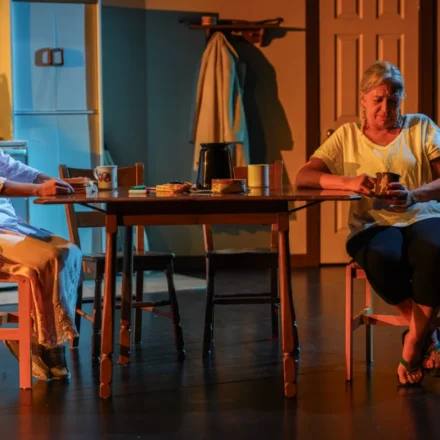
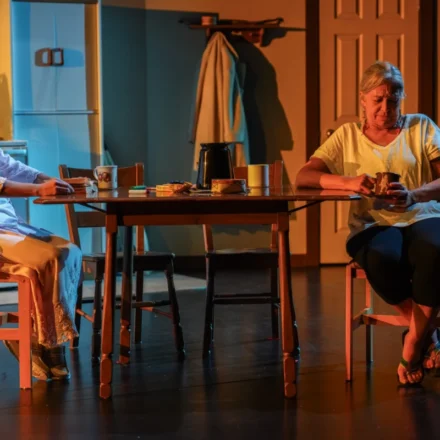
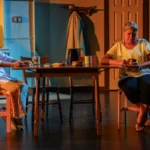
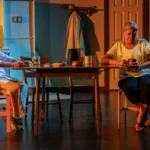
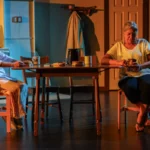
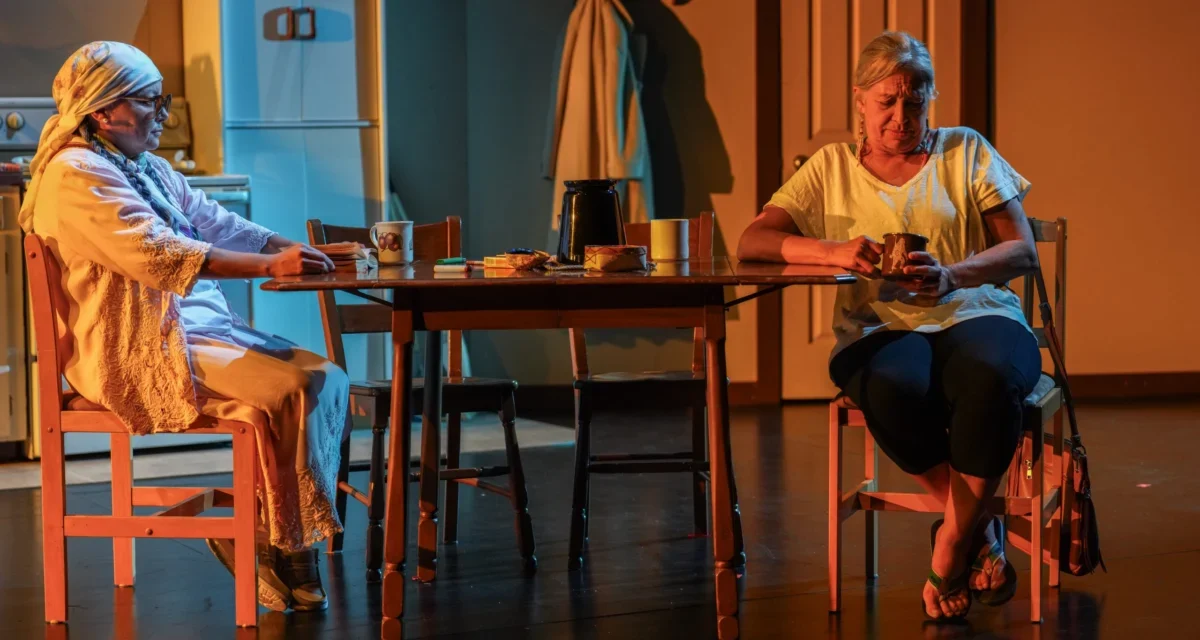
At the Red Eye Theater, Marcie R. Rendon’s Sweet Revenge serves as a poignant, genre-bending look at the persistence of intergenerational trauma. The narrative centers on Maggie (played with sharp, grounded confidence by Fern Renville), a woman who has carved out a life of spiritual and cultural care for her urban Native community.
The play’s central conflict is as symbolic as it is bizarre: a local ice cream truck persistently traverses Maggie’s neighborhood, its cheerful jingle acting as a sonic trigger for both Maggie and her mother, Granny Josephine (Oogie Push). To the uninitiated, the music is whimsical; to the characters, it is an auditory assault—a haunting echo of the childhood joy stolen from generations of Native children forced into boarding schools. When Maggie finally erupts, shouting, "I’m so tired of your rage controlling me," she is not merely rebuking her mother; she is articulating the exhausting burden of inherited pain.
Directed by Sequoia Hauck and presented by the Mni Giizhik Theatre Ensemble and Exposed Brick Theatre, the production is a complex portrait of an urban Native ecosystem. It does not shy away from the flaws within that community, depicting "spiritual customers" who seek out Maggie’s expertise to outsource their own cultural obligations. While the production faced minor opening-night hurdles—including slight logistical inconsistencies regarding prop usage and a somewhat dizzying plot device involving the serial murder of ice cream truck drivers—the emotional core remains ironclad. The shadow puppetry of Ches Cipriano, in particular, provides a spectral bridge between the play’s domestic realism and its deeper, historical ghosts.
The Geography of Rage: Moriah Evans at the Walker
If Sweet Revenge uses humor to puncture the weight of history, Moriah Evans’ recent performance at the Walker Art Center—titled with a string of symbols, }[¦/+^%<>.!@!!!!^^^]{—utilizes the human body as a protest against the "violence of choreography."

Evans’ piece transformed the Walker’s campus into a theater of surveillance and institutional confinement. The work began in the open air, with performers in fluorescent rain gear dancing against the backdrop of the city’s skyline. However, as the performance migrated indoors, the tone shifted from fluid to rigid, mirroring the way institutional structures strip individuals of their autonomy.
During a post-show talkback, Evans was explicit about her intent: "I often think choreography is a violent project." By treating the proscenium stage as an instrument of patriarchy and control, Evans forced her audience to reckon with how institutional spaces dictate movement and behavior. Dancers collapsed, repeated frantic phrases, and explicitly counted bodies, turning the theater into a space of confinement that mirrored the systemic violence referenced in the work’s text—a direct invocation of the deaths of Renee Good and George Floyd. It was an uncompromising performance that refused to let the audience remain passive observers.
Collective Healing and the Ananya Dance Theatre
While Evans focuses on the deconstruction of oppressive systems, Ananya Dance Theatre’s Prem (Love) focuses on the architecture of communal survival. Directed by Dipankar Mukherjee and choreographed by Ananya Chatterjea, the production is a response to the "Operation Metro Surge" immigration crackdowns that permeated Minnesota last winter, as well as the lasting scars of the 2020 uprisings.
Prem avoids the traditional protagonist-driven narrative. Instead, it functions as a Greek chorus, a collective entity that moves through cycles of catastrophe, grief, and eventually, joy. In one of the production’s most arresting moments, performer Mankwe Ndosi sings, "No one is coming to save us because we are the ones that we need."
This is the thesis of the current moment in Twin Cities performance art. It is a pivot away from waiting for institutional correction toward the radical act of self-reliance. As the production notes suggest, the goal is not to present a neat, hopeful conclusion—which would be a dishonest response to the ongoing threats against democratic processes and the safety of marginalized communities—but to demonstrate the physical act of "making the future together."
Chronology of Institutional Confrontation
The current wave of performance art is not a vacuum; it is the culmination of years of mounting social pressure in the Twin Cities.

- 2020: The murder of George Floyd and the subsequent uprising fundamentally shifted the landscape of local performance, moving artists toward more direct, activist-driven themes.
- 2023-2025: The implementation of aggressive federal immigration enforcement, such as Operation Metro Surge, prompted a shift in local dance and theater toward themes of sanctuary and communal resistance.
- October 2026: The current season, featuring these three major works, marks a high-water mark for "confrontational art," where the stage is explicitly used as a site for challenging state-sponsored narratives.
Supporting Data: The Impact of Narrative Coercion
Artistic directors involved in these productions emphasize that narrative is a tool often weaponized by the state. Police press releases, media coverage, and government documentation are, according to the creators, forms of "coercive storytelling." By reclaiming the narrative through performance, these companies are not just entertaining; they are providing a counter-archive.
In Sweet Revenge, the data is found in the characters’ lived experience; in Evans’ work, it is found in the physical toll of surveillance; and in Prem, it is found in the collective memory of the community. Together, these works suggest that the most potent art of the mid-2020s is that which functions as an intervention.
Implications for the Future of Twin Cities Arts
The implications of this movement are significant for the future of local cultural institutions. As audiences continue to seek out performances that mirror the urgency of their daily lives, theaters are being forced to move away from "safe" programming.
The success of Sweet Revenge, Prem, and Evans’ residency at the Walker suggests a growing appetite for art that is "rough around the edges" but intellectually and emotionally decisive. These creators are signaling that the era of apolitical performance has passed. Whether through the lens of Indigenous history, the trauma of state violence, or the necessity of collective survival, the mandate for the artist is clear: to maintain an uncompromising point of view.
As the performances of Sweet Revenge and Prem continue through this week, the Twin Cities remains a vital hub for this dialogue. For those attending, the experience is not one of easy catharsis, but rather one of shared witness. As Ndosi’s voice reminds us in Prem, the responsibility of the future lies not in the hands of the institutions that have failed us, but in the hands of the communities that have learned to survive them.
Performance Details:
- Sweet Revenge: Playing at the Red Eye Theater through Oct. 17. Tickets range from $0 to $35.
- PREM | Love: An Occupation: Playing at the Southern Theater through Oct. 17. Tickets range from $0 to $50.