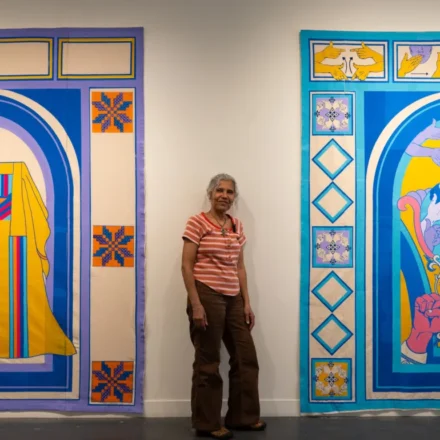

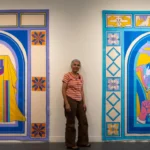






























In the heart of Minneapolis, the Rosalux Gallery has become a site of quiet, profound storytelling. The latest exhibition, Living Threads, is an immersive installation by St. Paul-based artist Hend Al-Mansour that uses the tactile, methodical medium of screen printing to map the intersections of culture, gender, and personal history. Through her work, Al-Mansour seeks to dismantle monolithic perceptions of Arab women, replacing them with a nuanced tapestry of power, vulnerability, and human connection.
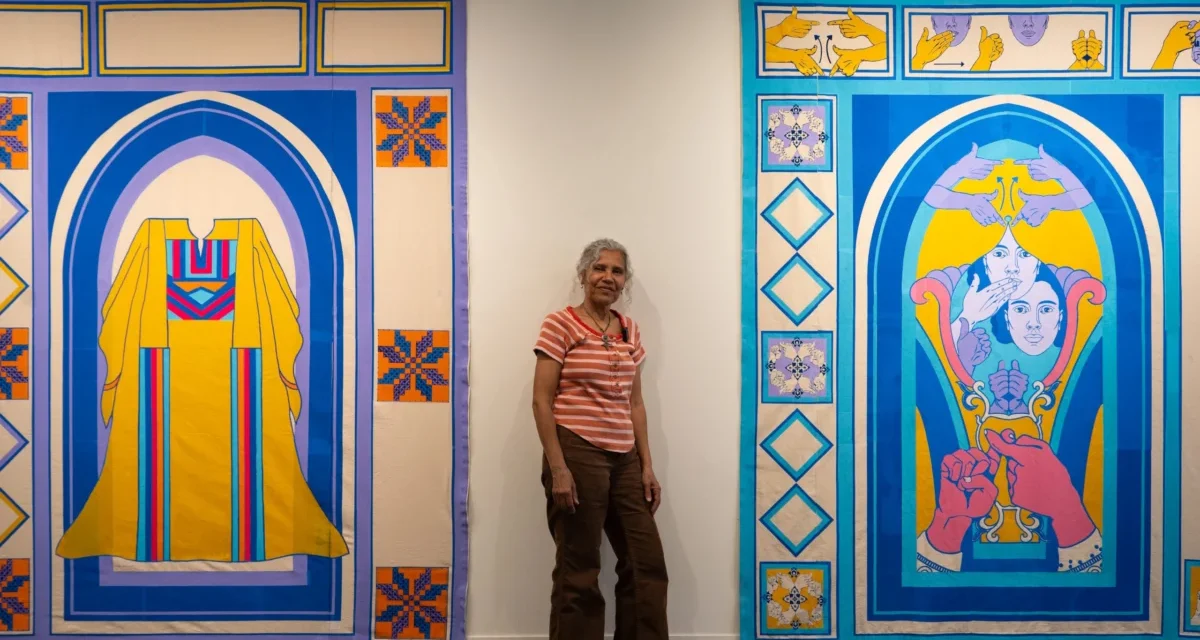
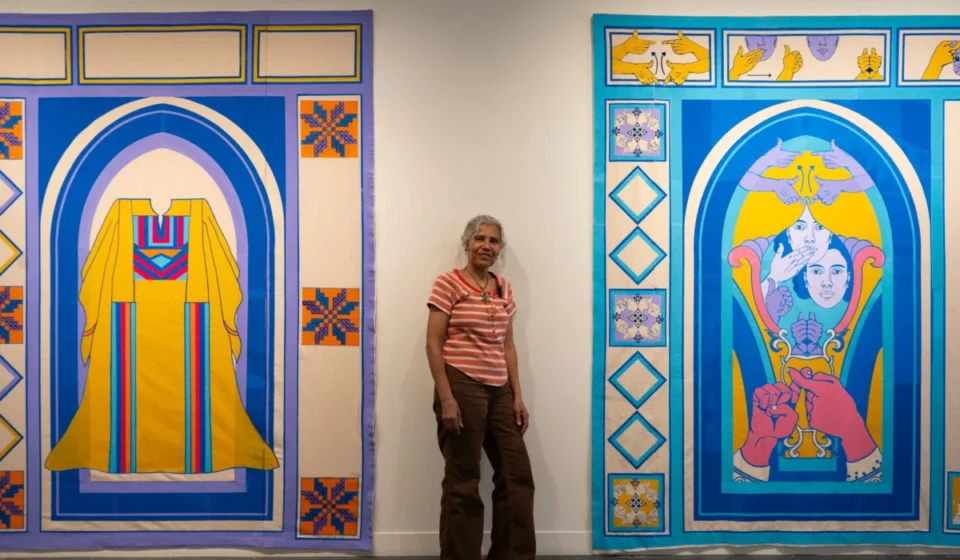
Living Threads is not merely an art display; it is a collaborative portrait of Yara Omer, a Minnesota-based Palestinian American poet and educator for the Deaf. By weaving together Islamic architectural motifs, the kinetic language of American Sign Language (ASL), and the intricate patterns of traditional Palestinian embroidery, Al-Mansour crafts a visual lexicon that honors both the individual and her collective heritage.
The Genesis of an Artistic Journey
The path that led Hend Al-Mansour to the gallery walls of Minneapolis was neither linear nor expected. Born in Saudi Arabia, Al-Mansour initially pursued a career in medicine, eventually relocating to Minnesota in 1997 to complete a medical fellowship at the prestigious Mayo Clinic. Yet, the constraints she experienced in her youth—the rigid gender separation, the surveillance of religious police, and the mandatory covering of her body—had fostered a deep, simmering need for expression that medicine could not satisfy.
"For me, it was like a prison," Al-Mansour recalls of her life in Saudi Arabia. "I just couldn’t tolerate it anymore. So that’s why I just left."
Upon choosing to leave her medical career behind, she pivoted toward the arts, eventually earning a Master of Fine Arts from the Minneapolis College of Art and Design. Her transition from physician to artist was driven by a desire to interrogate the structures of power that had once confined her. Today, that interrogation has expanded from her personal liberation to a broader project of documenting the lives of women who, like herself, navigate the world with strength and intentionality.

Chronology of a Creative Evolution
Al-Mansour’s current installation at Rosalux serves as a evolution of her previous work. In 2025, she debuted a precursor to this series at the Minneapolis Institute of Art (Mia) as part of the exhibition Mihrabs: Portraits of Arab American Women. In that show, she constructed walk-in architectural spaces—modeled after the mihrab, or prayer niche—that housed portraits of four women from her local community.
These architectural structures were not accidental; they were designed to root the women’s identities within their respective cultural traditions. The mihrab—an ornate, often arched recess in the wall of a mosque—symbolized a sanctuary. By placing contemporary women inside these sacred forms, Al-Mansour bridged the gap between historical religious architecture and the modern, secular, and professional lives of the women she portrayed.
Living Threads narrows the focus from a group exhibition to a singular, deep-dive narrative. By dedicating the entire space to the story of Yara Omer, Al-Mansour allows for a more granular examination of how cultural identity is negotiated in a foreign land. The transition from the broad, multi-subject approach at Mia to the intimate, singular focus at Rosalux highlights the artist’s growing interest in the power of the individual story to convey universal truths.
Technical Precision and Collaborative Process
The visual impact of Living Threads is the result of an exhaustive, labor-intensive screen printing process. Because the artist’s mesh stencils are limited to four-foot-by-four-foot dimensions, she must segment her image negatives into six distinct sections, preparing a unique screen for each.
The process is a physical, repetitive ritual: inking one color at a time onto a large studio table, then carefully washing the stencils to prepare for the next layer. This "exacting process," as Al-Mansour describes it, reflects the patience required to piece together a person’s life.

Crucially, Al-Mansour did not work in isolation. She collaborated with William Noor, a queer Palestinian American writer, teaching him the craft of screen printing. As they worked side-by-side, the studio became a space for dialogue and cultural exchange. This collaborative element underscores the theme of community that is so central to the exhibition. Al-Mansour’s approach to her subjects is equally collaborative; she begins by conducting extensive interviews with the women she portraits, meeting them in their homes or at local coffee shops to understand their goals, fears, and internal landscapes.
The Significance of the "Living Thread"
The exhibition’s title, Living Threads, is drawn from the interconnected nature of Omer’s life. Al-Mansour highlights Omer’s professional life as an educator for Deaf children, her dedication to her Palestinian heritage, and her role within her chosen family of friends.
In one of the panels, Al-Mansour incorporates a phrase Omer keeps in her home: "Life is better with friends." Al-Mansour was struck by the sentiment, noting that it perfectly encapsulates Omer’s character—her reliance on her community and the support she provides to her students. To translate this, Al-Mansour incorporated images of the phrase signed in ASL directly into the artwork, creating a visual harmony between the text, the gesture, and the cultural context of the subject.
This is a recurring strategy in Al-Mansour’s work: to make the invisible visible. By placing the thobe—a traditional, heavily embroidered Palestinian tunic—alongside modern professional attire, she emphasizes that Omer’s identity is not a choice between two worlds, but a synthesis of them.
Institutional Challenges and Artistic Resilience
Al-Mansour’s career has not been without institutional friction. Prior to her Mihrabs exhibition at the Minneapolis Institute of Art, she had planned an entirely different show. However, the museum opted to postpone that exhibition due to concerns regarding its depiction of the Prophet.

This moment of censorship, while undoubtedly difficult, served as a catalyst for her subsequent work. Rather than retreating, Al-Mansour pivoted, focusing her creative energy on the celebration of Arab women. This shift solidified her thematic trajectory: if the institutions of her past—both in Saudi Arabia and in the West—sought to limit or categorize her voice, she would use that voice to center the very people those institutions often ignored or misrepresented.
Her work is, by definition, a reaction to the current historical moment, specifically regarding the ongoing struggle for Palestinian sovereignty. While she admits she does not have the answers to the geopolitical crisis, her hope is simple: "I hope one day they find peace and justice. I’m not sure they’ll have the land, but at least justice."
Implications: The Power of Representation
The implications of Living Threads extend far beyond the walls of the Rosalux Gallery. By presenting Palestinian people in their "everyday" reality—as educators, poets, and friends—Al-Mansour is engaging in a quiet form of political resistance. She rejects the flattening of Palestinian identity into a mere political talking point, insisting instead on the humanity of her subjects.
"I want to present Palestinian people as normal people," she explains. "To show their love of beauty, what they do, what they love, what are their hopes."
As the exhibition runs through August 30, it invites the Minneapolis community to slow down and witness the complexity of a life lived at the intersection of multiple identities. Whether through her upcoming contribution to the anthology Nick of Time: Women Write about Art and Aging or through her installations, Al-Mansour continues to demonstrate that art is a powerful vehicle for understanding.

Living Threads stands as a testament to the fact that while history may be marked by displacement and conflict, the human spirit is defined by its ability to weave new threads, connect with others, and find a sense of home—no matter where the path may lead.
Exhibition Details:
- Location: Rosalux Gallery, Minneapolis
- Dates: Through August 30, 2026
- Gallery Hours: Saturday and Sunday, 12–4 p.m., or by appointment.
- Special Event: An artist talk is scheduled for Saturday, August 15, from 2–3 p.m. Admission is free.