














































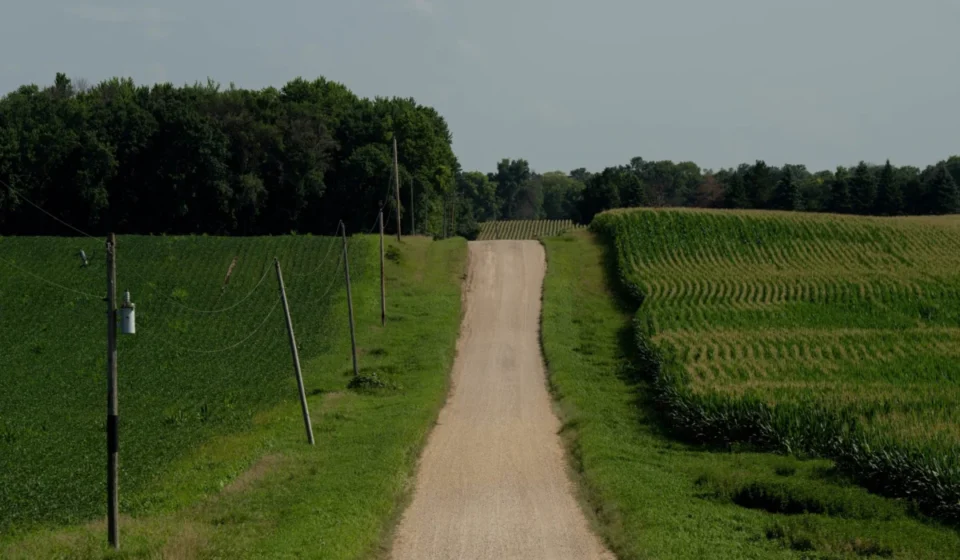

NEW ULM, Minn. – Two decades ago, a political newcomer and high school teacher named Tim Walz embarked on an improbable journey to unseat a seemingly entrenched Republican incumbent in Minnesota’s sprawling, largely rural 1st Congressional District. Against considerable odds in a region that has long leaned strongly Republican, Walz, then a history teacher and football coach from Mankato, shocked the political establishment by defeating former Rep. Gil Gutknecht in 2006. That victory catapulted Walz onto the national stage, eventually leading him to the governor’s mansion.
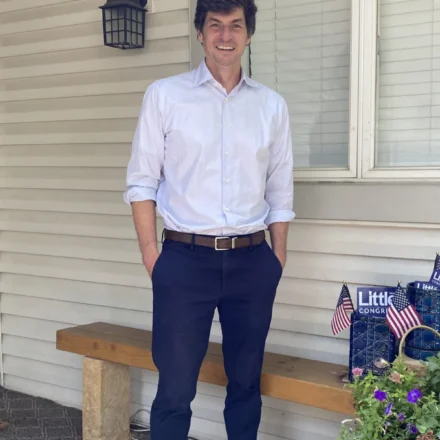
Now, history appears to be echoing in southern Minnesota. Another dedicated educator, high school math teacher Jake Johnson, 42, is stepping out of the classroom and onto the campaign trail, aiming to replicate Walz’s stunning upset. Johnson, a Democrat, is challenging the incumbent Republican, Rep. Brad Finstad, in the very same district. His early campaigning prowess and impressive fundraising capabilities have not gone unnoticed, drawing the keen attention and crucial support of the national Democratic Party.
The 2026 election for Minnesota’s 1st Congressional District promises to be a pivotal contest, not just for the candidates involved but for the broader political landscape of the state and the nation. While the parallels to Walz’s historic win are striking, the political terrain of southern Minnesota and the national climate have undergone significant transformations since 2006, presenting both unique opportunities and formidable challenges for Johnson’s campaign.
A Familiar Blueprint: Teachers Turned Challengers
The narrative of an educator challenging an established politician resonates deeply within Minnesota’s 1st District, a region where community ties and local institutions, including schools, hold immense importance. Tim Walz, with his background as a history teacher and football coach at Mankato West High School, leveraged his connection to generations of students and their families to build a grassroots movement. His moderate Democratic platform and relatable persona allowed him to bridge the partisan divide in a district accustomed to Republican leadership. He campaigned on issues that directly impacted working families and rural communities, promising practical solutions rather than ideological purity.
Fast forward to 2026, and Jake Johnson is treading a remarkably similar path. A high school math teacher from Stewartville, Johnson, like Walz, is a political novice making his first bid for federal office. He, too, is tapping into the powerful network of educators and their unions, understanding that teachers are often pillars of their communities, fostering trust and respect that can translate into political capital. This shared professional background provides an immediate point of connection with voters and a ready-made volunteer base.
Both Walz and Johnson have strategically positioned themselves as centrists within the Democratic Party. Walz famously ran as a moderate, appealing to independent and even some Republican voters in a district where outright liberalism would be a non-starter. While some 1st District residents now perceive Governor Walz as having shifted left since taking the state’s highest office, his congressional campaign was defined by pragmatism. Johnson is adopting a similar strategy, striving to present himself as a fiscally conservative Democrat. He has openly pledged to vote against any legislation that would increase the national debt until Congress achieves a balanced budget – a stance designed to appeal to economically conservative voters wary of federal spending.
"Members of both parties are not taking this seriously," Johnson stated, referring to the nation’s nearly $40 trillion debt, a clear signal of his commitment to fiscal responsibility. However, like most mainstream Democrats, Johnson also advocates for strengthening the federal social safety net, a position rooted in his own life experiences.
Chronology of Hardship and Public Service
The personal narratives of both Walz and Johnson are deeply intertwined with the very social programs they advocate for. This shared history of relying on public assistance provides a powerful and authentic foundation for their policy positions, resonating with many working-class families in the district.
Tim Walz’s youth was marked by significant hardship. Following the death of his father, his mother and younger brother depended on Social Security survivor benefits to make ends meet. This firsthand experience with the fragility of economic security and the vital role of government support undoubtedly shaped his political outlook and his commitment to expanding social welfare programs as governor. His administration has championed initiatives like universal school breakfasts and lunches and a generous paid family leave program, directly addressing the types of challenges his own family once faced.

Jake Johnson’s upbringing paints an equally compelling picture of resilience and the importance of community and government assistance. Growing up in Stewartville as one of 11 siblings, Johnson recounts a childhood where his father collected garbage and his mother went door-to-door reading meters. The family frequently relied on the kindness of their church and neighbors, alongside government programs. "I was a SNAP (food stamp) kid," Johnson openly shares. "We were a Medicaid family." These candid disclosures are not merely campaign talking points; they are deeply personal testimonials that allow Johnson to connect with voters on an emotional level, demonstrating a lived understanding of the struggles faced by many constituents in the 1st District.
Pat Booker, a long-time resident and voter in the district, has closely observed both Walz’s ascent and Johnson’s current campaign. A military veteran and retired probation officer from New Ulm, Booker notes the striking similarities in their approach to public engagement. "(Johnson) doesn’t hesitate to answer questions and doesn’t hesitate to meet with constituents, and that was the same way with Tim," she observed. This accessibility, she contends, stands in stark contrast to the perceived aloofness of the incumbent.
Booker’s own experience highlights this perceived difference. Concerned about potential cuts to SNAP and Medicaid, she spent eight months repeatedly attempting to secure a meeting with Rep. Finstad at his local congressional office in New Ulm. Her efforts yielded only "one pat letter saying thank you for your concerns." This lack of direct engagement can be a significant vulnerability for an incumbent, especially in a district where personal connection and responsiveness are highly valued.
Supporting Data: A District Transformed
The political landscape of Minnesota’s 1st Congressional District, while historically Republican-leaning, has undergone significant shifts since Walz’s 2006 victory. These changes present a more formidable challenge for Johnson than Walz faced, yet also define the unique context of this current race.
The "Red to Blue" Imperative:
Jake Johnson’s campaign has quickly garnered national attention, primarily due to his energetic campaigning and impressive fundraising. The Democratic Congressional Campaign Committee (DCCC) has recognized his potential by placing him on its highly coveted "Red to Blue" list. This designation is a critical lifeline for Democratic challengers, signifying that the national party views the candidate as a credible threat to flip a Republican-held seat. It grants access to a powerful arsenal of resources, including strategic guidance, enhanced fundraising support, and intensive campaign training. This national backing is crucial for an underdog candidate in a district rated as "likely Republican" by the Cook Political Report.
Johnson has already proven his mettle as a fundraiser, amassing nearly $1.9 million in campaign funds as of June 30, according to the latest reports filed with the Federal Election Commission. This figure is remarkably close to incumbent Finstad’s nearly $2 million war chest, demonstrating Johnson’s ability to compete financially despite his challenger status. This financial parity indicates a strong base of support, both locally and nationally, that believes in Johnson’s viability.
Incumbency and District Demographics:
Rep. Brad Finstad, 50, has held the 1st District seat since winning a special election in 2022. He benefits from the inherent advantages of incumbency, including heightened name recognition, established campaign infrastructure, and often a smoother path to fundraising. Professor Kevin Parsneau, a political science professor at Minnesota State University in Mankato, notes that Finstad "is certainly acting like internal (campaign) polls are telling him he has a wide lead." This confidence may explain his perceived reluctance to engage directly with challengers or hold unscripted town halls, a common strategy for incumbents in what they consider safe seats.
However, the district’s demographic and political shifts are critical to understanding the current dynamics. In the 2024 presidential election, Donald Trump carried the 1st District with 55% of the vote over former Vice President Kamala Harris, underscoring its conservative lean. This strong Republican performance makes Johnson’s task inherently more difficult than Walz’s, who ran in a less polarized era against a more moderate Republican.
New Ulm: A Conservative Stronghold:
Finstad’s hometown of New Ulm serves as a microcosm of the district’s deep-rooted conservatism and cultural identity. The city proudly embraces its German heritage, visible in landmarks like the towering Hermann monument, the daily chimes of the glockenspiel, and popular events like Oktoberfest and Bock Fest hosted by August Schell’s brewery. German names grace local businesses, and a group called the Junior Pioneers of New Ulm and Vicinity celebrates the direct descendants of the city’s early settlers.

In such a historically rich and close-knit community, newcomers can sometimes struggle to shed the label of "auslander," the German word for "outsider." While Pat Booker acknowledges that New Ulm has become more open-minded over time, it remains a Republican stronghold and the county seat of Brown County, which Trump decisively won. Yet, Johnson is boldly taking the fight to Finstad’s home turf, participating in New Ulm’s Bavarian Blast festival parade in July and planning a town hall in the city in August – a clear signal of his commitment to reaching all corners of the district, regardless of their political leanings.
The Rural Shift and Agricultural Woes:
The most significant transformation in the 1st District since Walz’s victory is its pronounced shift further to the right. This is partly due to redistricting following the Census-mandated changes, which incorporated more rural territory along the Mississippi River, making the district even less urbanized. More broadly, it reflects a national trend where rural areas have become increasingly Republican.
Political scientists, including Kate Knutson, a political science professor at Gustavus Adolphus College, point to a growing concern among rural residents that their core cultural values – faith, family, and freedom from government interference – are under threat in a rapidly changing nation. Moreover, many rural communities perceive the Democratic Party as composed of urban elites who look down on rural lifestyles and prioritize city or immigrant populations over the struggles of the rural working class. Knutson notes that the "farmer" component of Minnesota’s Democratic-Farmer-Labor Party has "peeled off."
However, this is also where Johnson sees an opening. He aims to subtly depress enthusiasm for the GOP among farmers by highlighting how some Trump-era policies, which Finstad has embraced, have adversely affected the agricultural sector. Farmers in southern Minnesota, Knutson explains, are "frustrated by tariff and immigration sweeps that are hurting the meatpacking industry." Global events, such as Iran’s shutdown of the Strait of Hormuz, have also exacerbated the situation by stalling critical deliveries of oil and fertilizer, driving up the cost of essential farm inputs. These economic pressures, Johnson argues, cut across partisan lines and could be a wedge issue.
Official Responses and Campaign Strategies
The campaigns of Jake Johnson and Brad Finstad present a stark contrast in their public engagement and messaging, reflecting their respective positions as challenger and incumbent.
Johnson’s Centrist Appeal:
Jake Johnson’s campaign is built on a dual promise: fiscal responsibility and a strong social safety net. His pledge to tackle the national debt by refusing to vote for increased borrowing until the budget is balanced is a direct appeal to conservative-leaning voters concerned about government spending. Simultaneously, his personal story and commitment to shoring up programs like SNAP and Medicaid resonate with the district’s working families and those who have relied on such assistance. He believes this blend of fiscal conservatism and social compassion can win over voters who feel alienated by both parties’ extremes. His strategy of holding town halls in all 21 counties of the district underscores his commitment to direct engagement and listening to constituents, echoing the accessibility praised by voters like Pat Booker.
Finstad’s Incumbent Strategy:
Rep. Brad Finstad, on the other hand, largely adheres to the playbook of an incumbent in a seemingly safe district. He generally avoids direct acknowledgment of his challenger, preferring to focus on official business and events tailored to his base. These include meetings with law enforcement, farm groups, and local companies, which allow him to project an image of active representation without entering potentially unscripted or confrontational campaign environments. "He’s speaking to his base," Professor Parsneau observes, "He does not want to be in an unscripted situation."
When pressed, Finstad maintains that he is highly accessible. "I travel all over southern Minnesota," he told MinnPost. "I’m always listening and communicating with constituents who agree and don’t agree with me. I’m having those conversations and I would say reach out to me, reach out to our office. I’m more than willing to have a conversation and answer questions." However, experiences like Pat Booker’s suggest a disconnect between this stated openness and actual constituent access.
On agricultural issues, Finstad has consistently defended Trump-era policies and deflected criticisms by blaming the Biden administration for current economic distress. "We’re heading in the right direction," Finstad stated after a roundtable on veterans’ issues in Mankato. "We have come out of some tough times where the inputs have been really crippling for the last six years, and then on top of that we’ve had that stale market because of that lack of trade." This narrative aligns with his broader strategy of appealing to a Republican base that largely supports Trump and is critical of current Democratic leadership. Finstad also often infuses his political rhetoric with deeply held personal beliefs, remarking that "it’s an honor of a lifetime" to serve the 1st District’s 750,000 residents, but "my goal is heaven, not Congress." He concludes with a confident assertion: "When November comes, the voters of southern Minnesota will decide, but no one is going to outwork me."

Implications: A Battle for the Soul of Rural Politics
The 2026 contest in Minnesota’s 1st Congressional District is more than just a local race; it is a critical bellwether for the broader political trends shaping America, particularly the future of rural representation.
The Underdog’s Path:
There is no doubt that Jake Johnson is the underdog. The district’s strong Republican lean, demonstrated by Trump’s 2024 victory and Finstad’s previous successful defenses of the seat, presents a steep uphill climb. However, the DCCC’s "Red to Blue" designation signals a belief that this seat, while challenging, is not insurmountable. Democrats hope that a combination of factors – potentially low approval ratings for the presidential administration, an energized Democratic base motivated by national issues, and the historical advantage the party out of power often holds in midterm elections – could create the necessary conditions for an upset.
Johnson’s strategy hinges on activating new voters, particularly younger constituents and those who feel disenfranchised by the current political climate. His personal story and centrist appeal are designed to win over a segment of independent voters and even disaffected moderate Republicans who might be open to a candidate focused on practical solutions rather than partisan warfare. His ability to connect with farmers by highlighting the economic pains caused by specific policies, rather than broad ideological attacks, could be key to chipping away at the GOP’s rural dominance.
Finstad’s Defense and the Power of the Base:
For Rep. Finstad, the path to victory lies in consolidating his Republican base and capitalizing on the district’s inherent conservative leanings. His alignment with Donald Trump, a stark contrast to Gutknecht’s moderation in 2006, resonates deeply with many voters in the current iteration of the 1st District. His focus on official duties and carefully curated events allows him to reinforce his image as a dedicated representative without risking missteps in direct debates with his challenger. The strong German heritage and conservative values of communities like New Ulm provide a solid foundation of support that Finstad will undoubtedly lean on heavily.
A Broader National Significance:
A Democratic victory in MN-01 would send a powerful message nationally, suggesting that even in deeply conservative rural districts, a well-funded, accessible, and moderate Democratic candidate with a compelling personal story can succeed. It would be a significant win for the DCCC’s strategy of targeting "likely Republican" seats and could embolden Democrats to invest further in rural outreach. Conversely, a decisive Finstad victory would reaffirm the Republican Party’s firm grip on rural America and underscore the enduring power of Trump’s influence in local elections, even in a midterm year.
The battle for Minnesota’s 1st Congressional District is a microcosm of the larger struggle for the soul of American politics. It asks whether a district transformed by polarization and shifting demographics can once again be swayed by a compelling narrative of local service and common-sense solutions, or if the deep-seated partisan alignments of the present will ultimately prevail. As Jake Johnson steps into the shoes of Tim Walz, southern Minnesota watches to see if history can, indeed, repeat itself.