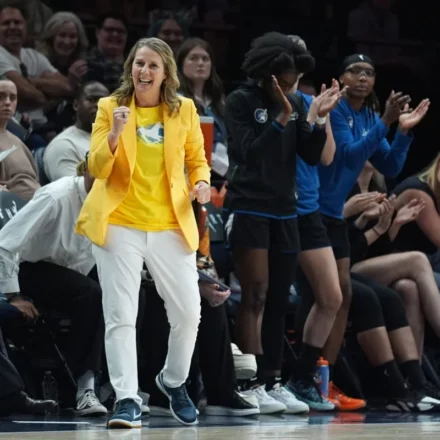










































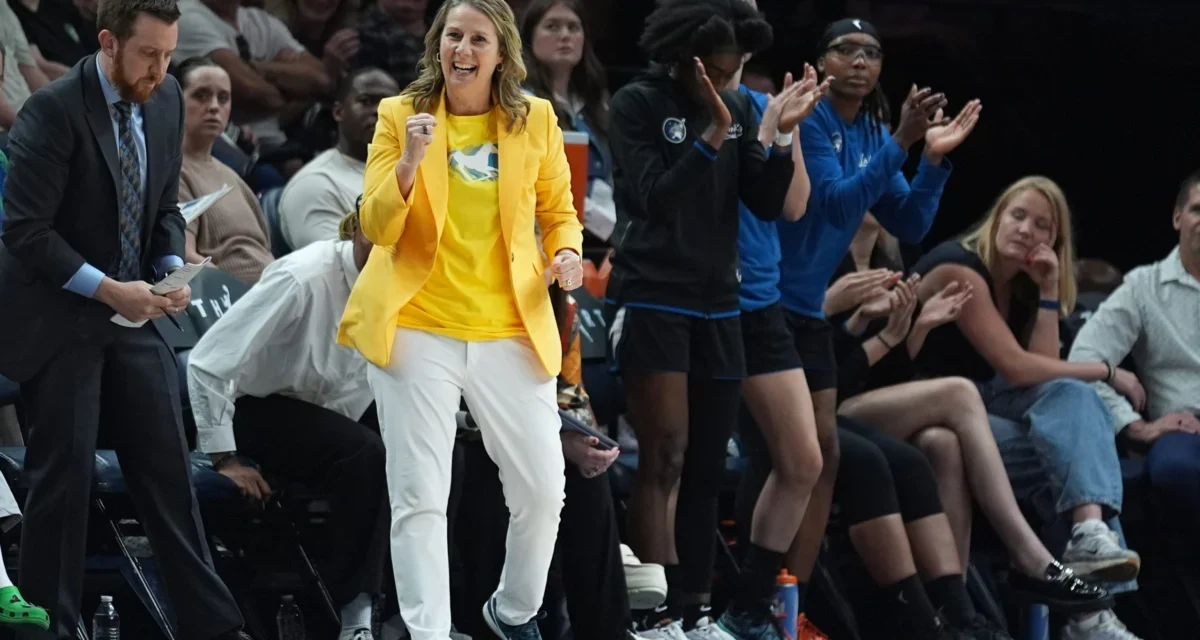


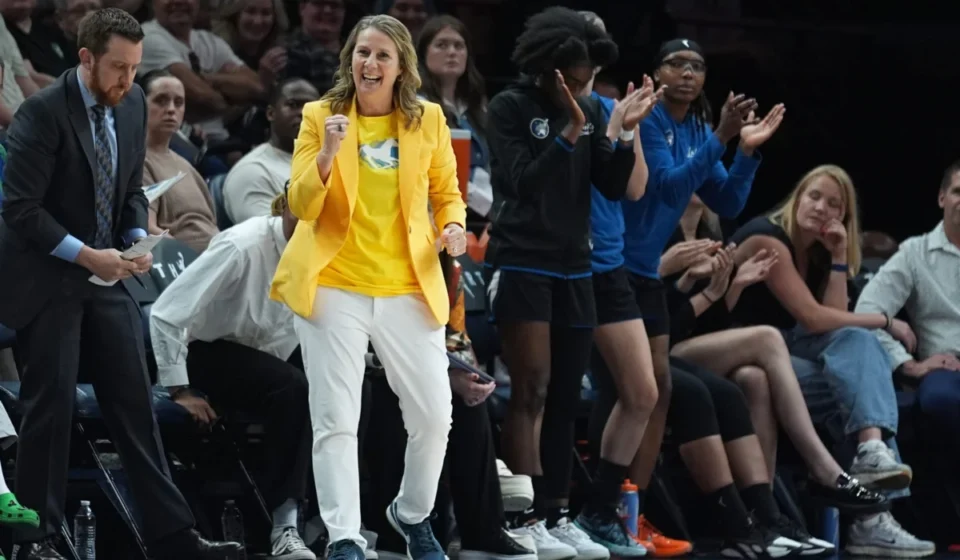

In the landscape of professional sports, the narrative of the “mellowed” veteran coach is a trope as tired as it is inaccurate. It suggests that with age comes a softening of the edges—fewer technical fouls, a quieter demeanor on the sidelines, and a retreat from the demanding intensity that defined a coach’s rise to prominence. But for Cheryl Reeve, the head coach and president of basketball operations for the Minnesota Lynx, the idea that she has “mellowed” is a fundamental misunderstanding of her character.
As she approaches her 60th birthday this September, Reeve remains the same fierce competitor who transformed the Minnesota Lynx from a perennial bottom-dweller into the most successful franchise in WNBA history. She is an Air Force brat, a product of the gritty basketball culture of South Jersey and Philadelphia, and a leader whose uncompromising standards have reshaped the league. To Reeve, growth is not about dilution; it is about evolution.
The Milestone: A Historic Ascent
On July 8, Reeve etched her name into the history books by securing her 380th regular-season victory, a rugged 86-80 win over the Connecticut Sun. This milestone propelled her past Mike Thibault to become the winningest coach in WNBA regular-season history. When combined with her playoff success—where she already held the league record—Reeve’s resume becomes peerless.
This achievement follows her recent induction into the Women’s Basketball Hall of Fame, a recognition of her 17-season tenure in Minnesota. Her trophy case is overflowing: four WNBA Coach of the Year awards, two Executive of the Year honors, and six championships (four as the head coach of the Lynx, two as an assistant with the Detroit Shock). Despite these accolades, Reeve is not a coach who looks back; she is a coach who remains obsessed with the next ring.
Chronology of a Coaching Titan
Reeve’s journey to the pinnacle of basketball was far from linear. Before she was a household name, she spent nine grueling seasons as an assistant coach across three different franchises—Cleveland, Charlotte, and Detroit—two of which folded during her tenure.
A middle child with a background in both computer science and business administration from La Salle University, Reeve’s path was often met with skepticism from those outside the basketball world. Even her own family, witnessing the instability of the early WNBA, gently suggested she pivot to a more secure career. She refused.
Her breakthrough came in 2010 when the Lynx, then a franchise that had only reached the playoffs twice in eleven years, found themselves in a leadership void. Encouraged by Bill Laimbeer—who worked with her in Detroit—the Lynx organization took a chance on her. Upon her arrival, Reeve set a tone that was jarring to some but necessary for all. She didn’t just want to make the playoffs; she demanded a culture of championship expectation.
"I remember when I interviewed here, one of my biggest takeaways was that I felt like I could come in here with a different expectation than maybe what they had in the past," Reeve reflected. "The goal was just to make the playoffs. And I just didn’t feel like that bar was high enough."
The early days were turbulent. The 2010 season began with a 2-9 record, and Reeve’s brutal honesty—publicly calling her team "bad" after a loss—shocked the franchise’s business staff. Yet, that bluntness was the catalyst for the dynasty that followed. The arrival of Maya Moore in 2011, paired with Reeve’s defensive-first philosophy, ignited a seven-year run that saw the Lynx appear in six WNBA Finals, winning four titles.
The Standard: Accountability Above All
Reeve’s coaching philosophy is rooted in radical accountability. Whether it is a superstar like Napheesa Collier or a rookie point guard like Olivia Miles, the standard remains identical.
This was on full display during a recent postgame ceremony honoring Hall of Famer Sylvia Fowles. Even while celebrating a legend, Reeve could not overlook a sloppy defensive performance in a 101-93 win over Portland. She told the crowd, only half-jokingly, that the retired legends in attendance could have played better defense than the current roster. For a team with the best record in the league (20-6), this serves as a reminder that complacency is the enemy of greatness.
Courtney Williams, now in her third season under Reeve, describes the experience as a trial by fire. "Cheryl is going to be honest," Williams said. "She’s going to coach you hard, and if you’re built for it, you’re built for it. The ones that ain’t, they can’t play for Cheryl because she’s a straight shooter. I’m a straight shooter too, so it works out."
Williams highlights that Reeve’s intelligence is matched only by her refusal to coddle. "She has one of the greatest basketball minds I’ve been around. She holds everyone accountable, no matter if you’re the best player, the staff, or the ball kids. She really just has a standard, and she wants everyone to be at that standard."
Evolution, Not Mellowing
If Reeve hasn’t "mellowed," how has she changed? According to the coach herself, it is a matter of wisdom and adaptation. As a mother to her 11-year-old son, Oliver, and a wife, Reeve has learned to discern which battles are worth the emotional energy. She is more willing to let a young player like Olivia Miles play through mistakes that she would have pulled a veteran for a decade ago.
"The coach that Lindsay Whalen played for is very different than the coach Olivia Miles is currently playing for," Reeve noted.
This evolution is also marked by a deeper understanding of human dynamics. During a recent press conference, Reeve displayed a rare moment of vulnerability, admitting to a past interaction with Williams that she felt had "broken her spirit." The fact that she can reflect on that mistake, discuss it with her player, and move forward shows a depth of leadership that only comes with decades of experience.
Supporting Data and Organizational Stability
Reeve’s longevity is a rarity in professional sports, where the average shelf life of a head coach is notoriously short. Her success is supported by a stable ownership group in the Taylors and a front-office philosophy that prioritizes consistency.
While other championship-caliber coaches, such as Sandy Brondello, have faced the volatility of the coaching carousel, Reeve has remained the face of the Lynx. This stability has allowed her to retool the team repeatedly—from the post-heavy era of Fowles to the modern, perimeter-oriented game that dominates the league today.
Beyond the court, Reeve has used her platform to advocate for social causes, from gender equality to supporting the Minnesota Aurora soccer club. Her commitment to her players’ lives outside of basketball mirrors her intensity on the court; she is a coach who cares about the individual as much as the athlete.
Implications for the Future
As the WNBA enters a new era of unprecedented growth and visibility, Cheryl Reeve stands as the gold standard for coaching excellence. Her peers, including rivals like Brondello, acknowledge her status as the "G.O.A.T." of the league.
"She’s one of the coaches I admire in this league," Brondello said. "I have so much respect for her, what she does and how her teams compete. Just the toughness of her teams, the way she prepares them, how they play. It’s a credit to the identity she wants them to play with."
Reeve is not finished. Her eyes are set on the horizon, specifically on securing another championship for a group of players she clearly loves. When asked about her drive, she keeps it simple: "Courtney Williams has never won a championship. I want it for them. Every day."
Cheryl Reeve’s legacy is already cemented in the Naismith Hall of Fame and the record books. But for those watching the Lynx, it is clear that the fire that started in 2010 is still burning just as bright. She hasn’t mellowed; she has simply mastered the art of leading a championship organization, proving that in a league that is constantly changing, the demand for excellence remains the only constant.