
























































WASHINGTON D.C. – President Donald Trump’s aggressive trade policy, marked by the imposition of steep tariffs on a broad spectrum of Canadian goods, is casting a long shadow over the upcoming midterm elections, particularly in strategically vital northern border states. What began as a contentious economic maneuver has rapidly evolved into a potent political battleground, forcing Republican candidates to navigate a delicate balance between loyalty to the president and the economic realities faced by their constituents.
In states like Minnesota, where the trade relationship with Canada is deeply interwoven with local economies, the new trade war has not yet erupted into a full-blown political brawl, but the underlying tension is palpable. The potential for Trump’s protectionist policies to become a defining campaign issue is significant, threatening to upend established political dynamics and expose fault lines within the Republican party. Beyond the immediate border regions, the ripple effects are being felt in agriculture-heavy states already grappling with the fallout from broader trade disputes, compelling a growing number of GOP figures to publicly distance themselves from the administration’s signature economic strategy.
The Unfolding Trade Tensions: A Chronology of Escalation
The current trade impasse between the United States and Canada is not an isolated incident but rather the culmination of escalating tensions that have simmered for over a year.
Early Moves (2025): The initial salvo in this trade dispute was fired last year when President Trump first imposed 25% tariffs on a range of Canadian goods, citing national security concerns. This move immediately drew criticism from various sectors within the U.S., but was met with support from some Republican lawmakers who echoed the administration’s rhetoric about protecting American industries and workers. Rep. Tom Emmer (R-MN, 6th District), for instance, publicly endorsed these early duties, suggesting they would "improve the environment" for American companies.
Congressional Resistance (Early 2026): By February of the current year, the growing disquiet over the tariffs manifested in legislative action. The U.S. House of Representatives approved a resolution aimed at terminating the tariffs imposed on Canada. Notably, all of Minnesota’s Republican members of Congress voted against this resolution, with Rep. Brad Finstad (R-MN, 1st District) articulating his opposition on X (formerly Twitter). Finstad argued that such a move by "House Democrats" was "political posturing" that would "significantly weaken our ability to secure the border" by undermining the President’s authority to address issues like "fentanyl trafficking to illegal immigration." This resolution, however, failed to gain traction in the U.S. Senate, effectively stalling any legislative rollback of the tariffs. Separately, Sen. Amy Klobuchar (D-MN) successfully shepherded a Senate resolution to lift U.S.-imposed tariffs on Canada, but this too was not taken up by the House.
The Latest Escalation (Summer 2026): The most recent and significant escalation came with President Trump’s decision to impose an even steeper 50% tariff on $20 billion worth of additional Canadian goods. This aggressive move was met with swift and equally punitive retaliation from Ottawa, which announced its own 50% tariffs on an equivalent $20 billion worth of U.S. products. These retaliatory measures by Canada are strategically designed to inflict maximum political pain, targeting goods produced in states crucial for the upcoming midterms.
Phased Implementation: The immediate economic impact of these latest tariffs is somewhat mitigated by a phased implementation schedule. Canada’s retaliatory tariffs, for example, are not slated to take effect until September 8th. Crucially, Canadian officials have deliberately excluded key commodities like potash—a vital fertilizer for U.S. farmers, including those in Minnesota—and energy products from this initial wave, a strategic decision likely aimed at preventing an immediate, widespread economic shock that could galvanize opposition too quickly. Furthermore, the more expansive automobile tariffs, which could have a profound impact on both economies, are not scheduled to go into effect until January 1st of the following year. This delay provides a brief window for political maneuvering and potential de-escalation, but also leaves businesses and consumers in a state of prolonged uncertainty.
Supporting Data: Economic Realities and Political Calculus
The economic relationship between the U.S. and Canada is vast and complex, making any disruption fraught with consequences. For Minnesota, Canada is not just a neighbor but its largest overseas trading partner. The figures underscore the depth of this interdependence: Minnesota imports approximately $13 billion in Canadian goods annually while exporting a substantial $5 billion worth of its own products across the border. This imbalance means that Minnesota consumers and businesses are particularly susceptible to higher prices on imported goods, while Minnesota exporters face significant challenges accessing their largest international market.
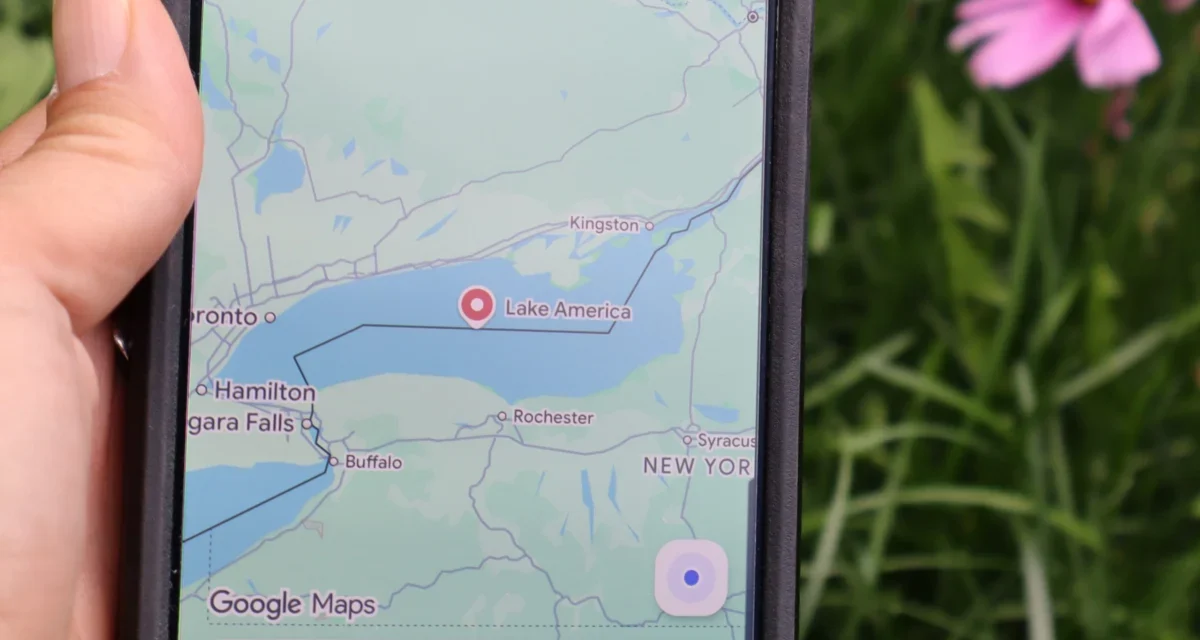
Economists’ Warnings: Tyler Schipper, an economics professor at the University of St. Thomas, highlights the immediate, albeit delayed, impact. "Because effects are somewhat limited right now, it allows politicians not to talk about the issue," Schipper noted, referring to the delayed implementation of some tariffs. However, he cautioned that this temporary reprieve is precarious. An escalation of the trade war, exemplified by the administration’s almost farcical attempt to "rename" Lake Ontario to "Lake America," could accelerate tariff deadlines and broaden their scope to include commodities Minnesotans are far more dependent upon. Schipper also pointed out that Minnesota’s tourism sector has already begun to feel the chill from the soured relationship with Canada, indicating that the effects, while perhaps not yet catastrophic, are certainly not negligible. "Even if the effect is small right now, tariffs add to an environment where people are already concerned about affordability, and that won’t go well for politicians who support tariffs," he added, emphasizing the cumulative burden on consumers.
Targeted Retaliation: Canada’s approach to its retaliatory tariffs is a masterclass in political targeting. Melanie Joly, Canada’s industry minister, openly admitted to this strategy when announcing the measures: "We are picking products that will target states in the United States." This calculated precision aims to exert maximum pressure on U.S. politicians in vulnerable positions, forcing them to confront the direct economic consequences of their government’s trade policies on their constituents.
Broader GOP Concerns: The tariffs are not an isolated headache for the Republican party. They join a growing list of contentious issues that have shaken the GOP base, including the ongoing war in Iran and the administration’s decision to import beef from overseas, a move that American ranchers claim undercuts their livelihoods. For Republican elected officials, especially those in tight races, the tariffs add another layer of anxiety. Tim Lindberg, a political science professor at the University of Minnesota-Duluth, articulated this predicament: "This is another example of how Republicans are having trouble this year with what Trump is doing and how he’s doing it. So, if they can’t strongly agree with something, the best thing is not to say anything at all." Lindberg also noted that Minnesota, unlike some other border states, has fewer highly vulnerable U.S. Senate or House seats, which might explain why the issue hasn’t resonated as intensely there as elsewhere.
Official Responses: Navigating a Divided Landscape
The political landscape surrounding the tariffs is sharply divided, with Republicans largely attempting to tiptoe around the issue or express nuanced opposition, while Democrats seize on it as a clear line of attack.
The Republican Quandary:
- Lisa Demuth (GOP Gubernatorial Candidate, Minnesota): Initially appearing sympathetic to the new duties, Demuth was forced to issue a clarifying statement after DFL (Democratic-Farmer-Labor) attacks, asserting that she does not support Trump’s tariffs on Canadian goods. This swift backtrack underscores the political sensitivity of the issue.
- Sen. Susan Collins (R-ME): Facing a tough reelection battle, Senator Collins unequivocally stated that imposing 50% tariffs on Canadian goods was "a mistake," highlighting the economic harm to her state and the retaliatory burden on U.S. products.
- Sen. Lisa Murkowski (R-AK): Another prominent Republican, Senator Murkowski, has also publicly opposed tariffs on Canadian goods, reflecting concerns in her resource-rich state.
- Mike Rogers (GOP U.S. Senate Candidate, Michigan): After facing attacks from his Democratic opponent, Rogers "rolled back a bit" from his previous support of Trump’s trade policy, acknowledging that "tariffs are necessary, but are not a one-size-fits-all solution." This nuanced stance attempts to appease both pro-Trump voters and those concerned about economic repercussions.
- Minnesota Congressional Republicans: A notable silence has emanated from Minnesota’s congressional Republicans regarding the latest U.S.-Canadian trade war. None responded to requests for comment, a strategy that aligns with Professor Lindberg’s observation about avoiding strong agreement when the issue is contentious. However, their past votes against a resolution to end earlier tariffs indicate a foundational support for the administration’s trade posture, even if unspoken now.
- Michele Tafoya (Republican Senate Candidate, Minnesota): While her campaign did not respond to requests for comment on the latest tariffs, Tafoya expressed support for Trump’s trade policy at Farm Fest the previous month. Yet, even she conceded, "in the short term, it causes disruptions, and that stinks," acknowledging the immediate negative impact.
- White House Response: Recognizing the growing unease within the GOP, the White House is actively working to allay concerns. U.S. Trade Representative Jamieson Greer has scheduled meetings with a large group of U.S. House Republicans, an effort clearly aimed at "calming those waters" and mitigating potential electoral damage.
The Democratic Offensive:
- Jake Johnson (Democratic Challenger): Johnson has repeatedly criticized Rep. Brad Finstad for his support of the president’s tariffs, making it a central plank of his campaign.
- Rep. Betty McCollum (D-MN, 4th District): McCollum launched a scathing critique on X, declaring, "Canada is not the 51st state. It’s a sovereign, democratic nation – and one of our closest allies… President Trump’s decision to bully Canada and impose steep tariffs is a huge mistake, and all of us will pay for it."
- House Democrats’ Unified Front: McCollum joined Rep. Kelly Morrison (D-MN, 3rd District) and approximately 80 other House Democrats in sending a letter to President Trump, urging an immediate end to the trade war. The letter highlighted that "Recent tariffs, continued threats of additional trade restrictions, and increasingly adversarial rhetoric are creating uncertainty for businesses, workers, farmers, and consumers on both sides of the border."
- Lt. Gov. Peggy Flanagan (Democrat, Minnesota): Battling Republican Michele Tafoya for a U.S. Senate seat, Flanagan characterized the new levies as "just the latest example of Trump’s disastrous trade policy that is jacking up prices for American consumers and ruining export markets for Minnesota farmers and businesses." She further advocated for "a serious trade policy that focuses tariffs on the real cheats like China, not punishing our longtime allies like Canada to satisfy Trump’s ego."
Implications: A High-Stakes Bet on the Midterms
The ongoing trade war with Canada, and the broader implications of Trump’s protectionist agenda, represent a high-stakes gamble with significant implications for the midterm elections, the U.S.-Canada relationship, and the future of global trade.
Midterm Election Vulnerabilities: The most immediate concern is the impact on Republican candidates. While economists like Tyler Schipper note that "economists have gotten the message that tariffs raise prices for consumers," he also acknowledges that "some Republicans believe that tariffs will result in jobs coming back to the United States even if there’s not good evidence that manufacturing is coming back." This disconnect between economic reality and voter perception creates a tightrope walk for GOP candidates. Those in swing districts or states with strong economic ties to Canada find themselves particularly vulnerable. The Canadian strategy of targeting specific states with retaliatory tariffs is designed precisely to exacerbate these political pressures, forcing candidates to either defend an unpopular policy or risk alienating the President’s base. The "affordability" factor, as highlighted by Schipper, could prove to be a potent weapon for Democratic challengers, tapping into widespread consumer anxiety.
Erosion of a Vital Alliance: Beyond the electoral cycle, the trade war risks long-term damage to one of the United States’ most stable and crucial alliances. Canada is not merely a trading partner but a deeply integrated cultural, historical, and security ally. The aggressive rhetoric and punitive measures threaten to fray this relationship, potentially impacting cooperation on critical issues ranging from border security to continental defense. Rep. Betty McCollum’s assertion that Canada is "a treasured neighbor, friend, and close ally" underscores the sentiment that the current approach is strategically myopic and ultimately detrimental to broader U.S. interests.
Economic Uncertainty and Future Risks: The phased implementation of tariffs offers a temporary reprieve, but the looming deadlines for broader duties, particularly on automobiles, cast a pall of uncertainty over supply chains, investment decisions, and consumer spending. Schipper’s warning about an escalation of the trade war leading to accelerated deadlines and broader commodity tariffs is a stark reminder of the potential for significant economic disruption. Businesses reliant on cross-border trade are forced to contingency plan for various scenarios, diverting resources and hindering growth. The broader implications for global trade norms, as the U.S. increasingly leans on unilateral tariff actions, could also reshape international economic relations for years to come.
A Defining Legacy: President Trump’s trade policy, with its "America First" mantra and willingness to challenge established allies, is poised to be one of the defining, and most divisive, aspects of his presidency. While proponents argue that tariffs are a necessary tool to rebalance trade and protect domestic industries, critics point to the retaliatory cycles, increased consumer costs, and damage to international relationships. The midterm elections will serve as a crucial referendum on this approach, determining whether the political costs of such aggressive trade tactics outweigh the perceived benefits in the eyes of the American electorate. As Republicans grapple with how to respond, their silence or nuanced positions speak volumes about the profound political challenges inherent in navigating this complex and consequential trade dispute.