

















































Defiance in Albert Lea: City Council Blocks First Cannabis Dispensary Despite State Mandates

ALBERT LEA, MN – In a move that sets the stage for a high-stakes legal battle between local governance and state authority, the Albert Lea City Council voted on Monday to deny a business license to the city’s first prospective cannabis retail shop. The 4-3 decision, made in open defiance of Minnesota’s recently enacted cannabis statutes, has left the business owner in a state of regulatory limbo and the city facing the prospect of significant financial penalties and litigation.
The denial of the registration for "The Smoking Tree" marks a pivotal moment in the rollout of Minnesota’s legal cannabis industry. While the state’s Office of Cannabis Management (OCM) has begun the arduous process of licensing entrepreneurs, the friction in Albert Lea reveals a burgeoning "local control" movement that threatens to complicate the state’s efforts to establish a uniform retail market.
Main Facts: A Council Divided Against State Law
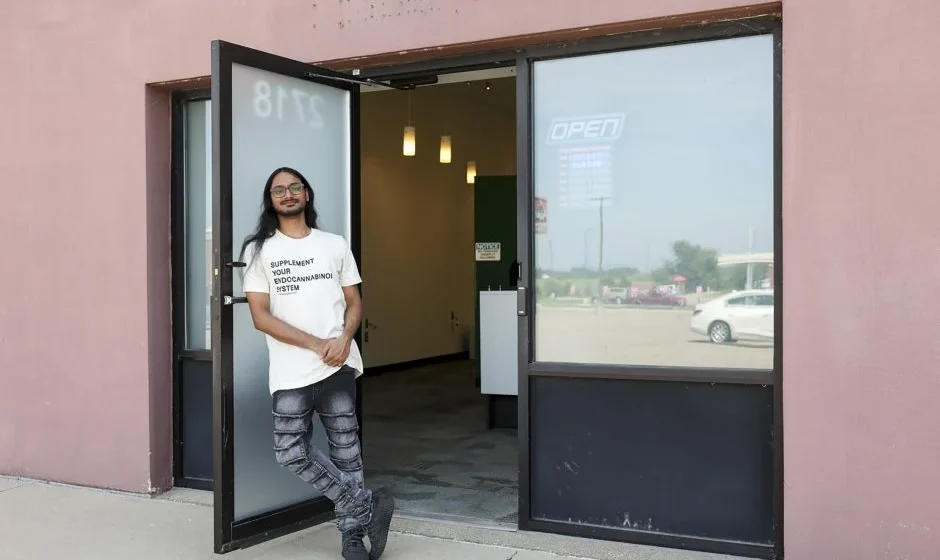
The Smoking Tree, owned by local entrepreneur Jacob Schlichter, was poised to make history as Albert Lea’s first legal cannabis dispensary. Having already secured the necessary state-level approvals and passed rigorous inspections, Schlichter viewed the local registration as a final administrative hurdle. He had scheduled a "soft opening" for Tuesday, the day following the council meeting.
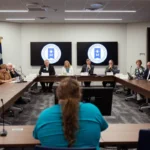
However, the council’s majority opted to reject the registration, citing a desire to push back against state mandates. The vote fell along a 4-3 split:
- Opposed to Registration: Mayor Rich Murray and Councilors Larry Baker, Rachel Christensen, and Keith Van Beek.
- In Favor of Registration: Councilors Brian Anderson, Jason Howland, and Reid Olson.
The denial came despite explicit warnings from the city’s own legal counsel and administrative staff. City Attorney Joel Holstad informed the council that the city lacks the legal authority to prohibit a business that has met all state and local requirements. Furthermore, City Manager Ian Rigg cautioned that the move could result in the immediate loss of hundreds of thousands of dollars in Local Government Aid (LGA).
Chronology: The Path to the "No" Vote
The conflict in Albert Lea did not emerge in a vacuum. It is the culmination of months of regulatory preparation and growing political resentment regarding the state’s legalization framework.
May 2023: State Legalization
The Minnesota Legislature passed, and Governor Tim Walz signed, the bill legalizing recreational cannabis for adults. The law established the Office of Cannabis Management (OCM) and set the ground rules for retail sales, which were expected to begin in earnest by 2025.
May 2024: Local Ordinance Adoption
Anticipating the arrival of retail shops, the Albert Lea City Council approved a local ordinance detailing the registration process. This ordinance established a "first-come, first-served" system based on the timestamp of an applicant’s state licensure. It also outlined zoning restrictions, limiting where such businesses could operate relative to schools, parks, and churches.
June 2024: Schlichter’s Milestone
Jacob Schlichter became the first micro-retail cannabis applicant in Minnesota to pass the state’s licensing inspection. This achievement placed him at the forefront of the industry statewide and solidified his position as the first in line for Albert Lea’s local registration.
July 18, 2024: Local Application Filing
City staff confirmed that Schlichter had completed all necessary local registration steps. City Manager Ian Rigg verified that the application met every requirement set forth by both the state and the city’s own May ordinance.
July 22, 2024: The Council Meeting
The registration was originally placed on the council’s "consent agenda," a category usually reserved for routine, non-controversial items that are approved in a single vote without discussion. However, the item was pulled for individual consideration, leading to the heated debate and subsequent 4-3 denial.
Supporting Data: The Legal and Financial Framework
To understand the gravity of the council’s decision, one must look at the specific constraints placed on local governments by Minnesota Statute 342.13.
The "12,500" Rule
Under state law, local governments cannot indefinitely ban cannabis businesses. Specifically, a city or county must allow at least one cannabis retail registration for every 12,500 residents. With a population of approximately 18,000, Albert Lea is legally required to register at least two cannabis businesses.
Limits of Local Authority
While cities can implement "reasonable" zoning restrictions—such as buffer zones around schools or daycares—they are expressly prohibited from using those ordinances to effectively ban all cannabis commerce. If an applicant meets the state’s OCM requirements and the city’s established zoning laws, the local government’s role is intended to be ministerial (administrative) rather than discretionary.
Financial Vulnerability
Albert Lea’s defiance carries a heavy price tag. The city receives over $6 million annually in Local Government Aid (LGA), which constitutes roughly one-third of its $18 million general fund. City Manager Ian Rigg noted that the state could impose a 5% penalty on LGA for non-compliance with the cannabis statutes.
- LGA Penalty: ~$300,000
- Estimated Legal Defense Costs: ~$100,000+
- Total Initial Risk: $400,000
Official Responses: Principles vs. Pragmatism
The council meeting served as a forum for two diametrically opposed philosophies on governance: the "Rule of Law" versus "Local Sovereignty."
The Opposition’s Stance
Councilor Larry Baker emerged as the most vocal critic of the state’s mandate. For Baker, the issue was not necessarily the cannabis itself, but the erosion of local authority. "We need to speak up, and this is just a point where I’m going to start speaking up," Baker said during the meeting. "It’s just a matter of principle. I get tired of control being taken, whether it’s state or federal government."
Baker expressed concern that if the city complied with this mandate, the legislature might eventually strip away other local powers, such as the ability to prevent high-rise developments in residential neighborhoods.
Mayor Rich Murray echoed these sentiments, accusing the state government of financial greed. "I do not like the way the state Legislature and the governor has rammed this down our throats with very little say in the process, all because they’re hungry for more revenue," Murray stated.
The Case for Compliance
On the other side of the dais, Councilor Brian Anderson argued that the council was engaging in a futile exercise that would only harm taxpayers. He noted that because the city had already passed an ordinance and the applicant had met all criteria, the council was merely providing the "illusion of choice."
"I think it’s up to me sitting up here to do the responsible thing and actually say that this is going to happen whether we want it to or not," Anderson said. "I think we need to embrace it and make the best of it."
City Attorney Joel Holstad was blunt in his assessment of the legal landscape, predicting a "highly unlikely chance of prevailing" in a lawsuit against the State of Minnesota. He characterized the defense of such a suit as a "legitimate" but ultimately losing battle that would drain city coffers.
Implications: A Precedent for Minnesota’s Green Frontier
The decision in Albert Lea ripples far beyond the city limits of Freeborn County. It serves as a "canary in the coal mine" for the Office of Cannabis Management as it attempts to launch a multi-billion dollar industry in a state with deep urban-rural divides.
Potential for Litigation
Jacob Schlichter, the owner of The Smoking Tree, now finds himself in the unenviable position of having to consider suing his own city. "The law is the law," Schlichter remarked. "Whether or not you agree with cannabis, we can all agree that this is a bad use of our tax money."
If Schlichter files a writ of mandamus—a court order compelling a government official to properly fulfill their official duties—the city could be forced by a judge to issue the license while also being held liable for Schlichter’s lost revenue and legal fees.
State Intervention
The Minnesota Office of Cannabis Management has a vested interest in ensuring that local governments do not create a "patchwork" of prohibition that undermines the legal market. If Albert Lea’s defiance goes unpunished, other conservative-leaning municipalities may follow suit, potentially leading to "cannabis deserts" across Greater Minnesota. This would likely trigger more aggressive enforcement from the state, including the aforementioned LGA withholding.
The Future of The Smoking Tree
Despite the setback, Schlichter remains committed to opening in Albert Lea. He has called upon local supporters to lobby the council members, hoping that public pressure might lead to a reconsideration of the vote in a future session. However, with the council’s majority framing the issue as a "principled stand" against state overreach, a change of heart may be unlikely without a court order.
For now, the storefront of The Smoking Tree remains dark, a symbol of the friction between a new state industry and the traditionalist roots of the communities it seeks to enter. As the legal dust settles, the residents of Albert Lea may find themselves paying a high price for their council’s moment of defiance—a price measured in hundreds of thousands of dollars in lost aid and legal bills.