





















































Echoes of History: A Teacher’s Uphill Battle to Flip Minnesota’s First Congressional District

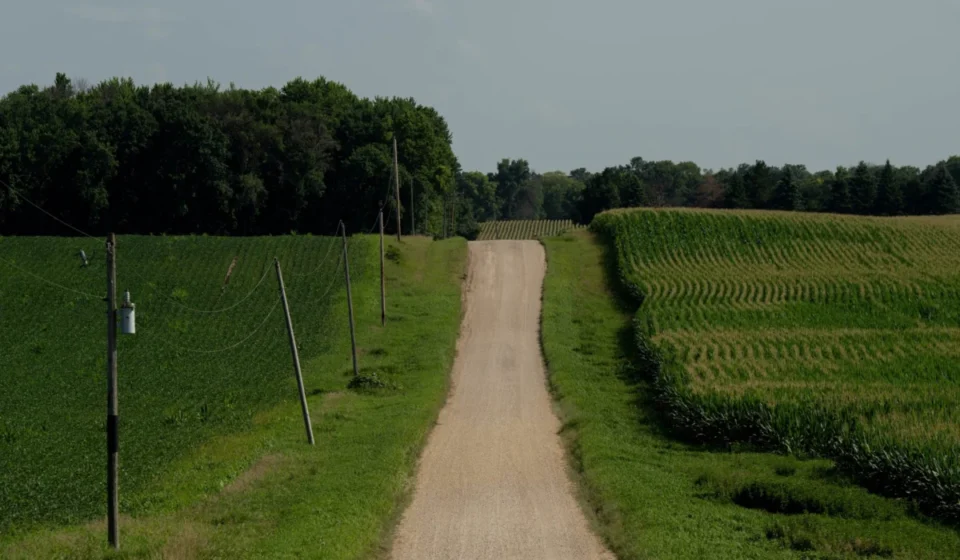
NEW ULM, Minn. – In the heart of Minnesota’s largely rural 1st Congressional District, a familiar narrative is unfolding. Nearly two decades after a political newcomer and teacher, Tim Walz, sensationally unseated a long-serving Republican incumbent, another educator is now embarking on a strikingly similar quest. Jake Johnson, a 42-year-old high school math teacher, is the Democratic challenger aiming to dislodge Republican Representative Brad Finstad from a seat that has become increasingly conservative since Walz’s historic victory.
Johnson’s campaign, characterized by an impressive ability to connect with voters and raise substantial funds, has garnered significant attention from the national Democratic Party. His inclusion on the Democratic Congressional Campaign Committee’s (DCCC) coveted "Red to Blue" list signals a serious, albeit challenging, bid to flip a district that political analysts widely rate as "likely Republican." This race is not merely a local contest; it’s a litmus test for the Democratic Party’s ability to reclaim ground in traditionally conservative rural areas and a potential indicator of broader shifts in the national political landscape.
A Look Back: Walz’s Blueprint for an Upset
The precedent for Johnson’s audacious challenge was set in 2006, when Tim Walz, then a history teacher and football coach from Mankato, decided to enter the political arena. With no prior electoral experience, Walz faced Gil Gutknecht, a moderate Republican who had held the 1st District seat for 12 years and appeared to have an unassailable hold. Walz’s campaign resonated with voters across the sprawling southern Minnesota district, tapping into a desire for fresh leadership and a message of common-sense representation. His moderate stance, combined with his relatable background as an educator, allowed him to build a broad coalition that ultimately propelled him to victory.
Walz served five terms in the U.S. House of Representatives, cultivating a reputation as a pragmatic Democrat before successfully running for governor in 2018. While some 1st District constituents now observe that Governor Walz has adopted more liberal policies, particularly concerning social welfare programs like universal school breakfasts and lunches and a generous paid family leave program, his initial appeal stemmed from his centrist approach and deep community ties forged through years in the classroom and on the football field. His success in 2006 demonstrated that even in a district with a strong GOP lean, a compelling candidate with a local background could defy expectations.
The Present Challenge: Johnson’s Campaign and Platform
Fast forward to today, and Jake Johnson, a high school math teacher from Stewartville, mirrors many aspects of Walz’s early career. Like Walz, Johnson is a political newcomer leveraging his years in education to build rapport with the community. Both men have successfully tapped into support from former students and the politically influential teachers’ unions, which view their candidacies as a direct extension of their commitment to public service.
Johnson, 42, is campaigning as a centrist Democrat, strategically positioning himself as a fiscal conservative. He has notably pledged to vote against any legislation that would increase the federal government’s borrowing capacity until Congress commits to balancing the budget. "Members of both parties are not taking this seriously," Johnson stated, referring to the nation’s nearly $40 trillion national debt. This stance is a calculated move to appeal to fiscally conservative voters in the district who might otherwise be wary of a Democratic candidate.

However, Johnson also aligns with mainstream Democratic values by advocating for the strengthening of the federal social safety net. This dual approach is deeply rooted in his personal history, much like Walz’s. Johnson grew up in Stewartville as one of 11 siblings, with a father who collected garbage and a mother who read meters door-to-door. He openly shares his family’s reliance on community and government assistance during his youth. "I was a SNAP (food stamp) kid," he recounted. "We were a Medicaid family." This lived experience provides a powerful narrative, connecting him to the struggles of working-class families and those who depend on vital social programs. Similarly, Walz’s family depended on Social Security survivor benefits after his father’s death, providing him with a profound understanding of economic hardship.
Supporting Data: District Dynamics and Political Realities
The 1st Congressional District of Minnesota presents a formidable challenge for any Democrat. Historically, it has been a largely rural and conservative stronghold. The 2024 presidential election saw Donald Trump secure 55% of the district’s vote, and Republican incumbent Brad Finstad, 50, has successfully fended off Democratic challengers since winning a special election for the seat in 2022.
Shifting Demographics and Political Polarization:
The district has undergone significant changes since Walz’s win. Redistricting, following the Census-mandated changes, expanded the district’s rural footprint by incorporating new territory along the Mississippi River in the southern part of the state, further solidifying its conservative tilt. More broadly, national trends show rural areas increasingly aligning with the Republican Party. Political science experts, like Kate Knutson of Gustavus Adolphus College, note that the "farmer" component of Minnesota’s Democratic-Farmer-Labor Party has significantly "peeled off."
Rural residents, social scientists explain, often feel that their cultural values – centered on church, family, and freedom from government interference – are under threat in a rapidly changing nation. Many also perceive the Democratic Party as dominated by urban elites who disregard rural lifestyles and prioritize city or immigrant populations over the struggles of the rural working class. These perceptions deepen the ideological divide and make cross-party appeal more difficult.
New Ulm: A Conservative Stronghold:
New Ulm, Finstad’s hometown and the county seat of Brown County, exemplifies the district’s conservative bedrock. The city is deeply proud of its German heritage, visible in landmarks like the towering Hermann statue, daily glockenspiel chimes, and popular Oktoberfest celebrations at August Schell’s brewery. Generations of families trace their lineage to the city’s 1854 founding, with groups like the Junior Pioneers of New Ulm and Vicinity celebrating descendants of early settlers. While long-term residents like Pat Booker, a military veteran and retired probation officer, note that the community has become more welcoming over time, New Ulm remains a Republican-majority city. Brown County, for instance, overwhelmingly supported Donald Trump over Kamala Harris in 2024.
Despite this, Johnson is actively campaigning in Finstad’s backyard. He participated in New Ulm’s Bavarian Blast festival parade in July and plans to hold a town hall in the city in August, demonstrating a commitment to engaging voters even in the most challenging areas.

Campaign Finance and National Support:
Johnson’s financial prowess has been a key factor in attracting national attention. As of June 30, campaign finance reports filed with the Federal Election Commission show Johnson has amassed nearly $1.9 million in campaign funds. While Finstad has a slight edge, raising close to $2 million, Johnson’s ability to compete financially with an incumbent in a tough district is notable.
The DCCC’s "Red to Blue" designation is a significant boost, granting Johnson access to vital fundraising support, strategic guidance, and campaign training. This national endorsement signals that the Democratic Party views Johnson as a credible contender capable of turning a red seat blue, a crucial part of their broader strategy to regain control of the U.S. House. Democrats are banking on factors like former President Trump’s approval ratings, an energized Democratic base, and the historical advantage enjoyed by the party out of power in midterm elections to flip swing districts and challenge Republican incumbents.
Accessibility Concerns:
Voter Pat Booker, who has closely followed both Walz’s and Johnson’s careers, highlights a perceived difference in accessibility between the challenger and the incumbent. " (Johnson) doesn’t hesitate to answer questions and doesn’t hesitate to meet with constituents, and that was the same way with Tim," she observed. Booker, concerned about potential SNAP and Medicaid cuts, described trying for eight months to secure a meeting with Finstad at his local congressional office, only to receive "one pat letter saying thank you for your concerns." This anecdotal evidence, if widespread, could undermine Finstad’s local connection, a crucial asset for any representative.
Economic Woes and Farmers’ Frustration:
A potential vulnerability for Finstad, despite the district’s conservative lean, lies in the economic frustrations of its agricultural community. Kate Knutson suggests that Johnson could "depress – at least a little bit – the enthusiasm among farmers for the GOP by continuing to hammer Finstad for embracing Trump policies that have hurt farmers." She points to specific issues: "Farmers are frustrated by tariff and immigration sweeps that are hurting the meat packing industry in southern Minnesota." Furthermore, global events like Iran’s shutdown of the Strait of Hormuz have stalled deliveries of essential oil and fertilizer, driving up farm input costs and exacerbating economic anxieties in farm country.
Official Responses: Candidates on the Record
When pressed on agricultural concerns, Representative Finstad has largely deflected criticism of Trump-era policies, instead blaming the Biden administration for the economic distress. "We’re heading in the right direction," Finstad told MinnPost after a July roundtable on veterans’ issues in Mankato. "We have come out of some tough times where the inputs have been really crippling for the last six years, and then on top of that we’ve had that stale market because of that lack of trade." This narrative aligns with the broader Republican strategy of attributing economic difficulties to the current Democratic White House.
Finstad generally avoids acknowledging Johnson directly, preferring to focus on official business and events tailored to his base. Political science professor Kevin Parsneau notes this strategy: "He’s speaking to his base. He does not want to be in an unscripted situation." When asked about constituent engagement, Finstad affirmed his commitment to accessibility. "I travel all over southern Minnesota," he stated. "I’m always listening and communicating with constituents who agree and don’t agree with me. I’m having those conversations and I would say reach out to me, reach out to our office. I’m more than willing to have a conversation and answer questions." He concluded with a faith-based perspective on his service: "It’s an honor of a lifetime to serve the 1st District’s 750,000 residents, but my goal is heaven, not Congress. When November comes, the voters of southern Minnesota will decide, but no one is going to outwork me."

Implications: Can History Repeat Itself?
Jake Johnson’s candidacy in Minnesota’s 1st Congressional District represents a compelling test of political resilience and strategy. The parallels to Tim Walz’s 2006 upset are undeniable: both are teachers, political newcomers, and moderate Democrats challenging Republican incumbents in a district that leans red. However, the political landscape has fundamentally shifted. Walz defeated a moderate Republican, Gil Gutknecht, in a less polarized era. Finstad, by contrast, has closely aligned himself with Donald Trump, reflecting the Republican Party’s sharp turn to the right and the former president’s enduring influence on local elections.
The DCCC’s investment in Johnson signals a belief that this race is winnable, perhaps a microcosm of a national strategy to chip away at Republican majorities by focusing on strong candidates who can articulate local concerns and draw on personal narratives. Johnson’s unique blend of fiscal conservatism and support for social safety nets, coupled with his deep roots in the district and campaigning prowess, offers a distinct appeal that could potentially bridge ideological divides. His efforts to engage voters in every county, including Finstad’s hometown of New Ulm, demonstrate a ground-up strategy crucial for an underdog.
The outcome of this race will have significant implications. For Democrats, a victory would offer a powerful blueprint for competing in tough rural districts and demonstrate that the "Red to Blue" strategy can yield results even in challenging environments. For Republicans, holding the seat would reaffirm the district’s conservative trajectory and underscore the challenges Democrats face in reclaiming rural America. As the 2026 election approaches, all eyes will be on Minnesota’s 1st District to see if history can indeed repeat itself, or if the altered political terrain proves too formidable for even the most promising of challengers.