















































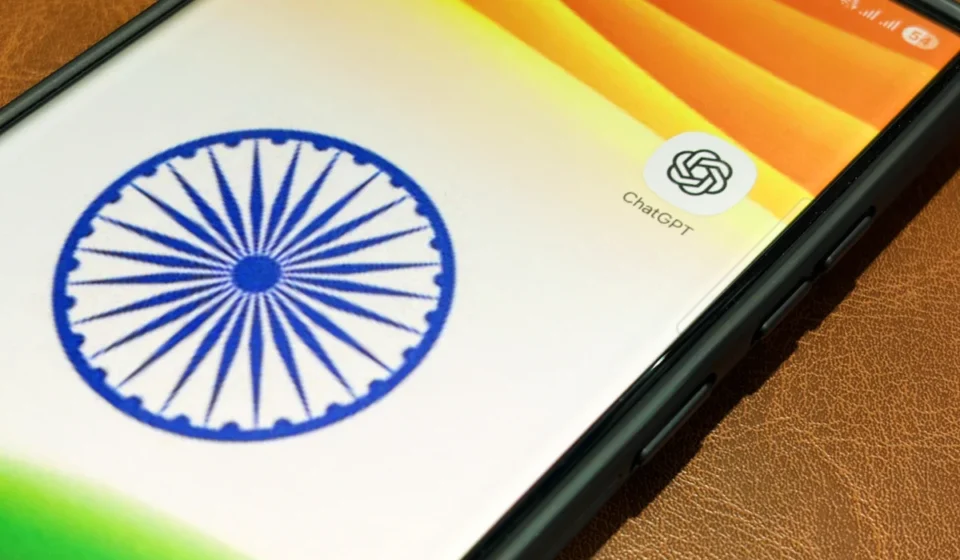

It appears the final bastion of ad-free digital utility has fallen. OpenAI, the architect of the modern generative AI boom, has officially confirmed that it will begin integrating advertisements into its ChatGPT Free and "Go" subscription tiers across India. The shift, which follows a quiet but definitive update to the company’s terms of service earlier this month, signals a pivotal change in how the world’s most popular AI assistant generates value from its massive user base.
For the millions of Indians who have integrated ChatGPT into their daily workflows, education, and creative processes, the transition marks the end of an era of purely utilitarian interaction. As OpenAI pivots toward becoming a diversified commercial powerhouse, the inclusion of advertisements is not merely an experiment—it is a strategic necessity.
The Strategic Expansion into India
India represents one of the most critical battlegrounds for global technology firms. According to data shared by OpenAI in February, the country boasts over 100 million weekly active ChatGPT users. A significant majority of this demographic relies on the platform’s free version or the more accessible "Go" tier, which was introduced to lower the barrier to entry for users in emerging markets.
OpenAI’s decision to monetize this specific user base is the culmination of a long-term cultivation strategy. Since mid-2025, the company has aggressively courted Indian users. This included the August 2025 launch of the sub-$5 ChatGPT Go plan and an audacious promotion that offered the service for free for an entire year to Indian users. By anchoring its presence through high-visibility partnerships with major sporting events like the Indian Premier League (IPL) and the Women’s Premier League (WPL), OpenAI successfully entrenched itself as a household name.
The appointment of a former Uber India executive to lead regional operations earlier this summer further underscored the company’s intent to treat India as a primary revenue driver rather than just a growth market.
A Chronology of Commercialization
To understand how OpenAI arrived at this point, one must look at the rapid evolution of its business model over the past eighteen months.
- February 2025: OpenAI announces its massive reach in India, revealing a 100-million-user milestone, setting the stage for future monetization.
- August 2025: The company launches "ChatGPT Go," a sub-$5 tier specifically designed for price-sensitive markets like India.
- October 2025: A bold, year-long free access campaign for the Go tier is launched, effectively capturing a vast segment of the Indian market.
- February 2026: OpenAI officially launches its ad-serving platform for U.S. users, marking the first time the AI interface became a billboard for third-party brands.
- June 2026: OpenAI records a quarterly revenue of $6.7 billion, showing growth, though it remains under pressure to accelerate profitability ahead of a potential IPO.
- August 2026: The ad program expands into Europe, signaling a global rollout.
- September 2026: OpenAI confirms the integration of ads into the Indian Free and Go tiers, supported by partnerships with global agencies WPP and Omnicom.
The Mechanics of the Ad Platform
OpenAI is not entering the advertising space alone. By partnering with industry giants WPP and Omnicom, the company is leveraging established infrastructure to ensure its ad-serving technology is robust from day one.
The launch, scheduled for next month, will feature an "Ad Manager" interface. This tool is designed to allow marketers to craft campaigns with a relatively low barrier to entry: a daily minimum budget of ₹725 (approximately $7.60). This move is clearly aimed at small-to-medium enterprises (SMEs) that want to tap into the high-intent traffic that ChatGPT generates.
Dave Dugan, Head of Global Ads Solutions at OpenAI, framed the move as a value-add for both businesses and users. "With ChatGPT Ads, businesses of every size can introduce themselves at relevant, high-context moments when decisions are beginning to take shape," Dugan stated. The company’s philosophy appears to be that because ChatGPT users are often in a "discovery" or "research" phase, the ads served to them will be inherently more relevant than static banner ads found on traditional search engines or social media feeds.
Financial Imperatives and the IPO Horizon
The move to introduce ads in India is inextricably linked to the broader financial narrative surrounding OpenAI. As the company eyes a potential Initial Public Offering (IPO) in the coming year or two, its revenue streams are under intense scrutiny by investors.
Recent reporting from The Wall Street Journal indicates that while OpenAI’s revenue is climbing—hitting $6.7 billion in the second quarter of 2026—the growth rate has been described as "tepid" when compared to rivals like Anthropic. In a market where capital expenditure for training frontier AI models reaches into the tens of billions of dollars, the need to stabilize and diversify revenue is paramount.
Currently, the company relies heavily on its "Plus" and "Pro" subscription tiers. However, with a stated goal of reaching 220 million paying subscribers by 2030, the reliance on premium subscriptions may not be enough to satisfy the aggressive valuation targets expected from public markets. By turning its free and low-cost tiers into ad-supported revenue engines, OpenAI is essentially creating a secondary monetization layer that captures the value of its non-paying user base.
Implications for Users and the AI Landscape
The integration of ads into the AI experience poses several philosophical and practical questions.
1. The Impact on User Experience
For many, the primary appeal of ChatGPT has been its "clean" interface—a minimalist chat box that feels like a conversation rather than a browsing experience. Introducing commercial content into this flow threatens to alter the user experience. Will ads feel like intrusive interruptions, or will they be seamlessly woven into the conversational fabric? OpenAI’s success in India will depend largely on whether these ads maintain the platform’s perceived integrity.
2. Data Privacy and Targeting
The shift to an ad-supported model raises questions about how user data will be utilized for ad targeting. While OpenAI has historically emphasized its commitment to privacy, the introduction of an advertising infrastructure typically requires more sophisticated tracking to ensure ROI for advertisers. Users will likely be watching closely to see if the "contextual" nature of these ads relies on their personal conversation history.
3. The Future of the Free Tier
There is a long-standing concern in the tech world that the "free" version of a product eventually degrades to force users into a paid subscription. If the advertising experience in the free tier becomes too aggressive, it may serve as a psychological nudge to upgrade to the ad-free Pro plans.
4. Market Dominance
By formalizing its ad business in India, OpenAI is effectively competing with the dominant search and social advertising players, such as Google and Meta. If ChatGPT becomes a viable place for brands to reach consumers during the early stages of the "decision-making process," it could shift significant marketing budgets away from traditional search-based advertising.
Conclusion: The New Normal
The arrival of advertisements in India’s ChatGPT interface is a watershed moment for the AI industry. It marks the transition of large language models from experimental, subsidized tools to fully integrated commercial platforms.
As OpenAI navigates the complexities of this rollout, the company must balance its need for aggressive revenue growth with the necessity of maintaining the user trust that built its empire. Whether the Indian market—a highly price-sensitive and tech-savvy demographic—will embrace this new, ad-supported ChatGPT remains to be seen. However, one thing is certain: the era of "free" AI, at least in the traditional sense, is rapidly coming to an end. OpenAI has set the course, and the rest of the industry will almost certainly follow.