






















































From Minneapolis to the Global Stage: How a Tiny Nonprofit Publisher Cracked the Booker Longlist

In the high-stakes, hyper-competitive world of international literature, the Booker Prize is the undisputed heavyweight champion. For the major conglomerates of London and New York, a longlist nomination is a triumph; for a small, independent nonprofit in Northeast Minneapolis, it is a seismic event.
Coffee House Press, an organization that has spent decades operating in the literary trenches, is currently basking in the glow of an unprecedented achievement: the inclusion of Makenna Goodman’s Helen of Nowhere on the 2026 Booker Prize longlist. This recognition represents more than just a nod to a talented author; it is a validation of a business model that prioritizes artistic risk over mass-market appeal, even as the broader publishing industry faces a precarious economic landscape.
A David vs. Goliath Moment for Coffee House Press
The journey of Helen of Nowhere from a Minneapolis office to the global stage is a testament to the unpredictable nature of literary discovery. Published by Coffee House Press in September 2025, the novel was later acquired by the London-based Fitzcarraldo Editions—a partnership that helped propel the book into the purview of the Booker judges.
The jury, in their official citation, characterized the work as "philosophically, politically and spiritually adventurous." For Makenna Goodman, a writer who has spent her career outside the glare of the mainstream spotlight, the nomination was nothing short of a shock.
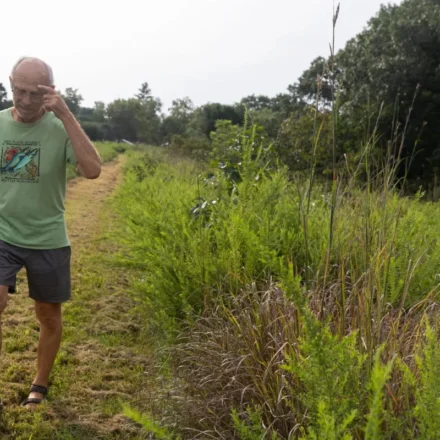
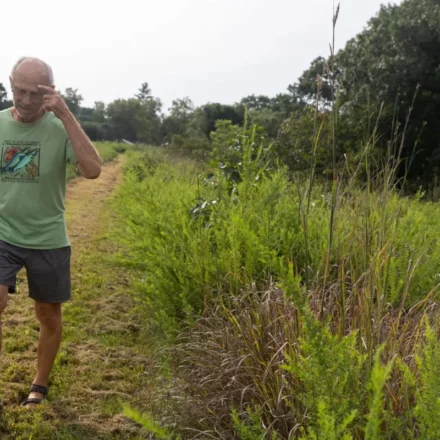
"I haven’t even gotten a New York Times review for either of my books," Goodman said from her home in Vermont, reflecting on the transition from quiet obscurity to the biggest prize in the English language. "So, it’s just wild to go from super quiet to being considered for the Booker."
Goodman is no stranger to the independent publishing ecosystem. Her first novel, The Shame, was published by Milkweed Editions, another pillar of the Minnesota literary community. "Independent publishers are known for taking risks on artists," she noted. "I think readers go to those presses specifically because they want something edgy—something that wouldn’t necessarily be greenlit by a corporate house."
The Anatomy of an Intellectual Novel
At a trim 140 pages, Helen of Nowhere is the shortest entry on the 2026 longlist. Its brevity, however, belies its structural complexity. Eschewing traditional narrative flows, the novel is written in six acts, utilizing four distinct characters to trade perspectives.
The plot serves as a biting meditation on modern life. It follows a professor whose self-styled persona as a "modern-day Thoreau" has begun to crumble. Feeling eclipsed by his student-turned-wife, he finds himself stewing in resentment during a real estate tour of a home in the woods. As the realtor navigates the couple through the property, she weaves in the story of Helen, the home’s former owner—a woman who truly lived the "off-the-grid" ideal that the professor only performs.
Through this setup, Goodman explores the commodification of nature, the disillusionment of the post-#MeToo era, and the peculiar, hollow allure of real estate. "I’m just using writing as a way to make sense of the world that I am in," Goodman explained. "It’s almost like a conversation with the self."
Navigating the Industry: The "Weird" Factor
The story of Coffee House Press is as much about the physical space it occupies as the words it prints. Their offices are located in a building that once served as a bottling plant for the Greenbelt Brewery. The floors remain thick and reinforced, a structural necessity that now supports a massive, historic letterpress machine—a relic from the press’s co-founder, Alan Kornblum.
Kornblum originally founded "The Toothpaste Press," a moniker derived from a literary movement that sought to elevate common, everyday objects into the realm of art. When he moved the operation to Minneapolis and rebranded as Coffee House Press, he kept the spirit of innovation alive.
Today, the current staff—led by Executive Director Linda Ewing and Director of Acquisitions and Marketing Mark Haber—is tasked with balancing that legacy with modern fiscal realities. Ewing, who stepped into the role in 2023 during a period of significant staff turnover, recalled a pivotal meeting with the Minnesota State Arts Board.

"We went around the table and I don’t know who started using this word, but someone said, ‘Well, we publish weird books,’" Ewing recounted. "And all the way around the table, every staff member used that word. I was like, ‘No, stop it!’"
While the term may lack the prestige of "avant-garde" or "experimental," it has stuck. In an era of algorithmic publishing, where many houses are looking for the "next big thing" that mimics the last bestseller, Coffee House Press has leaned into its identity as a home for the "weird."
Financial Sustainability in a Changing Climate
The acclaim surrounding Helen of Nowhere comes at a critical time. The nonprofit publishing sector is currently experiencing a "winter" of sorts, defined by rising printing costs, shifting distribution channels, and a tightening of philanthropic funding.
"We’re looked on as being an important small publisher," Mark Haber said. "But the other side of that is that it’s very expensive to continue to do the things you want to do in this environment."
To adapt, the press has had to implement painful structural changes. The staff has been reduced from 12 employees to fewer than six, and the annual output has been scaled back from 12–14 books to 8–10. These choices are designed to ensure that when they do publish, they can provide the necessary marketing and editorial support for their authors.
"This organization deserves our attention and our support," Ewing said, noting that for her, the work is a labor of love. The Booker nomination serves as a vital signal to donors and readers alike that small, mission-driven presses are not merely surviving; they are producing the most vital literature of our time.
The Broader Landscape: A Minnesota Connection
The 2026 Booker longlist is particularly notable for its ties to the North Star State. Beyond Goodman’s success, the list includes The Disappearers by Marlon James. James, a literary titan in his own right, holds a dual identity as an internationally acclaimed author and a part-time Minnesota resident and professor emeritus at Macalester College.
While Goodman’s book sits at 140 pages, James’s The Disappearers stands at 600, representing the vast breadth of what the Booker committee considers to be the pinnacle of fiction. James is scheduled to discuss his work in September at the "Talking Volumes" series in St. Paul, an event that underscores the depth of the literary ecosystem in the Twin Cities.
Implications: What Comes Next?
As the industry looks toward September 22—when the Booker shortlist will be finalized—and the ultimate announcement of the winner on November 9, the implications for Coffee House Press are significant. A win would bring a £50,000 purse, but more importantly, it would solidify the press’s reputation as a kingmaker in the indie world.
For readers, the success of Helen of Nowhere is a reminder to look beyond the bestseller lists curated by corporate algorithms. It is a reminder that the most provocative, challenging, and "weird" ideas are often cultivated in the small, scrappy offices of nonprofit presses that prioritize the integrity of the work above all else.
Whether or not Goodman takes home the trophy, the "Booker buzz" has already achieved a vital goal: it has refocused the spotlight on the necessity of independent publishing. As Mark Haber noted, receiving 25 submissions a week from writers across the globe proves that the appetite for what Coffee House Press produces is as strong as ever. In a world that often feels increasingly homogenized, the work of small publishers remains an essential, if fragile, sanctuary for the unconventional.