





































Suspended in Mid-Air: Inside Netflix’s High-Altitude Experiential Marketing Campaign on Sunset Boulevard

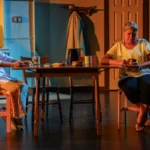
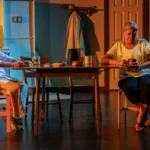
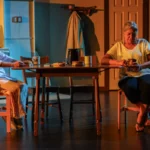
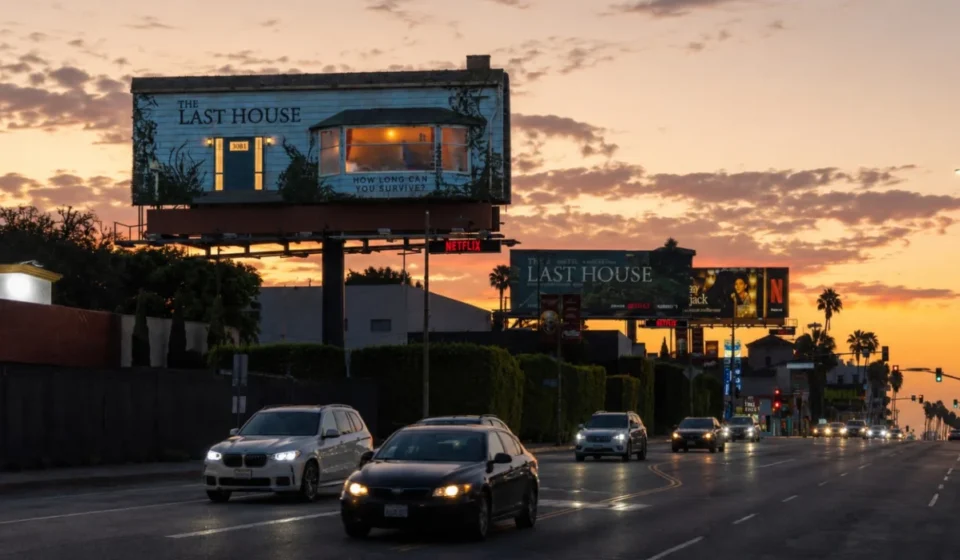
WEST HOLLYWOOD, CA — Passersby navigating the bustling, neon-lit corridor of the Sunset Strip in West Hollywood were greeted by an unusual sight: a fully furnished, three-dimensional micro-apartment suspended 30 feet in the air. Inside this elevated domestic sanctuary, a man was living, reading, eating, and observing the city below through a pair of binoculars.
The high-altitude installation, situated near the intersection of Sunset Boulevard and Selma Avenue, was not an eccentric housing protest or a high-concept art piece, but rather a meticulously engineered promotional stunt by Netflix. The activation was designed to generate buzz for The Last House, a sci-fi thriller starring Greta Lee and Wagner Moura, which debuted on the streaming platform on August 7.
By placing a living performer inside a transparent, elevated domestic space, Netflix effectively translated the psychological claustrophobia of its film into a physical spectacle, capturing the attention of commuters, social media users, and local emergency tracking networks alike.
Main Facts: The Anatomy of an Elevated Living Room
The installation on Sunset Boulevard departed significantly from traditional out-of-home (OOH) advertising. Rather than relying on a static print poster or a digital LED screen, Netflix constructed a fully realized, three-dimensional domestic room directly into the billboard’s structural frame.
+---------------------------------------------------------+
|                    [ THE LAST HOUSE ]                   |
|   +-------------------------------------------------+   |
|   |  [Window]       [Bookshelf]       [Armchair]    |   |
|   |   Curtains         Plants          Performer    |   | ~ 30 Feet
|   |                                  (Binoculars)   |   |   Elevation
|   +-------------------------------------------------+   |
|                                                         |
+---------------------------------------------------------+
=========================[ COLUMN ]========================
===========================================================
~~~~~~~~~~~~~~~~~~~ SUNSET BOULEVARD TRAFFIC ~~~~~~~~~~~~~~
The Physical Setup and Daily Routine
The suspended room was equipped with standard household amenities, including:
- An armchair and reading lamps
- Potted houseplants and bookshelves stocked with literature
- Functional windows draped with domestic curtains
- A whiteboard used as the primary medium for communication with the ground
The performer occupying the space moved into the billboard on Thursday morning with plans to remain there through the conclusion of the weekend. Observers on the ground and local news crews documented the occupant engaging in routine daily activities: stretching, eating meals, listening to music, and periodically peering down at the heavy Sunset Strip traffic using a pair of binoculars. As night fell, the performer transitioned into pajamas and a robe, maintaining the domestic illusion under the warm glow of interior lamps while the city’s nightlife swirled below.
The Narrative Connection
The creative concept behind the stunt is a direct physical manifestation of the plot of The Last House. The film follows a family suddenly and inexplicably trapped inside their suburban home by an unseen, impenetrable force. Deprived of contact with the outside world and unable to step beyond their threshold, they are forced to adapt to confinement while watching the world carry on without them.
By confining a performer to a glass-faced room suspended above one of the busiest thoroughfares in Los Angeles, Netflix mirrored this narrative tension. The occupant remained physically isolated in a domestic bubble, highly visible yet entirely detached from the pedestrian and vehicular traffic flowing continuously beneath him.
Chronology: From Construction to Weekend Vigil
The rollout of the campaign followed a precise timeline designed to maximize local curiosity before revealing the underlying commercial context.
Thursday: The Occupant Arrives
- 08:00 AM: The performer quietly ascended the billboard structure and took up residence inside the furnished room.
- 12:00 PM: Commuters on the Sunset Strip began noticing the figure. Initial speculation circulated on social media platforms, with users questioning whether the setup was an elaborate prank, a performance art piece, or an actual residential anomaly.
Friday: Media Mobilization and the Citizen App Phenomenon
- 02:00 PM: Local emergency and neighborhood safety applications, most notably the Citizen app, began broadcasting alerts. Users in the West Hollywood vicinity received notifications regarding a "man living inside a billboard," prompting curious residents to drive to the location to verify the reports.
- 05:30 PM: Television news crews, including CBS Los Angeles, arrived on-site. The occupant, unable to project his voice over the din of Sunset Boulevard traffic, utilized a hand-written whiteboard to interact with reporters, holding up a custom message greeting the station’s broadcast crew.
Timeline of the Sunset Boulevard Activation:
[Thu Morning] Performer enters billboard -> [Thu Afternoon] Social media speculation begins -> [Fri Afternoon] Citizen App alerts trigger local visits -> [Fri Evening] TV News (CBS LA) broadcasts live segment -> [Sat-Sun] Peak public engagement -> [Sun Night] Performer vacates structure
The Weekend: Peak Public Engagement
- Saturday – Sunday: The installation reached peak visibility. Pedestrians gathered on the sidewalks of Selma Avenue to photograph the performer, who continued his domestic routine, occasionally waving or displaying written messages on his whiteboard.
- Sunday Night: The performance concluded. The actor vacated the structure, leaving behind the empty, furnished room as a silent, static testament to the film’s premise.
Supporting Data & Context: Netflix’s History of Experiential Disruption
This high-altitude stunt is part of a broader, well-established marketing playbook for Netflix, which has long favored physical, sometimes unsettling installations over traditional media buys.
The Altered Carbon Bus Stop Incident (2018)
In 2018, to promote its cyberpunk series Altered Carbon, Netflix installed hyper-realistic, life-sized human figures wrapped in plastic inside bus shelters across West Hollywood. The figures, designed to look like organic "sleeves" (clones used to host human consciousness in the show), featured a subtle pneumatic mechanism that simulated breathing.
The installation drew widespread media attention, with some commuters expressing fascination and others reporting feelings of intense discomfort. The campaign demonstrated Netflix’s willingness to use the public spaces of Los Angeles as a canvas for high-concept, boundary-pushing experiential marketing.
+-----------------------------------------------------------------------+
| Comparison of Key Netflix Experiential Marketing Campaigns in LA      |
+------------------+------------------------+---------------------------+
| Campaign Year    | Property Promoted      | Stunt Mechanics           |
+------------------+------------------------+---------------------------+
| 2018             | Altered Carbon         | "Breathing" mannequins    |
|                  |                        | inside West Hollywood     |
|                  |                        | bus transit shelters.     |
+------------------+------------------------+---------------------------+
| 2024             | The Last House         | Live performer living in  |
|                  |                        | a furnished, 30-foot-high |
|                  |                        | billboard room.           |
+------------------+------------------------+---------------------------+
The Real Estate of Attention
Netflix’s reliance on physical advertising in Los Angeles is backed by significant corporate investment. In 2018, the streaming giant acquired a substantial portfolio of physical billboards along the Sunset Strip from Regency Outdoor Advertising in a deal valued at approximately $150 million. This acquisition gave the company permanent control over some of the most coveted outdoor advertising real estate in the world, allowing it to execute complex, long-term physical installations without the leasing constraints faced by typical advertisers.
Official Responses and Public Commentary
The campaign successfully elicited a wide range of reactions from the public, media, and marketing professionals, illustrating the power of physical novelty in a digital-first advertising landscape.
Public and Community Reaction
For local residents, the installation served as a momentary disruption to the visual monotony of corporate advertising. One resident, speaking to local reporters, noted that he only learned of the installation through a Citizen app alert.
"I saw a notification on my phone about a person living inside a billboard on Sunset," the resident remarked. "In LA, you see a lot of strange things, but a guy sitting in a furnished living room 30 feet in the air reading a book definitely warranted a drive over. It’s clever—it actually makes you stop and look, which regular posters don’t do anymore."
On social media, the stunt generated a wave of user-generated content. TikTok and Instagram creators filmed the performer from the street level, speculating on the logistics of his stay—such as how he accessed restroom facilities or how he slept through the constant roar of Los Angeles traffic.
Media and Industry Commentary
Industry analysts pointed out the strategic brilliance of the campaign’s minimalist branding. The billboard featured no massive corporate logos or extensive text blocks explaining the plot of The Last House. Instead, the physical setup forced viewers to engage with the core concept of the movie—confinement and observation—before they even learned the title of the film.
"This is a textbook example of ambient media," said an outdoor advertising strategist based in Los Angeles. "Standard billboards try to sell you a product by telling you about it. This billboard sells you an emotion—curiosity and a mild sense of voyeurism—which aligns perfectly with a thriller. It leverages the location perfectly; the Sunset Strip is so cluttered with massive digital screens that the only way to stand out is to do something analog, human, and deeply strange."
Implications: The Evolution of Experiential and Ambient Marketing
The success of the The Last House billboard highlights a growing shift in how entertainment companies approach audience acquisition in an era of digital saturation.
Overcoming "Ad Blindness"
With the rise of ad-blockers, premium ad-free streaming tiers, and the general desensitization of consumers to digital banners, traditional advertising avenues are yielding diminishing returns. "Ad blindness" is particularly acute in metropolitan hubs like Los Angeles, where residents are bombarded by thousands of commercial impressions daily.
By utilizing "ambient marketing"—the practice of placing advertising in unusual, unexpected places or using everyday objects in creative ways—brands can bypass the cognitive filters consumers use to ignore traditional ads. A living human being residing in a suspended room cannot be easily scrolled past or swiped away; it commands physical presence and demands cognitive processing from those who witness it.
The Virality Loop of Experiential Marketing:
[Physical Stunt on Sunset Strip]
       │
       ▼ (Passersby take photos/videos)
[Organic Social Media Shares (TikTok/Instagram)]
       │
       ▼ (Algorithmic amplification)
[Local/National News Coverage (CBS, blogs)]
       │
       ▼ (Global Digital Impressions)
[Increased Streaming Views on Netflix Platform]
The Viral Loop: Physical to Digital
While the physical installation was localized to a single intersection in West Hollywood, its target audience was global. Experiential stunts of this nature are engineered to serve as "content engines."
The physical billboard acts as the seed. The real-world spectators, local news outlets, and digital creators act as the distribution network, capturing the installation and broadcasting it to millions of internet users worldwide. A stunt that physically reached perhaps a few thousand commuters on Sunset Boulevard ultimately generated millions of impressions online, proving that in the modern marketing ecosystem, the physical world is often the best starting point for digital virality.