






















































The Northern Powerhouse: How Minnesota Became the Unlikely Epicenter of the Global Microgrid Revolution

In the suburban landscape of Bloomington, Minnesota, just northeast of the busy I-494 and Highway 100 interchange, stands a building that defies traditional architectural norms. With its red-and-blue exterior and sharp, angular lines, it resembles a futuristic sailboat or perhaps a high-tech sentinel standing at attention. This is the headquarters of Open Access Technology International (OATI), and while its exterior is striking, the work occurring within its walls is fundamental to the stability of the North American continent.
Inside, a phalanx of electrical engineers and high-powered computer servers coordinate the flow of electricity across the vast majority of North America’s high-voltage transmission lines. However, OATI is no longer just focused on the "macro" grid. The company, along with a burgeoning ecosystem of Minnesota-based firms, is leading a quiet revolution in microgrid technology—a shift that promises to redefine energy resilience, sovereignty, and efficiency in an era of climate volatility.
Main Facts: Minnesota’s Outsized Influence in Energy Technology
Minnesota has emerged as a premier hub for microgrid technology, design, and manufacturing. While Silicon Valley often captures headlines for software innovation, the Twin Cities and surrounding regions have built a multibillion-dollar industry centered on the "brains" of the power grid.
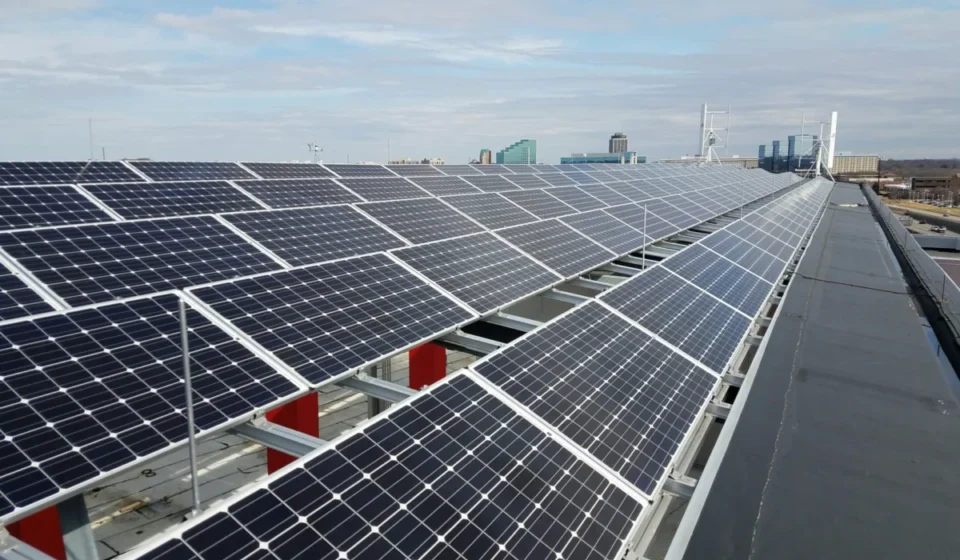
A microgrid is a self-contained energy system that allows local communities, businesses, or campuses to generate their own power. These systems can operate in tandem with the main electrical grid or "island" themselves, functioning independently during outages. Minnesota’s contribution to this field is multifaceted, involving:
- Software and AI Orchestration: OATI’s proprietary "GridMind" platform uses artificial intelligence to synchronize diverse energy sources, including solar panels, batteries, and cogeneration plants.
- Modular Hardware Innovation: Companies like Minneapolis-based Syncris are developing "Lego-block" style inverters that simplify the deployment of microgrids, making them accessible to smaller entities.
- Academic and Research Leadership: The Center for Microgrid Research at the University of St. Thomas is the only institution in North America providing hands-on professional and student training for advanced microgrid development.
- Economic Impact: According to the Minnesota Department of Employment and Economic Development (DEED), the state exported approximately $2.3 billion in "IT-related electrical equipment" in the last year alone, much of it tied to power electronics and controls.
Chronology: From Industrial Giants to AI-Driven Resilience
The state’s current status as a microgrid leader did not happen overnight; it is the result of a decades-long evolution of industrial expertise.
The Era of the Multinationals (1980s–2000s)
The foundation was laid by the presence of global conglomerates. Companies like Honeywell, Siemens, IBM, Eaton, and Johnson Controls established a massive footprint in Minnesota. These firms specialized in power electronics and energy controls, creating a deep pool of local engineering talent. During the late 1980s, Minnesota also became a center for trade publications like Independent Energy magazine, which documented the early shifts toward decentralized power.
The Software Shift (1990s–2010s)
Founded in the mid-1990s, OATI began by solving the complex problem of moving electricity across state and national borders. As the grid became more digital, OATI’s software became the industry standard for large-scale energy transactions. Simultaneously, specialized firms like Hunt Technologies in Pequot Lakes began pioneering advanced metering infrastructure (AMI), further digitizing the relationship between utilities and consumers.
The Microgrid Explosion (2020–Present)
The last five years have seen a pivot toward localized resilience. Driven by extreme weather events—such as the record-breaking June heatwaves in the Midwest and devastating hurricanes in the South—the demand for microgrids has surged. OATI transitioned its large-scale grid expertise into the microgrid space, using its own Bloomington headquarters as a proof of concept. Meanwhile, newer startups like Syncris were born out of research labs to address the "grid edge" challenges that traditional utilities struggled to solve.
Supporting Data: The Economics of Energy Independence
The growth of the Minnesota microgrid sector is backed by significant financial investment and technical performance data.
Federal and State Investment
In 2024, the federal government signaled its confidence in Minnesota’s energy leadership through substantial grants. The Biden administration awarded $3.15 million to the Red Lake Nation and $1.75 million to the White Earth Nation for solar-and-battery-powered microgrids. More recently, the Department of Energy announced an $8 million innovation grant for remote communities, a project in which Minnesota-based consultants and technology providers are heavily involved.
Technical Efficiency and Scalability
Data from OATI shows that their Distributed Energy Resource Management Systems (DERMS) are now utilized by more than 150 electric cooperatives across the U.S., including 24 members of the Dairyland Power Cooperative in Wisconsin and Minnesota. In North Carolina, an OATI-partnered "cottage community" project demonstrated that a 31-home microgrid could produce more power than it consumed, leading to an expansion of the project to support 300 homes.
The Cost of Inaction
For industrial customers, the data is even more compelling. Syncris reports that some of their customers were losing hundreds of thousands of dollars annually due to "power quality" issues—minor voltage fluctuations that degrade sensitive machinery over time. Microgrids act as a buffer, smoothing out these fluctuations and extending the life of industrial equipment from seven years to a projected 20 years.

Official Responses: Perspectives from the Front Lines
Key stakeholders emphasize that Minnesota’s success is rooted in a culture of self-reliance and technical pragmatism rather than the "move fast and break things" ethos of other tech hubs.
David Heim, OATI Vice President and Chief Strategy Officer:
"It’s cool that we are a Twin Cities company doing all this right here in our backyard, not out in Silicon Valley. We aren’t just theorizing; we are running our own data center on this technology. When the main grid goes down, we stay on."
Michael Burr, Founder and Director of Microgrid Initiatives:
"The most obvious reason that Minnesota has established an outsized footprint… is the longstanding presence of major multinational companies. Minnesota’s place in the industry has been driven by the longstanding efforts of Minnesotans to achieve greater energy sustainability, independence, and self-reliance."
Zach Edmond, Co-founder and COO of Syncris:
"Today, every system is a highly custom solution. They’re built as a one-off. Our technology is more like a Lego block. If you need more power, you can add more of them. We are making this technology accessible to the ‘grid edge’—the places the traditional system forgot."
Mary Brown, OATI Senior Executive VP and Chief Legal Officer:
"With import tariffs and changes to federal energy policy set to raise electricity bills, these resources will increasingly help reduce Minnesotans’ energy costs. Technology has advanced to the point that we can effortlessly orchestrate entire neighborhoods’ worth of cars and batteries."
Implications: A Bulwark Against an Uncertain Future
The rise of the Minnesota microgrid industry has profound implications for the future of the American energy landscape.
1. Climate Resilience
As extreme weather events become more frequent, the traditional centralized grid is increasingly vulnerable. Microgrids in New Orleans and North Carolina have already proven their worth by keeping community "resilience hubs" powered after hurricanes. Minnesota’s technology is the blueprint for how the rest of the country can survive prolonged outages.
2. Energy Sovereignty
For tribal nations, microgrids are more than just a power source; they are a tool for political and economic leverage. By generating their own power, tribes can negotiate from a position of strength with major utilities, demanding better rates or infrastructure concessions. This "energy sovereignty" is becoming a necessity for remote communities.
3. Economic Stability for the "Grid Edge"
Rural manufacturers and warehouses often suffer from being at the end of distribution lines. Minnesota’s innovations in modular inverters and power quality controls allow these businesses to remain competitive. By reducing the "hidden costs" of power fluctuations and outages, microgrids are preserving industrial jobs in rural areas.
4. Cybersecurity
As the grid becomes more decentralized and digital, it becomes a larger target for cyberattacks. The University of Minnesota’s collaboration with other Midwestern universities to "harden" microgrids against threats ensures that the transition to green energy does not come at the cost of national security.
In conclusion, the "robotic dog" building in Bloomington is a symbol of a larger transformation. Minnesota has successfully leveraged its industrial heritage to become the architect of a smarter, more resilient, and more democratic energy future. As electricity prices rise and the climate shifts, the world is increasingly looking to the North Star State for the power to keep the lights on.