



























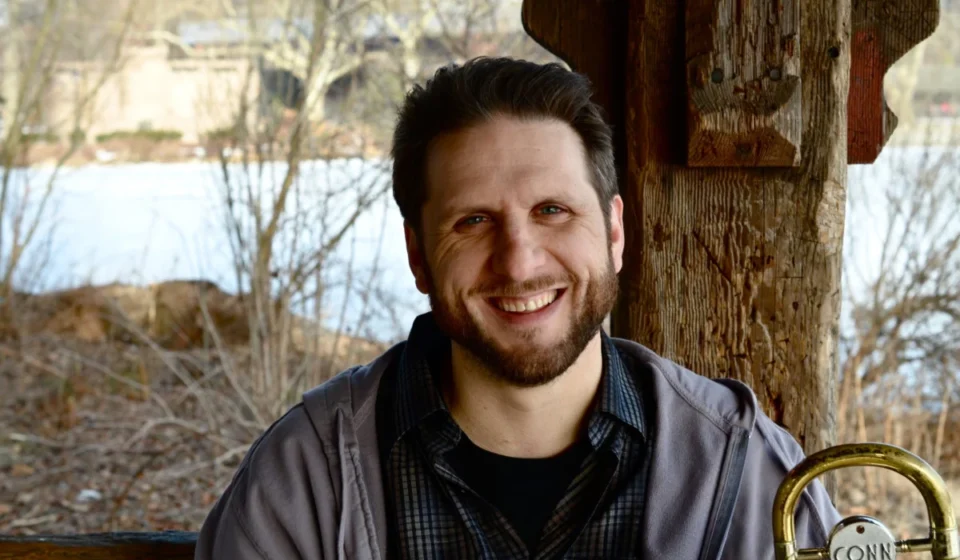

For 56 years, JC Sanford has lived and breathed music. A career defined by the rigorous discipline of the trombonist, the visionary scope of the composer, and the structural precision of the conductor, Sanford’s life has been an odyssey through the world of high-art jazz. Yet, as he stands at the precipice of the third annual Northfield Jazz Festival, he finds himself grappling with a set of variables that never appeared on a conservatory syllabus: the precise calibration of food truck logistics, the delicate ethics of portable toilet placement, and the anxiety-inducing complexities of weather insurance.
“I never in my life thought I’d be booking a food truck, never mind thinking, ‘OK, are two taco trucks enough, or should it be something else?’” Sanford says, his voice carrying a mixture of wry humor and deep, earnest dedication. “This stuff has been a real area of growth for me.”
Sanford, the primary engine behind the Northfield Jazz Festival, has transformed a simple community aspiration into a robust cultural institution. Returning this weekend, the festival represents a decade-long homecoming for the musician, who moved back to the college town 40 miles south of the Twin Cities to raise his daughter and seek a reprieve from the relentless pace of New York City.
The Evolution of a Local Tradition
The trajectory of the Northfield Jazz Festival is a case study in organic growth. Two years ago, the inaugural event was a modest, day-long affair showcasing three Northfield-based groups. Underwritten by a small grant from the Southeastern Minnesota Arts Council (SEMAC), it was an experiment in local engagement.
By the second year, partnering with the Northfield Arts Guild, Sanford tripled the festival’s budget. The event expanded to a three-day schedule, bridging the gap between local talent and national prestige by introducing nationally recognized headliners and performers from the Twin Cities.
This weekend marks the festival’s most ambitious iteration yet. Bolstered by funding from the Minnesota State Arts Board and Arts Experience, the festival has solidified its infrastructure. The growth is not merely financial; it is organizational. Sanford and a cadre of dedicated volunteers have refined their management style, turning the trial-and-error lessons of the previous two years into a polished, professional operation. Most importantly, the festival remains entirely free to the public, a core tenet of Sanford’s vision for accessible art.
A Weekend of Sonic Exploration: A Chronological Guide
The festival’s structure is designed for fluidity, encouraging attendees to drift between venues.
Friday Night: The Local Kickoff
The festivities begin at the Grand Event Center. Recognizing that Northfield’s diverse population—split between longtime residents and the 5,000 students of Carleton and St. Olaf—requires a broad approach, Sanford is leaning into community favorites. The Strawberry Jazz Collective, known for their infectious, swing-ready take on vintage standards, will open the night. They will be joined by the Bend in the River Big Band.
“It is a great way to get the locals who know these folks to be more attuned to events happening the rest of the weekend,” Sanford explains. “It’s a blowout that serves as an entry point for the wider musical journey.”
Saturday: Masterclasses and Virtuosity
Saturday pivots toward high-level artistry. At 1 p.m., the duo of Judi Vinar and David Stanoch will perform at the Northfield Arts Guild Theater, followed by the Dale Alexander Trio at the Northfield Public Library at 2:30 p.m.
The marquee event occurs at 7:30 p.m. at the First United Church of Christ, featuring Grammy-nominated pianist Christian Sands. Sands, 37, is a titan of contemporary jazz. Known for his ability to reshape standards with a blend of gusto and intellectual precision, Sands will also host a masterclass at 4 p.m., offering a rare window into the process of a world-class improviser.

Sunday: The Park and the Closing Note
Sunday retains the inaugural festival’s outdoor template at Way Park. Utilizing the "Showmobile"—a mobile bandshell—the day features a three-act lineup. The Michael Cain Trio kicks off the afternoon at 1 p.m., followed by the Charles Gorczynsky Tango Quartet.
The finale features the Inatnas Orchestra, a big band co-founded by Sanford and his wife, the acclaimed composer Asuka Kikatani. The set will feature trumpeter Russ Johnson—a legendary fixture of the New York jazz scene—and vocalist Anya Menk, a former student of Sanford’s. The festival concludes at 6 p.m. with a traditional jazz jam session at Imminent Brewing, hosted by the Blue Ox Trio.
Supporting Data: The Intersection of Art and Infrastructure
The success of the Northfield Jazz Festival is not just a result of musical curation; it is a result of navigating municipal bureaucracies and fostering community partnerships.
- Financial Model: The festival relies on a hybrid of state grants and private donations. By eschewing ticket sales, the barrier to entry is eliminated, ensuring that economic status does not dictate access to world-class music.
- Venue Distribution: By placing performances in diverse venues—libraries, churches, theaters, and parks—the festival integrates itself into the physical fabric of the town.
- The "Town vs. Gown" Dynamic: Northfield is defined by its colleges, but as Sanford notes, there is a historical tension regarding land use, taxes, and community integration. The festival acts as a mediator, utilizing public spaces and local businesses to create a shared cultural stake for all citizens.
Official Perspectives: The Organizer’s Vision
When asked about his experience returning to Northfield, Sanford reflects on how the town has evolved. "It is definitely much more diverse than when I went to high school here," he notes. "But in a lot of ways, it hasn’t changed that much. It has always been a community that really appreciated the arts."
Sanford views the administrative "minutiae"—the insurance, the portable toilets, the logistics—not as a burden, but as a necessary evolution of his career. "It is very easy to communicate with the people who work for the city departments," he says. "They tell me the steps to do what I have to do. And the Department of Tourism has been helpful because we’re all going for the same goal—to bring people to Northfield."
This sentiment reflects a broader philosophy of civic engagement. For Sanford, the festival is a tool for community enrichment. It is a way to prove that high-level jazz is not exclusive to the urban centers of New York or Chicago, but can thrive in the heart of a small, midwestern college town.
Implications for the Future of Regional Jazz
The Northfield Jazz Festival stands as a blueprint for other regional arts organizations. In an era where many independent festivals are struggling to maintain funding or relevance, Sanford’s model of transparency, community collaboration, and free access offers a sustainable path forward.
By creating a platform where a student like Anya Menk can share a stage with a veteran like Russ Johnson, and where a Grammy-nominee like Christian Sands can hold a masterclass in a local church, Sanford is doing more than just booking musicians; he is building a pedagogical and social ecosystem.
As the festival prepares to launch its third iteration, the question is no longer whether it can survive, but how far it can influence the local cultural landscape. For the residents of Northfield, this weekend is an invitation to witness the convergence of world-class talent and home-grown passion. For JC Sanford, it is the culmination of a lifelong commitment to the music, and a successful transition from the bandstand to the role of a community architect.
"The main thing for me," Sanford concludes, "if we ever had to start charging people, I don’t think I could keep doing this. The idea is, everything is free. If you show up, you have nothing to lose."