








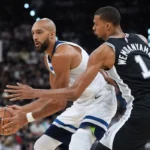








































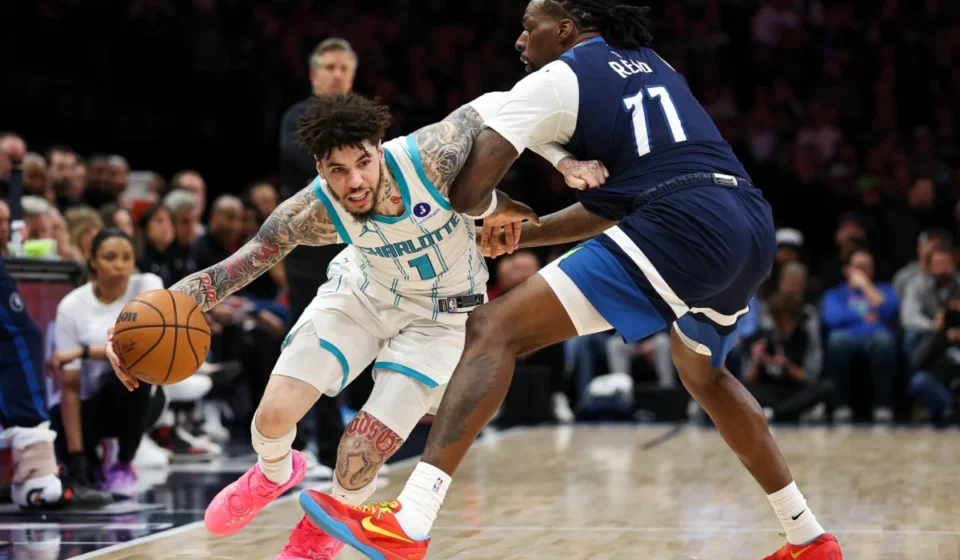

The Minnesota Timberwolves have officially entered the "Ball Era," and the price of admission was higher than even the most pessimistic fans dared to imagine. In a move that has sent shockwaves through the NBA, Timberwolves President of Basketball Operations Tim Connelly has orchestrated a blockbuster trade to acquire Charlotte Hornets superstar LaMelo Ball. In exchange, Minnesota has surrendered its longest-tenured player and beloved cult hero, Naz Reid, along with a staggering cache of future draft capital.
The move is vintage Connelly: bold, calculated, and entirely indifferent to the optics of gutting a roster’s depth for a singular, transformative talent. As the dust settles on the transaction, the Timberwolves are left with a new floor general and a profound question: Is this the final piece of the championship puzzle, or a reckless gamble that mortgages the franchise’s future for a player with a history of durability concerns?
The Anatomy of the Blockbuster
The trade, finalized on a frantic Thursday, sees Minnesota parting ways with Naz Reid—a player whose impact on the organization transcended his stat sheet. To facilitate the acquisition of Ball and wing Josh Green, Connelly effectively emptied the Timberwolves’ draft cupboard through 2033.
The terms are severe: Minnesota granted the Charlotte Hornets pick-swap rights for the 2028, 2029, and 2030 drafts, alongside second-round selections in 2029, 2032, and 2033. For a front office that prides itself on long-term sustainability, this represents a pivot toward an immediate, high-pressure window. The logic, however, is clear: Connelly believes the timeline of 25-year-old Anthony Edwards demands a primary playmaker capable of unlocking his elite efficiency.
A Chronology of the Summer Shake-up
The path to this trade was neither linear nor predictable. It began in the wake of a disappointing postseason exit, where the Timberwolves were dismantled by the San Antonio Spurs in the second round.
- Five Weeks Ago: Following the playoff exit, Connelly made his intentions clear, declaring, "If we mess up, we will mess up loudly. We are going to try and be as aggressive as possible."
- Tuesday: The front office initiated the roster purge by offloading Julius Randle and his $33-million contract. The move was initially viewed as a strategic maneuver to clear salary-cap space, with most analysts assuming Naz Reid would finally ascend to the starting power forward role.
- Thursday: The narrative shifted violently. In a move that mirrored the departure of Karl-Anthony Towns two years prior, the organization traded Naz Reid. The move left a fan base that had embraced Reid—evidenced by hundreds of "Naz Reid" tattoos and soaring memorabilia prices—in a state of disbelief.
Supporting Data: Why LaMelo Ball?
From a tactical standpoint, the rationale for targeting LaMelo Ball is rooted in the "Ant-centric" offensive philosophy. Data from the 2025-26 season highlights a glaring inefficiency in how Minnesota utilized Anthony Edwards.
According to analytics experts, Edwards proved to be one of the league’s most efficient catch-and-shoot threats, hitting 49.6% of his attempts in that role. Yet, because he was frequently tasked with primary ball-handling duties, only 28% of his three-point attempts were catch-and-shoot. By contrast, his pull-up three-point efficiency dropped to 35.3%.
Ball represents the antidote to this imbalance. Despite playing on a struggling Charlotte team last season, Ball thrived as a facilitator. When he was on the floor, the Hornets’ offensive rating jumped from 110.6 to 123.2. His ability to pierce defensive seams and initiate the pick-and-roll should theoretically allow Edwards to operate off-the-ball, where he is at his most lethal. Furthermore, the partnership between Ball and Rudy Gobert is expected to be a focal point; as a elite lob-initiator, Ball could be the catalyst that finally unlocks the full offensive potential of the Timberwolves’ defensive anchor.
The Connelly Doctrine: Risk as a Currency
When asked about the risks associated with such aggressive roster construction, Connelly remains characteristically unfazed. "The thing about risk, it is all self-induced pressure," he noted earlier this summer. "I’d rather get fired than sit here being in job-survival mode."
This philosophy defines the modern Timberwolves. By trading for Ball, Connelly has effectively doubled down on the idea that the team’s ceiling is determined by its elite young core rather than its depth. With eleven players aged 26 or younger—including Ball, Edwards, Jaden McDaniels, and newcomer Josh Green—the roster is built for explosive, high-tempo basketball. The strategy mirrors the aggressive rebuilding models seen in Oklahoma City and New York, though with significantly fewer draft assets remaining to pivot if the experiment fails.
Implications: The High Cost of Ambition
The acquisition of Ball is not without its red flags. Durability remains a significant concern; Ball has played more than 70 games in a season only twice in his six-year career, with several seasons marred by lengthy injury absences.
Furthermore, the departure of Reid and Randle creates a vacuum in the frontcourt. Can Jaden McDaniels adapt to an expanded role, or will the team look for bargain-bin veterans to fill the void? The answer likely lies in the development of young prospects like Joan Beringer, who is now expected to shoulder the backup center responsibilities.
Most importantly, the burden of leadership now rests heavily on Anthony Edwards. The coaching staff has long touted him as a potential "two-way superstar," but the consistency of his defensive intensity remains a point of contention. With the draft capital exhausted, the Timberwolves no longer have the luxury of slow growth.
The "Connelly Fever Dream" has produced its most ambitious result yet. The Timberwolves have traded their history and their future for the present. If LaMelo Ball can replicate his elite playmaking while staying on the court, this trade will be remembered as the move that cemented Minnesota’s status as a perennial contender. If not, the silence in the Target Center may eventually be filled by the echoes of a front office that swung for the fences and missed.
For now, the finger painting is done, the blockbuster is signed, and the pressure is at an all-time high. In the words of Connelly, the Wolves have chosen to "mess up loudly"—now, they must prove that they haven’t messed up at all.