



















































Senator Amy Klobuchar’s Ambitious Pivot: From Capitol Hill Clout to Minnesota’s Executive Seat

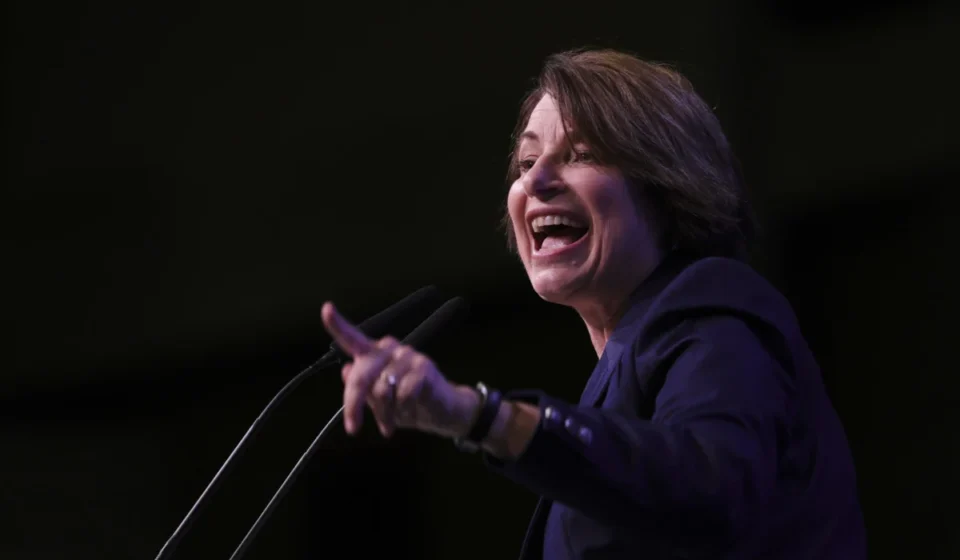
WASHINGTON, D.C. – In a political maneuver that has sent ripples through both national and state political circles, U.S. Senator Amy Klobuchar, a formidable figure in Democratic leadership, has announced her departure from the Senate to seek the governorship of Minnesota. Her decision, declared with a characteristic blend of pragmatism and passion, underscores a deep commitment to her home state, even at the cost of significant federal influence. "I truly do love my job in the Senate," Klobuchar stated emphatically, "but I love my state more than any job and I believe that we can get to a better place. I don’t like the status quo."
This unexpected pivot positions Klobuchar as the heavily favored candidate to become Minnesota’s next governor and, notably, the first woman to hold that esteemed office. Her campaign strategy is already taking shape, focusing on a clear distinction from the incumbent Governor Tim Walz and a robust 40-point plan aimed at comprehensive state government reform, with a particular emphasis on cracking down on any allegations of fraud. Klobuchar’s urgency is palpable, reflecting her long-standing reputation as a relentless worker. "Patience is a virtue," she quipped, "but it’s one I don’t have."
Main Facts: Klobuchar’s Pivotal Bid for Minnesota’s Governorship
Senator Amy Klobuchar’s decision to abandon her influential position in the U.S. Senate for a gubernatorial bid marks a significant shift in Minnesota’s political landscape. At 66, Klobuchar, a seasoned politician with a national profile, is poised to bring her brand of pragmatic progressivism to the state’s highest executive office. Her campaign is built on a promise of swift and decisive change, articulated through a comprehensive 40-point plan designed to overhaul state government operations and instill greater accountability.
Central to her immediate strategy is a deliberate effort to differentiate herself from current Governor Tim Walz, despite both being prominent DFL (Democratic-Farmer-Labor) figures. This distinction, while subtle, is critical for Klobuchar to establish her unique vision for Minnesota’s future. The reform plan is expected to tackle issues ranging from bureaucratic inefficiencies to ensuring transparency, all under the umbrella of restoring public trust. She has made it clear that she intends to address any perceived weaknesses in the current administration’s approach to governance.
Adding to the historical significance of her candidacy, Klobuchar is widely expected to become Minnesota’s first female governor, a milestone that resonates deeply with voters and further energizes her base. In a strategic move to build a diverse and effective leadership team, Klobuchar announced former Fergus Falls Mayor Ben Schierer as her running mate for lieutenant governor, signaling an intent to blend seasoned political experience with local administrative insights. Her formidable presence and clear message have immediately made her the frontrunner, setting the stage for a high-stakes election.
Chronology: The Unfolding of a Gubernatorial Campaign
The genesis of Klobuchar’s gubernatorial campaign can be traced back to an abrupt announcement in early January when Governor Tim Walz, contrary to prior expectations, declared he would not seek a third term. This decision blindsided many, including Klobuchar, who received only a single day’s notice. The unexpected open seat immediately triggered a flurry of activity within the DFL party, with both state and national Democrats quickly turning their attention to Klobuchar as the most viable candidate.
Despite the initial surprise, Klobuchar embarked on a period of careful deliberation. She acknowledged receiving numerous calls from Senate colleagues who "made the case for me to stay there," highlighting the considerable influence and seniority she had cultivated over nearly two decades in Washington. Having ascended to the No. 3 spot in Senate Democratic leadership as chair of the Steering and Policy Committee, her departure represented a significant personal and institutional sacrifice. However, after a two-week period of consideration, Klobuchar officially filed her paperwork as a gubernatorial candidate, making her intentions clear and effectively "eclipsing all other possible (Democratic) contenders," as noted by Tim Lindberg, a political science professor at the University of Minnesota Morris.
Her path through the DFL primary has been largely unchallenged, culminating in her securing the party’s endorsement despite a challenge from progressive newcomer Kobey Layne. This early consolidation of party support has allowed her to focus her substantial resources and political machinery on the general election. Indeed, Klobuchar’s campaign has already demonstrated remarkable financial prowess, raising over $7 million in campaign cash, far outpacing her Republican rivals. This robust fundraising, coupled with her existing statewide political infrastructure, provides a strong foundation for her gubernatorial bid, enabling her to quickly transition from a national legislative campaign to a state-focused executive race.
Supporting Data: The Rationale Behind the Move
Klobuchar’s decision, while seemingly abrupt, is rooted in a confluence of personal conviction, political opportunity, and a discernible frustration with the current state of national governance. One of the most frequently cited reasons by political analysts is the pervasive gridlock in the U.S. Senate. Tim Lindberg articulated this sentiment, suggesting that Klobuchar "may have suffered some frustration working in a closely divided Senate." The persistent challenge of the filibuster rule, requiring 60 votes for most major legislation, has notoriously impeded initiatives, regardless of which party holds the majority. For a politician known for her "get-things-done" ethos, the prospect of an executive role where she could directly implement policy and "make big changes" proved increasingly appealing.
Beyond the procedural frustrations of Washington, Klobuchar explicitly cited a deeper, more emotional motivation: a series of tragic events that have recently shaken Minnesota. She referred to the "horror" of incidents such as the murders of former Minnesota House Speaker Melissa Hortman and her husband, a mass shooting at Annunciation Catholic School, and the deaths of Renee Good and Alex Pretti during a federal operation. These events, she stated, profoundly influenced her decision, underscoring a belief that Minnesota could and should achieve "higher ground" amidst these challenges. Her desire to restore public trust in government and foster unity across political divides became a central tenet of her campaign narrative.
Strategically, the open gubernatorial seat presented an unparalleled opportunity. Lindberg highlighted that Klobuchar’s early entry effectively cleared the field of other potential Democratic contenders, giving her a significant head start. Jacob Rubashkin of Inside Elections further elaborated on Klobuchar’s inherent advantages, noting her "universal name ID and a track record of being the strongest DFL statewide candidates over the past decade." Her previous presidential bid and extensive Senate career have equipped her with a nationwide fundraising base and a well-oiled statewide infrastructure, assets that are invaluable for a gubernatorial contest.
Klobuchar’s reputation for bipartisanship and tireless work ethic also serves as a critical asset. Senator Tammy Baldwin (D-Wis.) lauded Klobuchar’s preparedness and "instinct to know where an agreement can be forged," traits honed through years of legislative deal-making. Senator John Hoeven (R-N.D.) corroborated this, noting Klobuchar’s relentless work ethic, often observing she "probably gets no more than six hours of sleep." This ability to bridge divides, even in a "politically palatable way" as Lindberg described – collaborating on shared interests without embracing opposing ideologies – has yielded tangible results. Examples include her partnership with Senator Ted Cruz (R-Texas) on the "Take it Down Act," which criminalizes the non-consensual sharing of AI-generated images, and her collaborative efforts with Senator Baldwin to secure over $1 billion for the replacement of the Blatnik Bridge. Her instrumental role in securing $3.2 billion for the Red River flood prevention project with Senator Hoeven further exemplifies her effectiveness in channeling federal resources to her state. This proven track record of delivering results through cross-party cooperation is a powerful message to Minnesota voters yearning for effective governance.
Official Responses: Voices from Capitol Hill and Beyond
The announcement of Senator Klobuchar’s gubernatorial bid elicited a range of responses, from expressions of support for her new endeavor to acknowledgments of the void her departure will create in the Senate. Klobuchar herself has been unwavering in articulating her primary motivation, repeatedly emphasizing her profound connection to Minnesota. "I love my state more than any job," she declared, framing her decision not as a rejection of her Senate career but as an affirmation of a deeper, more immediate calling to address state-level challenges and "change the status quo." Her impatience for transformative action, encapsulated in her comment about lacking the virtue of patience, speaks to her drive to see tangible results quickly.
From her colleagues on Capitol Hill, the reaction was largely understanding, albeit tinged with a recognition of the loss of her considerable influence. Senator John Hoeven, a Republican from North Dakota who has collaborated extensively with Klobuchar on regional projects like the Red River flood protection, provided a unique perspective. As a former governor himself, Hoeven offered insight into the appeal of the executive office. "Governor was the better job," he asserted, explaining that "as governor you can set your agenda and work with people to achieve it and Amy would really like that." His comments suggest an appreciation for Klobuchar’s desire for direct impact, even while acknowledging the difficult choice she faced in weighing her Senate career trajectory against a return to state leadership. Hoeven also noted that Klobuchar "had to weigh, ‘Do I stay and see how that plays out or do I go back to Minnesota?’"
Senator Tammy Baldwin, a Democrat from Wisconsin, who worked closely with Klobuchar on securing funding for the Blatnik Bridge, lauded her colleague’s effectiveness and dedication. Baldwin highlighted Klobuchar’s meticulous preparation when advocating for issues and her innate ability to "know where an agreement can be forged," qualities that made her an invaluable legislative partner. Furthermore, Baldwin pointed to Klobuchar’s unparalleled commitment to grassroots engagement, noting, "She visits every single county in Minnesota every year. That means to me she knows every corner of the state and she has her finger on the pulse." This intimate knowledge of her state, cultivated over years, underscores her readiness to lead at the executive level.
Political analysts, like Tim Lindberg, underscored the strategic brilliance of Klobuchar’s timing. Lindberg pointed out that "being governor allows her to be in a power position where she can do things and make big changes," aligning with Klobuchar’s expressed desire to move beyond legislative gridlock. Jacob Rubashkin of Inside Elections reinforced Klobuchar’s formidable electoral standing, labeling her "the strongest DFL statewide candidate over the past decade." He further detailed her strategic advantages, including a national fundraising network built during her Senate tenure and presidential run, and a ready-made statewide campaign infrastructure, all of which position her as a dominant force in the gubernatorial race.
Implications: A Shift in Power and Potential Impact
Senator Klobuchar’s pivot from Washington to St. Paul carries profound implications for both Minnesota and the national Democratic Party. The most immediate and significant consequence for Minnesota is the loss of her substantial clout in the U.S. Senate. As the No. 3 Democrat in leadership and with seniority dating back to 2007, Klobuchar possessed an unparalleled ability to direct federal resources and attention to her state. Her track record includes securing over $1 billion for critical infrastructure projects like the Blatnik Bridge replacement and a $3.2 billion federal-private partnership for the Red River flood protection plan. Such achievements, born from years of relationship-building and legislative acumen, would be exceedingly difficult for any newly appointed or elected successor to replicate quickly. This raises concerns about Minnesota’s future leverage in securing federal funding and advocating for its interests on a national stage.
Domestically, Klobuchar’s entry into the gubernatorial race significantly bolsters the DFL’s prospects in Minnesota. Her "universal name ID" and proven statewide electoral strength make her a powerful ticket-topper, with the potential to generate "coattails" for other DFL candidates down the ballot. This could be particularly crucial in a state that has not elected a Republican to a statewide seat in 20 years, making Klobuchar’s candidacy a strategic bulwark against any potential GOP resurgence. Her campaign is already focusing on key Democratic mantras such as "affordability," addressing rising costs of essential goods, and contrasting her vision with national Republican figures, including former President Trump, whose controversies are frequently highlighted in her fundraising appeals. She is expected to face one of three Republicans – House Speaker Lisa Demuth, former healthcare executive Kendall Qualls, or My Pillow CEO Mike Lindell – following their August primary, with Lindell often singled out in her campaign messaging due to his high profile and association with false claims about the 2020 election.
For Klobuchar personally, this move represents a fundamental shift in her political trajectory. From a national policymaker engaged in complex legislative battles, she transitions to a state executive with direct authority to implement her vision. This offers her the opportunity to enact the "big changes" she desires, unencumbered by the filibuster and Washington gridlock. Her 40-point plan for government reform and her emphasis on restoring trust reflect a desire to address the "horror" of recent state events and lead Minnesota to "higher ground." This new role will test her executive capabilities, but her history as Hennepin County Attorney and her reputation for relentless work suggest she is well-prepared.
Ultimately, Klobuchar’s gubernatorial bid is more than just another election; it is a strategic repositioning of a political heavyweight, driven by a deep-seated commitment to her state and a desire for more direct impact. While Minnesota stands to gain a highly experienced and dedicated leader, it must also grapple with the void left in Washington. Her journey from the halls of the Senate to the governor’s mansion will be closely watched, not just as a potential historic first for Minnesota, but as a case study in how national political figures adapt to the unique challenges and opportunities of state leadership.