

















































The $95,000 Cessna and the Six-Pack: Inside the Supreme Court Case Redefining Civil Asset Forfeiture

A six-pack of domestic beer typically retails for less than $15. Yet, according to the State of Alaska, the visibility of just one such package inside a passenger’s luggage is sufficient legal justification to permanently seize a pilot’s $95,000 aircraft.
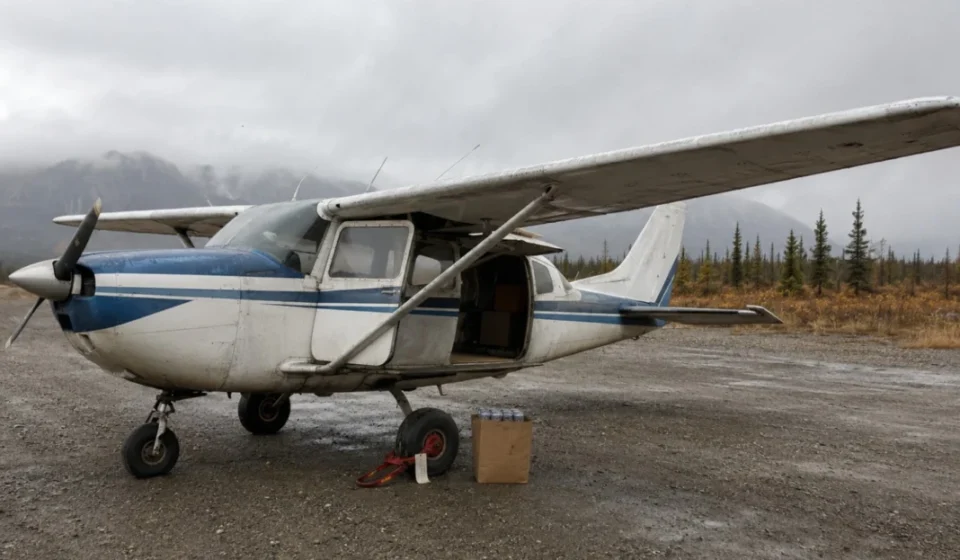
This stark disparity is at the heart of a long-running legal battle that has reached the highest court in the United States. The U.S. Supreme Court has agreed to hear the case of Jouppi v. Alaska, centering on Kenneth Jouppi, an 82-year-old retired bush pilot. For more than a decade, Jouppi has fought the state’s attempts to confiscate his 1969 Cessna U206D.
While the premise of a plane seized over a six-pack of beer makes for an arresting headline, the legal, geographic, and social realities of the case are far more complex. The dispute touches on the unique challenges of rural Alaskan governance, the devastating impact of alcohol abuse in isolated communities, and the constitutional limits of civil asset forfeiture under the Eighth Amendment.
Main Facts of the Case
The incident began on April 3, 2012, at an airfield in Fairbanks, Alaska. Kenneth Jouppi, owner and sole operator of the small air-taxi business KenAir LLC, was preparing to fly a passenger and her cargo approximately 110 miles north to Beaver, a remote, roadless village situated along the Yukon River.
[Fairbanks Airport] --- (110 Miles via Cessna U206D) ---> [Beaver, Alaska]
       |                                                         |
       * Intercepted by State Troopers                           * "Dry" Village
       * Cargo: Groceries & 72 cans of beer                      * Strict Alcohol Ban
The passenger had packed her groceries for the flight, but concealed within the cargo were 72 cans of beer: two cases of Budweiser and one case of Bud Light. The alcohol was reportedly intended for her husband, who served as the local postmaster in Beaver. Under Alaska’s "local option" laws, Beaver had adopted a strict prohibition on the sale, importation, and possession of alcohol in 2004.
Before the aircraft could take off, Alaska State Troopers conducted a search of the plane. According to law enforcement reports:
- A single six-pack of beer was visible at the top of an open grocery bag.
- The remaining 66 cans were packed deeper within the passenger’s personal luggage and boxes.
- The cargo was intercepted in Fairbanks, meaning no alcohol ever reached Beaver. Under Alaska state law, however, the mere attempt to transport alcohol into a dry community constitutes a completed offense.
The passenger subsequently pleaded guilty to violating local option laws. Jouppi and KenAir LLC went to trial, where prosecutors argued that the pilot had acted with "willful blindness" regarding the illicit cargo. A jury ultimately convicted Jouppi of a misdemeanor charge for knowingly transporting alcohol to a dry community, pointing to the visible six-pack as evidence that he should have inspected the rest of the cargo.
Chronology of the 15-Year Legal Dispute
The legal trajectory of Jouppi v. Alaska spans nearly a decade and a half, moving from a local misdemeanor trial to the steps of the nation’s highest court.
+-------------------------------------------------------------------------+
|                               TIMELINE                                  |
+-------------------------------------------------------------------------+
| 2004        | Beaver, Alaska votes to become a completely "dry" village.|
+-------------+-----------------------------------------------------------+
| April 2012  | Troopers intercept Jouppi's plane in Fairbanks.           |
+-------------+-----------------------------------------------------------+
| 2013-2014   | Passenger pleads guilty; Jouppi is convicted of a         |
|             | misdemeanor; criminal sentencing is finalized.            |
+-------------+-----------------------------------------------------------+
| 2014-2024   | State pursues civil forfeiture of the $95,000 Cessna.     |
|             | Case winds through state administrative and trial courts. |
+-------------+-----------------------------------------------------------+
| April 2025  | Alaska Supreme Court rules unanimously in favor of the    |
|             | state, declaring the forfeiture constitutional.           |
+-------------+-----------------------------------------------------------+
| Late 2025   | U.S. Supreme Court grants certiorari to hear the appeal.  |
+-------------+-----------------------------------------------------------+
| Est. 2027   | Anticipated U.S. Supreme Court decision.                  |
+-------------------------------------------------------------------------+
Criminal Prosecution and Sentencing
Following the 2012 intercept, the criminal portion of the case concluded with relatively minor penalties, reflecting Jouppi’s lack of a prior criminal record:
- Incarceration: Jouppi was sentenced to 180 days in jail, with 177 days suspended, leaving him to serve a three-day active sentence.
- Financial Penalties: The court imposed a $3,000 fine on Jouppi (with $1,500 suspended) and a $10,000 fine on his company, KenAir LLC (with $8,500 suspended).
- Probation: Both Jouppi and his company were placed on probation for three years, which they completed without incident.
The Civil Forfeiture Battle
While the criminal case concluded quickly, the civil asset forfeiture proceedings did not. The State of Alaska filed to permanently seize Jouppi’s 1969 Cessna U206D, valued at approximately $95,000. Jouppi contested the seizure, arguing that losing his primary business asset—worth more than thirty times his actual criminal fine—constituted an "excessive fine" under the Eighth Amendment of the U.S. Constitution.
The State Supreme Court Ruling
In April 2025, the Alaska Supreme Court issued a unanimous opinion upholding the forfeiture. The state’s highest court concluded that the loss of the plane was not "grossly disproportionate" to the gravity of the offense. The court emphasized the systemic harm of bootlegging in rural communities and noted that the state legislature had intentionally designed severe forfeiture laws to deter pilots from operating as supply chains for illegal alcohol.
Following this defeat, Jouppi’s legal team petitioned the Supreme Court of the United States, which added the case to its docket (Jouppi v. Alaska, Docket No. 25-246).
Supporting Data: The Legal and Social Landscape
To understand why the State of Alaska pursued a $95,000 aircraft over a misdemeanor offense, it is necessary to examine the socio-economic and logistical realities of the state’s rural interior.
Rural Alaska and the "Local Option"
More than 100 remote Alaska Native villages have adopted some form of alcohol restriction under the state’s "local option" laws. These communities are categorized into three regulatory tiers:
| Community Status | Restrictions |
|---|---|
| Wet | Alcohol sale, possession, and importation are legal under standard state regulations. |
| Damp | Sale is prohibited, but personal importation and possession are allowed within strict limits. |
| Dry | Complete prohibition. The sale, importation, and possession of any alcohol are illegal. |
Beaver, with a population of approximately 50 residents, chose to go entirely "dry" in 2004 to combat high rates of domestic violence, accidental deaths, and suicide.
Public Health and the Logistical Monopoly of Aviation
Alaska’s defense of its forfeiture policy rests on two primary arguments:
- The Cost of Alcohol Misuse: In isolated communities, the societal cost of alcohol abuse is magnified by geography. Many villages lack local hospitals, mental health facilities, or permanent law enforcement. Emergency medical evacuations (medevacs) for alcohol-related trauma must be conducted by air, costing taxpayers tens of thousands of dollars per flight.
- The Aviation Bottleneck: Because rural villages are cut off from the state’s road system, they are entirely dependent on small aircraft for mail, medicine, groceries, and passenger travel. This geographic reality makes small aircraft the exclusive vector for commercial bootlegging. By targeting the aircraft itself, the state aims to remove the physical instrument of the crime.
Official Responses and Legal Arguments
The upcoming Supreme Court battle features two fundamentally opposed interpretations of how constitutional protections against excessive punishments should be applied to individual citizens.
       STATE OF ALASKA's POSITION               vs.             KENNETH JOUPPI's POSITION
+------------------------------------------+             +------------------------------------------+
| * Focus on systemic, statewide harm.     |             | * Focus on individual culpability.       |
| * Plane is the essential "instrument"    |             | * Value of plane ($95k) is vastly        |
|   making the crime possible.             |             |   disproportionate to the $1.5k fine.    |
| * Strict deterrence is necessary to      |             | * Government should not use broad social |
|   protect vulnerable communities.        |             |   problems to justify extreme penalties. |
+------------------------------------------+             +------------------------------------------+
The State’s Position: Deterrence and Instrumentality
State prosecutors argue that focusing solely on the retail value of the intercepted beer ignores the true scale of the offense. In its briefs, the state maintains that:
- The airplane was the essential tool used to facilitate the crime. Without the Cessna, the illegal transportation of cargo to Beaver would have been impossible.
- The legislature’s intent was to create a high-stakes deterrent. If pilots risk losing only a minor cash fine, the high profit margins of bootlegging in dry villages would make the activity a calculated business risk.
- The court must weigh the forfeiture against the collective harm of the bootlegging industry, rather than treating the flight as an isolated event involving a single passenger.
The Petitioner’s Position: Individualized Justice
Jouppi’s attorneys argue that the Alaska Supreme Court erred by substituting a generalized social crisis for an assessment of the defendant’s actual conduct. They argue that:
- Jouppi was not a high-level bootlegger running an organized smuggling operation; he was a local charter pilot who failed to inspect a passenger’s grocery bag.
- The Eighth Amendment’s Excessive Fines Clause requires an individualized assessment of proportionality. Courts must compare the value of the seized property directly to the gravity of the specific defendant’s offense, their level of culpability, and their criminal history.
- Allowing governments to justify massive property seizures by pointing to broad societal problems (such as alcoholism or drug addiction) effectively guts constitutional protections, as almost any forfeiture can be rationalized under the guise of public health.
Constitutional Implications and Broader Impact
The Supreme Court’s decision in Jouppi v. Alaska could reshape civil asset forfeiture laws nationwide.
The Legacy of Timbs v. Indiana
The legal framework for this case was established in the landmark 2019 Supreme Court ruling Timbs v. Indiana. In Timbs, the Court ruled unanimously that the Eighth Amendment’s protection against excessive fines is a fundamental right incorporated against state and local governments under the Fourteenth Amendment.
That case involved Tyson Timbs, an Indiana resident whose $42,000 Land Rover was seized by the state after he pleaded guilty to a low-level drug offense. The Court ruled that the forfeiture was subject to the Excessive Fines Clause but did not establish a clear, standardized test for lower courts to determine what makes a financial penalty "grossly disproportionate."
Resolving the Judicial Split
In the years since Timbs, a split has emerged among state and federal courts regarding how to measure the excessiveness of a forfeiture.
                          HOW TO MEASURE "EXCESSIVENESS"?
                                         |
         +-------------------------------+-------------------------------+
         |                               |                               |
  Focus on the Offense            Focus on the Tool              Focus on the Harm
  - Assess individual guilt       - Seize any property used      - Justify high fines
  - Compare property value          as an "instrumentality"        by citing statewide
    to statutory fines.             to commit the crime.           crimes and social costs.
If the Supreme Court rules in favor of Jouppi, it could establish a strict, nationwide standard requiring state courts to conduct detailed, individualized hearings before seizing property. Such a ruling would require judges to weigh the owner’s personal culpability, their financial resources, and the ratio between the property’s value and the maximum statutory criminal fine.
Conversely, a ruling in favor of Alaska would grant state and local governments broad authority to defend high-value forfeitures by linking the seized property to wider social harms, potentially neutralizing the protections established in Timbs.
Conclusion
Fourteen years after Alaska State Troopers boarded his Cessna in Fairbanks, Kenneth Jouppi is retired, and his air-taxi business, KenAir LLC, has been dissolved. The physical aircraft, once a vital tool for delivering mail and medicine across the Alaskan interior, remains grounded—transformed from a commercial asset into a central piece of American constitutional litigation.
The Supreme Court is scheduled to hear oral arguments in the case during its upcoming term, with a final written opinion expected by the summer of 2027. Until then, the legal fate of a $95,000 airplane remains tied to a $15 six-pack of beer, serving as a high-stakes test of where the line between public welfare and constitutional protection is drawn.