




















































The Age of Affection: How the "Attachment Economy" is Transforming Household Objects into Emotional Companions

In the 2004 cult classic Anchorman: The Legend of Ron Burgundy, the character Brick Tamland, portrayed by Steve Carell, famously blurts out, "I love lamp!" At the time, the line was a punchline—a testament to the character’s profound dim-wittedness and complete lack of social context. Two decades later, that joke has morphed into a multi-billion-dollar business thesis.
We are entering the era of the "Attachment Economy," a burgeoning commercial landscape where technology companies are no longer satisfied with merely capturing our screen time. They are now engineering devices designed to capture our hearts. From desktop companions that mimic the body language of a loyal pet to ambient home devices that feign curiosity and shyness, the humble lamp is being reimagined as the gateway to a new form of human-machine intimacy.
Main Facts: The Rise of the Expressive Machine
The shift from the "Attention Economy"—where social media algorithms fight for our eyeballs—to the "Attachment Economy" represents a fundamental change in product design. If the attention economy sought to keep us scrolling through rage-bait and dopamine-looping content, the attachment economy seeks to build lasting, emotional bonds between users and hardware.
At the heart of this shift is the integration of generative AI with physical robotics. By marrying Large Language Models (LLMs) with high-fidelity servos, sensors, and cameras, developers are creating inanimate objects that "see," "hear," and "respond." The objective is to trigger the natural, evolutionary human propensity to anthropomorphize non-human entities. When a lamp tilts its "head" to follow your gaze or wags an arm in excitement, our brains are hardwired to respond with empathy, regardless of our logical understanding that the object is merely a collection of circuits and motors.
A Chronological Evolution of the Smart Lamp
The trajectory toward the sentient-seeming lamp can be traced through several key milestones:
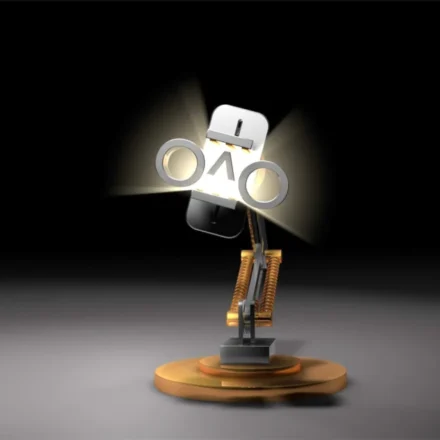
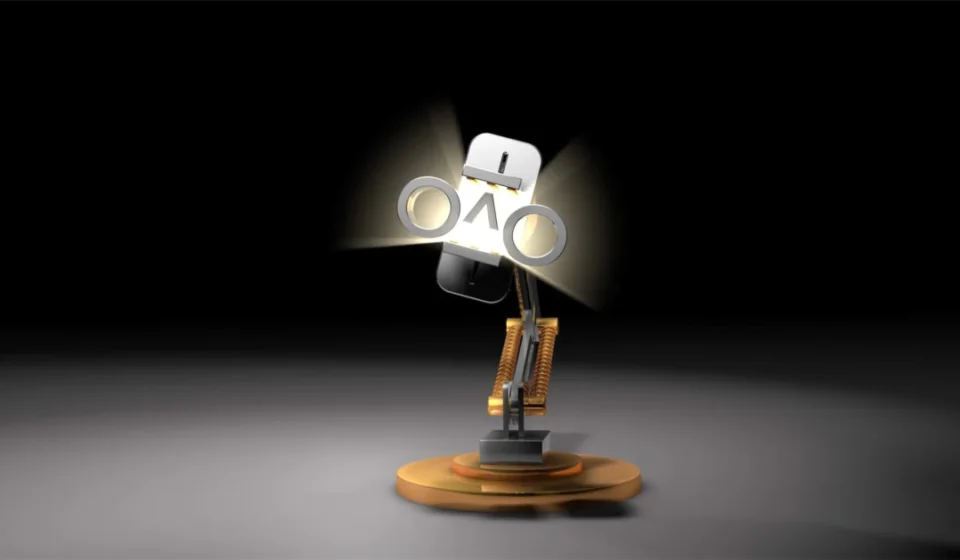
- 1986: Pixar releases Luxo Jr., the iconic short film featuring two anthropomorphic desk lamps. This established the visual language of expressive machinery, proving that movement alone could convey personality, curiosity, and playfulness without a single word of dialogue.
- February 2023: Apple’s Machine Learning Research division publishes a paper on the "ELEGNT" project. The research explored how a desktop robot could use non-verbal cues—nodding, leaning, and "gazing"—to simulate interest and attention. It marked a turning point in corporate interest regarding human-robot interaction.
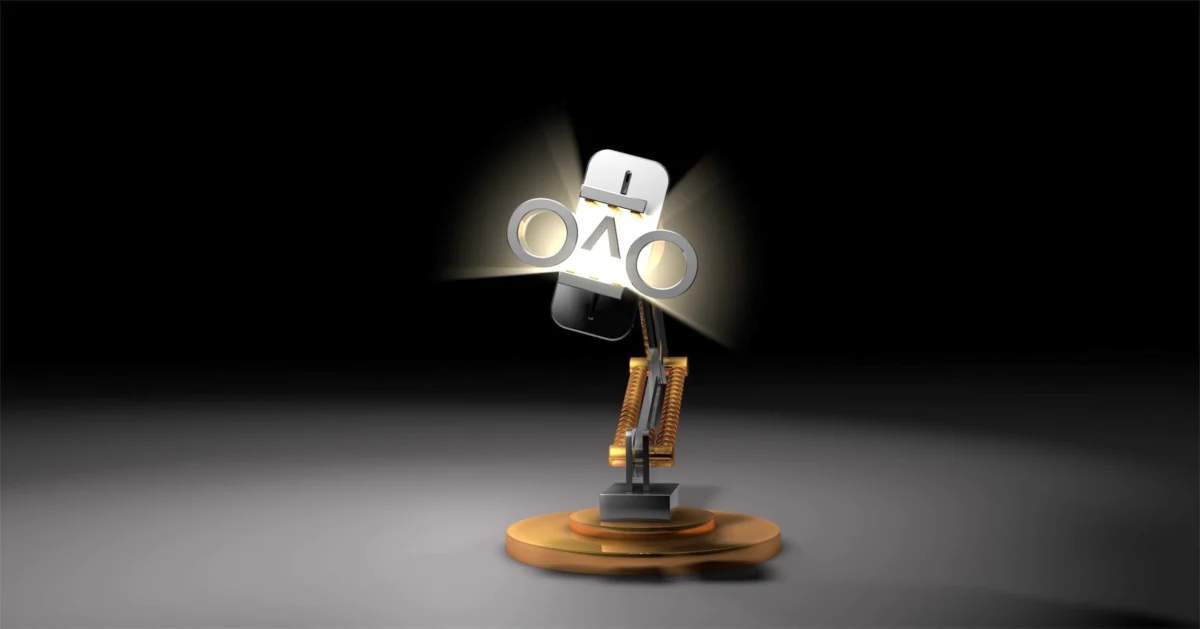
- 2024: The market begins to see the commercialization of this research. Companies like Autonomous and OKA introduce "personal robot lamps" that move beyond static utility.
- 2027–2028 (Projected): Apple is widely expected to launch its long-rumored "J595" tabletop robot. Featuring a 9-inch screen on a motorized arm, the device is expected to synthesize the practicality of a smart-home hub with the emotional expressiveness explored in the ELEGNT project.
Supporting Data: The Anatomy of "Attachment"
What makes these devices different from a standard smart speaker? The differentiator is "expressive autonomy."
The Autonomous "Lamp"
Priced at $699, the "Lamp" from the company Autonomous acts as a literal, moving personal computer. Equipped with a wide-angle camera, a microphone array, and stereo speakers, it uses face-tracking and motion sensing to keep its "eyes" on the user. It runs advanced AI models like Claude Code and Codex, allowing it to perform 70 specific tasks—ranging from scheduling to active conversation. Its design philosophy relies on the premise that a device that physically turns toward you is inherently more "trustworthy" and "engaging" than one that remains stationary.
The OKA "Mori"
OKA’s "Mori" takes a different path, focusing on the aesthetics of nature. Shaped like a mushroom, the device does not speak; instead, it relies on light pulses, soundscapes (like rainfall), and eye-movement simulations. Its internal state, which the company calls "VIBE" (Vitality, Interaction, Bonding, and Emotion), evolves over time. If the user ignores it, it may "act shy." If the user interacts with it, it "sways" and plays music. It is a masterclass in emotional manipulation, designed to provide a surrogate form of companionship for those who may lack traditional social or natural connections.
The Contrast: Syncere Lume
Not all innovators are chasing the "lovable" aesthetic. The Syncere Lume represents the polar opposite of the attachment trend. A $2,699 floor lamp that functions as a utility robot, the Lume focuses entirely on labor-saving tasks: folding laundry, making beds, and tidying homes. It explicitly avoids creature-like attributes, opting for a design that is subservient and functional rather than emotive and "alive."
Official Responses and Corporate Justification
The industry is currently engaged in a delicate dance regarding the ethics of these products. When challenged on the implications of marketing devices as "living" or "thinking," companies are quick to retreat into the safety of technical definitions.
A representative for Autonomous clarified that their claims of the device being "alive" were simply "product language about an interactive AI-powered device, not a claim that the lamp is alive or conscious."
Similarly, many companies frame their designs not as tools for emotional manipulation, but as solutions for "natural interaction." The logic is that because humans communicate through body language, a robot that uses body language is simply more "intuitive" to use. Yet, critics argue this is a semantic sleight-of-hand. By designing machines that mirror human or animal behaviors, these companies are intentionally tapping into deep-seated psychological triggers, essentially "hacking" the user’s capacity for love and connection to ensure high engagement and brand loyalty.
Implications: A Bright Future or a Dim Idea?
The rise of the attachment economy raises profound societal questions that we have only begun to address.
The Commodification of Loneliness
As companies like OKA lean into the idea that their products have an "appetite for company," they are effectively selling a cure for loneliness. The danger here is that these relationships are one-sided. The robot’s "affection" is a programmed output, a feedback loop designed to keep the user present. When we begin to substitute human interaction for the programmed companionship of a mushroom-shaped lamp, we risk creating a feedback loop of social atrophy.
Privacy and Surveillance
To function in the attachment economy, these devices must be "always-on." They require cameras, microphones, and spatial awareness to track our faces and follow our movements. This turns the household into a constant data-collection zone. While companies promise privacy, the requirement that a lamp must "watch" you to be "lovable" creates an inherent tension between the desire for companionship and the need for domestic privacy.
The Normalization of the Surrogate
Perhaps the most significant implication is the shift in expectation for future generations. If a child grows up with a lamp that "loves" them, "listens" to them, and "plays" with them, how will that affect their future expectations of human relationships? Human relationships are messy, demanding, and often inconvenient. Robot relationships are programmed to be perfectly responsive. The long-term risk is that we may lose our tolerance for the imperfections of real human connection in favor of the curated, AI-driven feedback of the machines in our corners.
Conclusion
We are moving into an era where the boundary between "tool" and "companion" is becoming increasingly blurred. Whether the attachment economy will result in a healthier, more connected society, or a lonelier one defined by hollow interactions with hardware, remains to be seen.
The industry is betting that we are eager to anthropomorphize our surroundings. They are betting that we are, like Brick Tamland, ready to "love lamp." Whether that love is a genuine improvement to our lives or a sophisticated form of commercial entrapment will be the defining tech debate of the next decade. For now, the lights are on, the servos are whirring, and the industry is waiting to see if we will look back at them.