





















































Minneapolis Arts Spotlight: A Week of High-Tech Innovation and Existential Reflection

This week, Minneapolis cements its status as a premier destination for high-caliber arts, with two of the city’s most significant cultural institutions—the Minnesota Orchestra and the Guthrie Theater—offering audiences transformative experiences. As the Minnesota Orchestra launches its bold "Sound Unbound" series with a visually reinvented Firebird, the Guthrie Theater invites patrons into the bleak, resonant landscape of Samuel Beckett’s Waiting for Godot. Together, these productions highlight the city’s commitment to pushing the boundaries of traditional performance art.
The Convergence of Music and Digital Art: The Firebird at Orchestra Hall
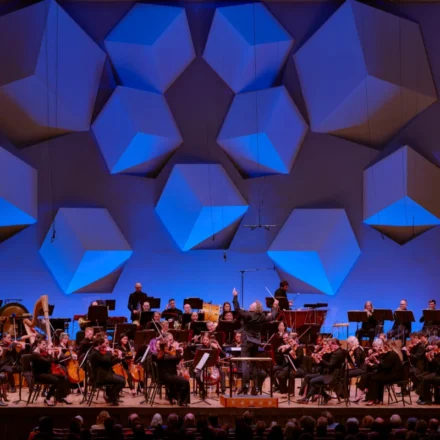
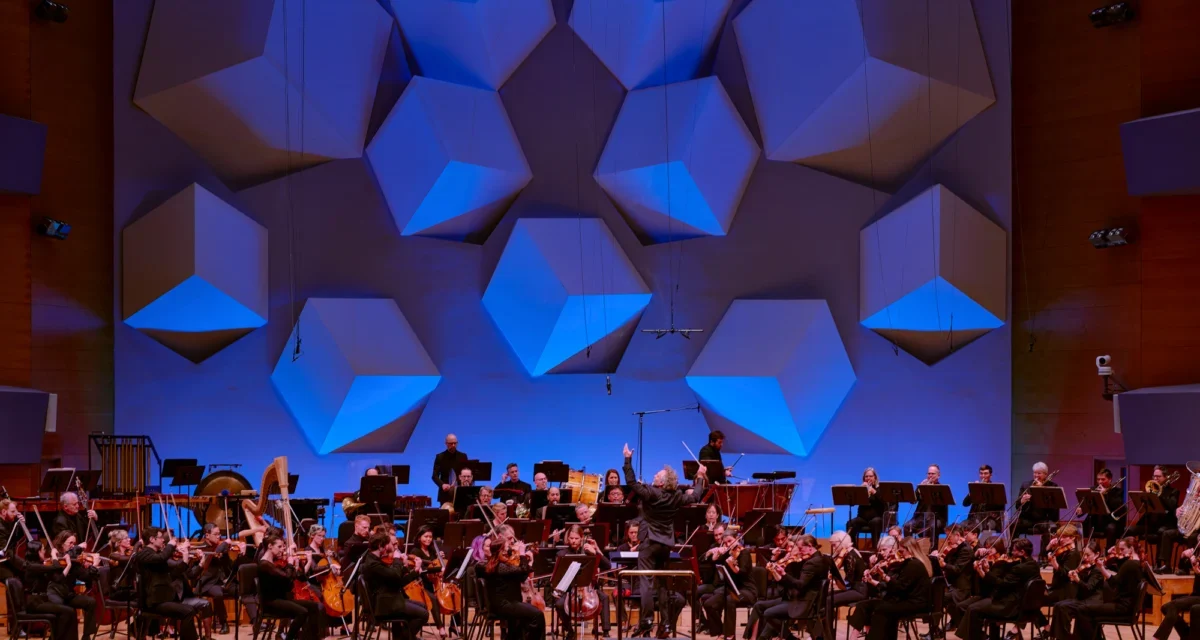
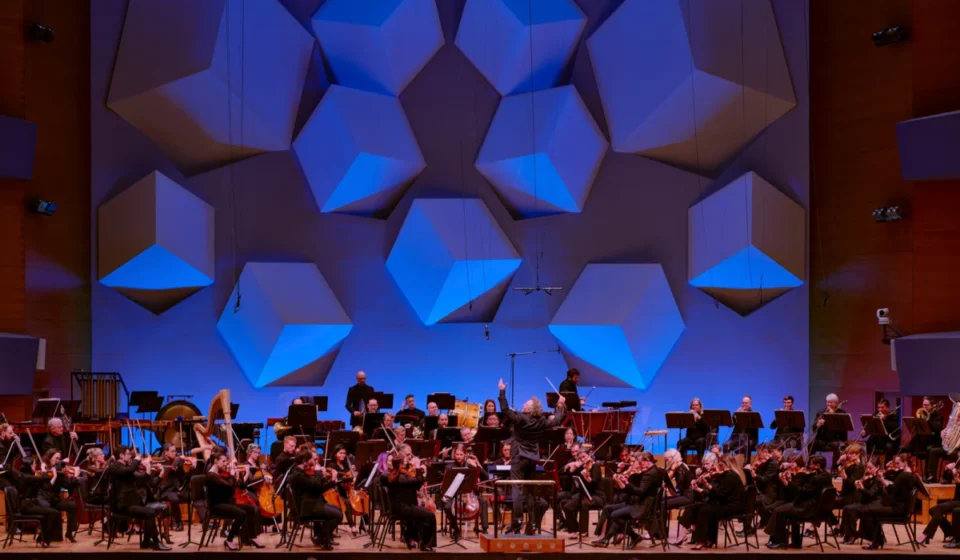
The iconic architectural cubes adorning the back wall and ceiling of Orchestra Hall are being transformed this week into a living, breathing canvas. BAFTA-winning visual designer Tal Rosner has been tapped to spearhead a radical aesthetic departure for the Minnesota Orchestra’s season opener: a high-tech, video-mapped interpretation of Igor Stravinsky’s 1910 masterpiece, The Firebird.
This collaboration serves as the flagship event for the orchestra’s new multi-year series, "Sound Unbound," which seeks to bridge the gap between classical symphonic music and contemporary visual art. By integrating advanced projection mapping—a technique that warps digital animations to fit the complex geometry of physical structures—Rosner is attempting to turn the hall itself into a narrative participant.
A Modernist Masterpiece Revisited
The Firebird holds a storied place in musical history. Composed for Sergei Diaghilev’s legendary Ballets Russes, it was a pivotal work that helped launch the modernist era of classical music. For the audience in 1910, the score was a revelation; for the Minnesota Orchestra’s 2025 audience, the challenge is to maintain that sense of radicalism.
"I don’t show the princesses, but the princesses are represented by golden ribbons," Rosner explained regarding his metaphorical approach. His design does not aim for literal representation but rather seeks to echo the rhythms, colors, and emotional shifts of Stravinsky’s score. The narrative arc follows the folkloric battle between Prince Ivan and the sorcerer Koschei, a tale of liberation and magic that Rosner treats with a modern, non-representational visual language.
Technical Precision and Collaborative Maturity
For Rosner, the "cubes" of Orchestra Hall were not an obstacle, but an invitation. "Almost every design decision I made is rooted in the fact that the cubes are the projection surface," he noted. "All the design elements are in constant consideration of the layout of the cubes, so the mapping is very, very, very accurate."
This project reflects a shift in Rosner’s own artistic philosophy. Having evolved from a background in television graphics—where his early dreams were set on the high-energy world of MTV—he now embraces a more "holistic" approach to performance. By working closely with the orchestra’s in-house lighting crew to manage pacing and cues, he has moved away from the "look at me" vanity of solo digital art, favoring a collaborative synergy that respects the musicians as much as the visuals.
Existential Dread at the Guthrie: A New Take on Godot
Across downtown Minneapolis, the Guthrie Theater is presenting a production that stands in stark contrast to the shimmering digital heights of Orchestra Hall. Artistic Director Joseph Haj is staging Samuel Beckett’s Waiting for Godot, a 1953 pillar of the Theatre of the Absurd.
While The Firebird uses technology to expand the senses, Haj’s Godot uses minimalism to strip the audience down to their core anxieties. Beckett famously left almost no room for interpretation in his stage directions, meticulously timing every silence and pause. Yet, under Haj’s direction, the production breathes new life into this rigid structure, questioning how the play’s existential dread lands in a contemporary, hyper-polarized world.
The Resonance of Beckett in Modern Times
Beckett’s work was born from the trauma of the French Resistance and the global fight against fascism. In the current socio-political climate, described by cultural critics as an era of "end times fascism," the play’s central question—how do we maintain hope when the world seems irredeemably bleak?—has gained a chilling new relevance.
The production features a powerhouse cast: David Strathairn as Vladimir and Jimmy Kieffer as Estragon. Despite the rigid requirements of Beckett’s dialogue, the chemistry between the two leads is palpable. Kieffer provides a grounded, lovable comedic touch that serves as the perfect foil to the gravitas of Strathairn, who brings an aching depth to the second act that leaves the audience suspended in the play’s signature existential silence.
Supporting the Narrative: Sound and Performance
The production is bolstered by Darron L. West’s immersive sound design, which creates a sense of immediacy that is, at times, unnerving. By embracing the "dire minimalism" of the script, the ensemble creates an atmosphere where even a minor "line flub" or a slight pause in movement feels significant. It is a testament to the cast that they can inhabit a play so well-trodden and make it feel as though the audience is witnessing the futility of waiting for the first time.
Supporting Data and Production Details
Minnesota Orchestra: The Firebird & Orchestral Masterworks
- Program: Stravinsky’s The Firebird, George Walker’s Icarus in Orbit, and Prokofiev’s Concerto No. 2 in G minor for Piano and Orchestra.
- Soloist: Pianist Vadym Kholodenko.
- Conductor: Music Director Thomas Søndergård.
- Dates: Friday, Sept. 25 at 8 p.m.; Saturday, Sept. 26 at 7 p.m.
- Venue: Orchestra Hall, 1111 Nicollet Mall, Minneapolis.
- Pricing: $64–$159.
The Guthrie Theater: Waiting for Godot
- Playwright: Samuel Beckett.
- Director: Joseph Haj.
- Cast: David Strathairn (Vladimir), Jimmy Kieffer (Estragon), William Sturdivant (Pozzo), Jim Lichtscheidl (Lucky).
- Dates: Runs through Oct. 11. Weekday performances typically at 7:30 p.m., with weekend matinees at 1 p.m.
- Pricing: $25–$91.
Implications: The Role of Culture in a Rapidly Changing World
The juxtaposition of these two major productions in a single week offers a fascinating snapshot of Minneapolis’s cultural landscape. The Minnesota Orchestra’s embrace of "Sound Unbound" suggests an industry-wide realization that to survive in the digital age, classical institutions must offer something that cannot be replicated on a screen—or, conversely, must use the screen to enhance the physical experience of a live concert.
Tal Rosner’s assertion that his Firebird design is "impossible to replicate anywhere else" underscores the value of site-specific art. By tethering the digital animation to the physical, brutalist-inspired cubes of Orchestra Hall, the orchestra is creating a "you had to be there" moment that digital streaming simply cannot capture.
Conversely, the Guthrie’s Godot reminds us that theatre remains the most effective medium for public processing of existential crisis. While technology can dazzle, the raw, unadorned human voice struggling to find meaning in a vacuum remains the heartbeat of the dramatic arts.
Whether one chooses the colorful, mythic folklore of Stravinsky’s Firebird or the desolate, questioning landscape of Beckett’s Godot, Minneapolis theater-goers and concert-goers are being asked to engage with the 20th century’s greatest artistic innovations in ways that feel uniquely urgent in the 21st. Both institutions are proving that whether through light mapping or minimalist silence, the purpose of art remains the same: to make us look, to make us listen, and ultimately, to make us feel.