























































In the quiet corridors of Century College in White Bear Lake, Minnesota, the fight against a high-tech criminal enterprise is being waged not with sirens and swat teams, but with spreadsheets, suspicious eyes, and a relentless commitment to institutional integrity.
For the employees at this 8,700-student institution, the academic semester has become a minefield. While their colleagues focus on curriculum and student support, these staff members dedicate roughly 60 hours every week to a singular, exhausting task: identifying and purging "ghost students"—sophisticated criminals who utilize stolen or fabricated identities to enroll in online courses, siphon federal financial aid, and vanish before a single assignment is graded.
The phenomenon, which has surged in the wake of the COVID-19 pandemic’s rapid transition to online learning, represents a fundamental threat to the stability of public higher education. As colleges struggle to maintain open-access missions, they have become prime targets for organized fraud rings that view the U.S. financial aid system as a low-risk, high-reward ATM.
A Growing Web of Deception: How the Fraud Works
The mechanics of "ghost student" fraud are deceptively simple, yet notoriously difficult to stop. Criminals typically harvest stolen Social Security numbers and personal data, or pay individuals—often referred to as "straw students"—a small fee to use their identities to file FAFSA (Free Application for Federal Student Aid) forms.
Once a fraudulent profile is established, the "student" enrolls in classes. Because the Department of Education distributes financial aid to institutions to cover tuition and fees—with the remainder disbursed directly to the student for living expenses—the criminals wait for the disbursement, pocket the excess funds, and immediately drop the courses.

The scale of the problem is staggering. The U.S. Department of Education has reported losing nearly $90 million to these schemes, but experts suggest this is likely a conservative estimate. High-profile cases have revealed the depth of the rot: a Detroit man recently pleaded guilty to a scheme involving 1,300 fake identities across 100 schools in 24 states, netting over $10 million. In North Carolina, a woman was sentenced to five years in federal prison for a $3.5 million fraud operation.
A Chronology of the Crisis
The realization that higher education was under siege did not happen overnight. For many faculty members, it began with a sense of unease that something in their virtual classrooms simply did not "feel" right.
- 2021–2022: As colleges pivoted to remote instruction, the "ghost student" industry saw a massive spike in activity. Institutions that had historically focused on accessibility found themselves unprepared for the influx of non-human applicants.
- 2023: Recognizing the systemic nature of the threat, the Minnesota State system of 26 colleges and seven universities established a specialized work group on enrollment fraud. This group began the slow process of formalizing protocols for identifying and responding to suspicious applications.
- 2025: The problem reached a boiling point. The Minnesota Legislature formally authorized the work group, providing a framework for future action. By January 2025, the group published its first comprehensive report, recommending a systemwide automated verification platform and standardized staff training.
- 2026: The Minnesota Legislature allocated $3 million to combat the crisis. While this funding is viewed as a vital first step, it arrives after years of the burden being shouldered by individual campus staff, who have been forced to innovate their own, localized defenses.
The Human Cost: Faculty at the Front Lines
History professor Joe Haker first flagged the issue at Century College three years ago when he noticed a student had submitted identical assignments for two different courses. A quick investigation revealed the unsettling truth: nine different "students" were, in fact, the same person. This summer, Haker estimates that as many as one-third of the 90 students in his online courses were likely fraudulent.
"It’s so maddening," Haker said. "You can’t help but feel very, very strange when you realize that this student you’re devoting time to is just scamming."
The emotional toll on faculty is matched by the logistical burden. Because the system lacks a unified, top-down strategy, professors have taken matters into their own hands. Some, like Mark Grant at Dakota County Technical College, now require students to turn on cameras and wave during live sessions to prove their existence. Others, like Haker, manually track IP addresses to spot suspicious enrollment patterns.

This labor-intensive approach is not sustainable. "We have campuses that are doing an enormous amount because they have the resources," Grant noted. "And we have campuses that are less equipped because they have fewer resources."
Official Responses and the Quest for Data
The response from the Minnesota State system has been characterized by a tension between the need for security and the mandate to remain an open-access institution. Craig Munson, who oversees information security for the system, acknowledges that the "ghost student" issue is not going away.
"It’s a lot of labor," Munson said regarding the current manual verification processes. "We want to rightsize that and get the automation where we can, and that’s where we asked for the help from the Legislature."
However, obtaining accurate data remains a struggle. While the system flagged 2,696 applications as potentially fraudulent in the 2025-26 school year, officials have remained tight-lipped regarding the exact dollar amount lost to these scams, citing security concerns. This opacity has drawn criticism, especially after U.S. Education Secretary Linda McMahon suggested in a 2025 letter that 1,834 fake students in Minnesota had siphoned $12.5 million. Munson, however, has expressed skepticism about that figure, stating, "If they do have information about where it came from, we’d love to see it."
Implications: A New Reality for Higher Ed
The "ghost student" crisis has forced a paradigm shift in how community colleges operate. They are no longer just educational institutions; they are now forced to function as cybersecurity outposts.

The financial implications are severe. Not only do schools face the direct loss of financial aid funds—for which they are often held liable by the federal government—but they also face the hidden costs of staff time. At Century College, sources estimate that $500,000 in financial aid was paid out to fraudulent actors in a single year.
Furthermore, the issue has created a burgeoning "fraud-prevention" industry. Companies like AMSimpkins & Associates have seen their client base explode from six schools in 2023 to over 500 today. As Maurice Simpkins, the firm’s founder, notes, "Fraud trends change weekly, sometimes daily, sometimes hourly." This creates a "cat-and-mouse" game where schools are constantly chasing the next iteration of criminal sophistication.
Toward a Systemic Solution
The path forward for Minnesota is currently pinned on the implementation of a new, automated identity verification system. This technology will likely require high-risk applicants to provide government-issued IDs and verify their presence via live photo capture.
State Senator Heather Gustafson, who has championed legislative efforts to curb the fraud, emphasizes that while the situation is dire, it is not a uniquely Minnesotan failure. "Even if we don’t get it perfect, the more we do, the more it sends the signal that we are not open for fraud business here," she said.
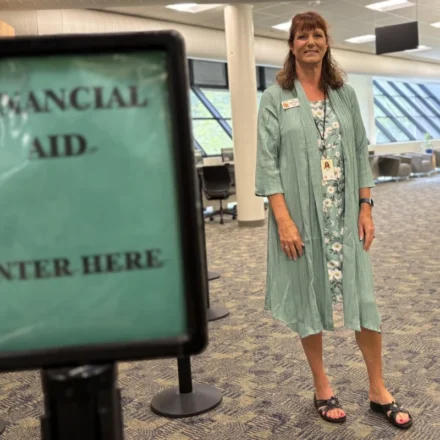
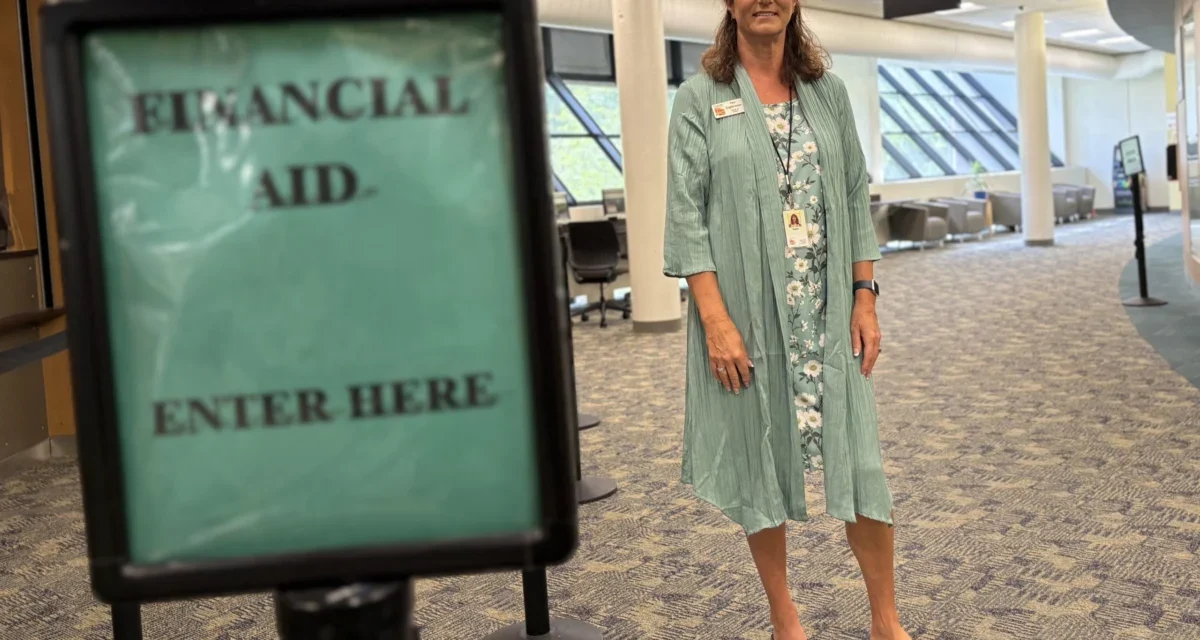
For directors like Pam Engebretson at Century College, the hope is that these systemic changes will finally relieve the pressure on frontline staff. "We’re doing everything we can on a local level, and any systemic changes that alleviate some of the manual work we’re doing would be awesome," she said.

Until then, the siege continues. As long as federal aid is available, and as long as digital barriers remain permeable, the "ghost students" will keep knocking. The institutions they target, however, are finally beginning to realize that the best defense against a phantom is a clear, ironclad identity. The challenge for Minnesota State now is to ensure that in their rush to lock the doors against criminals, they do not accidentally lock them against the very students they were founded to serve.