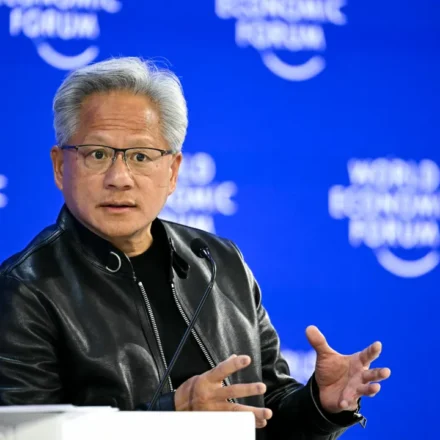




















































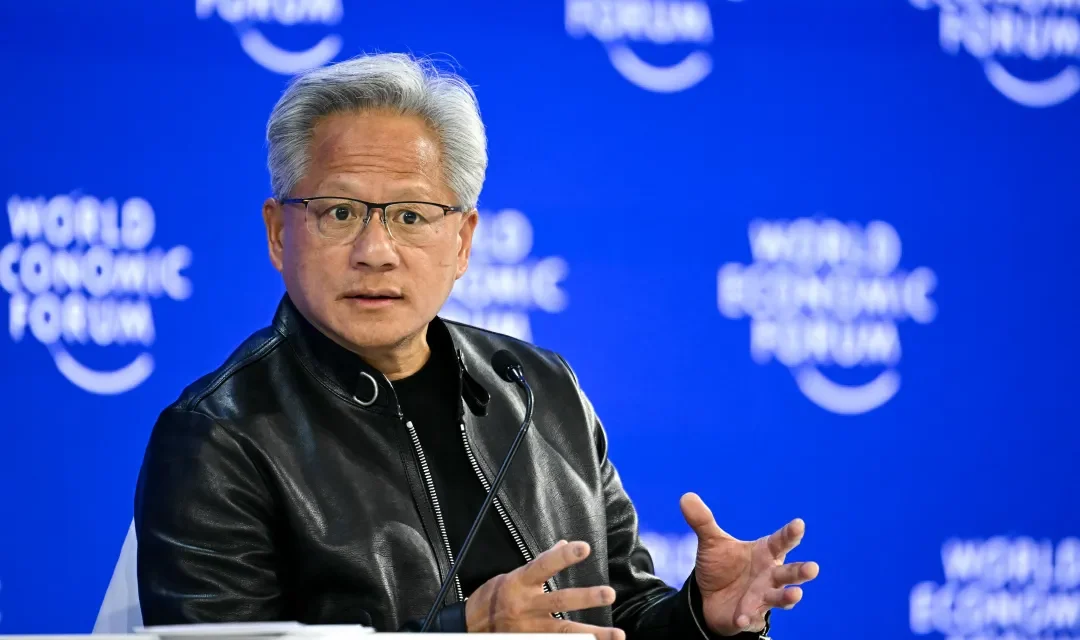






November 25, 2026 — In a development that has sent ripples through the corridors of Wall Street and the broader artificial intelligence sector, S&P Global Ratings has officially placed Nvidia on "CreditWatch Negative." The move, announced Tuesday afternoon, signals that one of the world’s most valuable companies—and the primary engine behind the global AI boom—is facing a potential downgrade to its credit rating, currently set at AA.
While Nvidia’s financial performance remains robust, the rating agency’s scrutiny is centered not on the company’s balance sheet, but on its boardroom stability. The recent, highly publicized saga involving the ouster and subsequent reinstatement of CEO Jensen Huang has triggered a profound re-evaluation of the company’s corporate governance, succession planning, and executive oversight.
The Core Conflict: Governance Over Financials
For decades, Nvidia has been the gold standard for growth, consistently exceeding market expectations. However, S&P Global Ratings noted that even an industry titan is not immune to the risks associated with internal instability.
In its official statement, the agency highlighted "weak executive oversight and a lack of clear succession planning" as primary drivers for the review. Central to this is the concept of "key man risk." For years, Nvidia’s strategy, vision, and market positioning have been inextricably linked to Jensen Huang. While this synergy has propelled the company to unprecedented heights, it has also created a structural vulnerability: the firm’s future success appears to rely almost entirely on the presence and leadership of one individual.
The volatility surrounding the board’s decision to remove Huang—and the subsequent pressure that forced his return—has cast a long shadow over the company’s internal controls. Investors and credit analysts are now forced to grapple with the question of whether Nvidia’s institutional framework is strong enough to survive a leadership transition, or if the company is merely a reflection of its founder’s singular personality.
A Chronology of the Crisis
To understand the gravity of the current situation, one must look at the timeline of events that led to this regulatory warning:
- August 2026: Nvidia unveiled an ambitious $500 billion financing initiative designed to fund massive AI infrastructure projects. The plan involved a consortium of six financial giants, including Goldman Sachs, Apollo, and Blackstone. Under the original terms, Nvidia agreed to act as a guarantor for 25% of the loans, essentially leveraging its own creditworthiness to fuel the expansion of "neocloud" providers and AI infrastructure firms.
- Early November 2026: Reports surfaced from Bloomberg indicating that lenders were already becoming jittery. Despite the massive scale of the AI boom, financial institutions began demanding that Nvidia increase its guarantee coverage, expressing skepticism about the creditworthiness of the smaller infrastructure companies being funded.
- Mid-November 2026: The boardroom friction reached a boiling point. An internal power struggle led to the abrupt ouster of Jensen Huang. The market reacted with immediate volatility as institutional investors and partners questioned the viability of the company’s roadmap without its visionary leader.
- Late November 2026: Following intense pressure from major shareholders, key industry partners, and a public outcry from employees, the board reversed its decision, reinstating Huang as CEO.
- November 25, 2026: S&P Global Ratings issued its notice of a potential downgrade, formally signaling that the "reinstatement" does not mitigate the governance concerns raised by the initial ouster.
The Ripple Effect: Why a Downgrade Matters
S&P expects to conclude its review within 90 days. Should they follow through with a cut from AA to AA-, it would mark the fourth-highest rating on their scale. While Nvidia will almost certainly retain its "investment-grade" status, the practical implications of a downgrade are significant.
Increased Cost of Capital
A credit rating downgrade is, in essence, a signal to the market that a company’s debt has become riskier. Consequently, lenders demand higher interest rates to compensate for that increased risk. For a company like Nvidia, which is currently managing hundreds of billions of dollars in capital expenditure and financing obligations, even a minor increase in borrowing costs can equate to millions in additional annual interest expenses.
The "Backstop" Vulnerability
The most acute concern lies in Nvidia’s role as the financier of the AI ecosystem. Because many "neocloud" and infrastructure companies lack the credit profile to secure their own funding, they rely on Nvidia to guarantee their debt.

If Nvidia’s credit rating is lowered, its ability to act as an effective guarantor is compromised. Lenders are already skittish; a downgrade would likely embolden them to demand even larger collateral or higher guarantee percentages from Nvidia. This creates a dangerous feedback loop:
- Nvidia guarantees a loan for an infrastructure project.
- Nvidia’s rating drops.
- Lenders demand more collateral from Nvidia.
- Nvidia must tie up more of its own capital to maintain the deal, potentially limiting its liquidity for R&D or expansion.
Perspectives and Official Responses
The market response to the S&P announcement has been cautious. While many analysts argue that Nvidia’s underlying business remains the most essential engine of the modern economy, others argue that the governance discount is now a permanent feature of the stock.
Nvidia has not provided a detailed rebuttal to the S&P assessment, but sources close to the board suggest that the company is currently focusing on "strengthening the board of directors" and "formalizing succession protocols" to appease both shareholders and rating agencies. The board is expected to announce a revamped governance structure in the coming weeks to prevent further volatility.
Market analysts are divided. "The issue isn’t the chips; the issue is the boardroom," says one senior credit strategist. "Nvidia is a company that has outgrown its own management style. They are operating at a scale where personal whims, even from a visionary like Huang, can no longer dictate corporate policy without institutional checks and balances."
Looking Ahead: The 90-Day Window
The next three months will be a defining period for Nvidia. The company faces a dual challenge: it must continue to lead the global AI arms race while simultaneously proving to the financial community that it is an institution, not a personality cult.
For S&P Global Ratings, the 90-day window is a diagnostic period. They are looking for more than just a public apology or a press release; they are looking for evidence of "institutional maturity." This likely includes:
- Independent Board Oversight: A more transparent process for executive selection and oversight that cannot be easily swayed by internal cliques.
- Formalized Succession Plans: A documented, board-approved roadmap for leadership that provides clarity in the event of an executive departure.
- Governance Reform: Structural changes that prevent the concentration of power that led to the mid-November chaos.
As the industry watches, the "Nvidia Case" serves as a stark reminder that in the world of high-stakes technology, the most dangerous risk is often the one that occurs in the boardroom, not the laboratory. Investors remain optimistic about the technology, but the credit markets are now demanding a level of corporate maturity that Nvidia has yet to fully demonstrate. Whether the company can pivot from a founder-centric startup model to a stable, blue-chip institutional giant will determine its financial trajectory for the next decade.
For now, the world waits to see if the AA rating will hold, or if the "king of AI" will be forced to pay a higher price for its recent leadership drama.