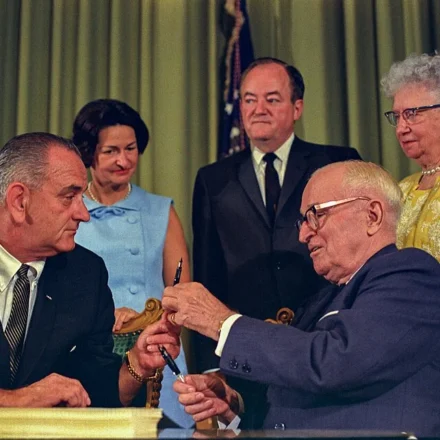






















































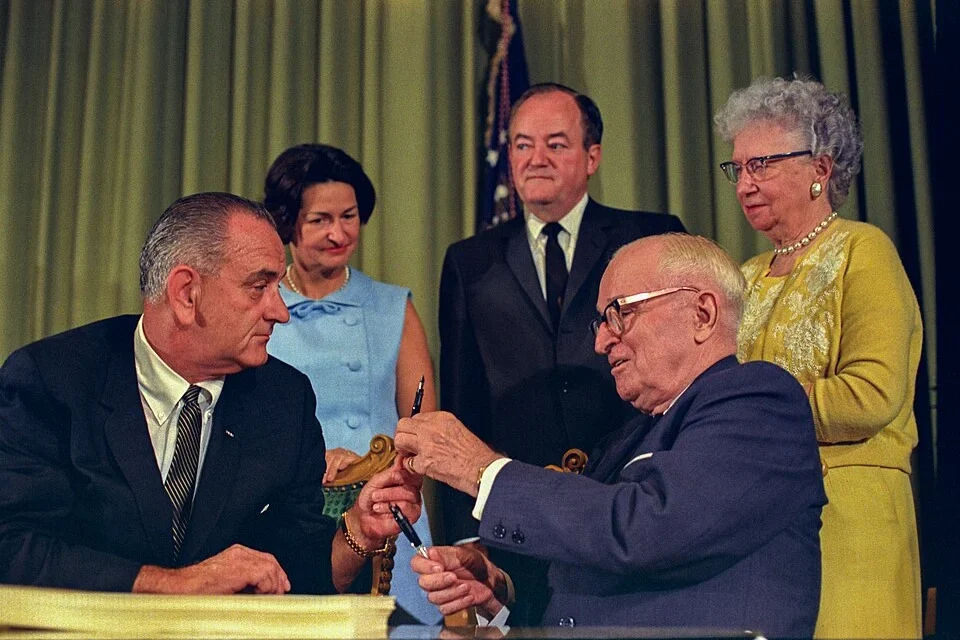





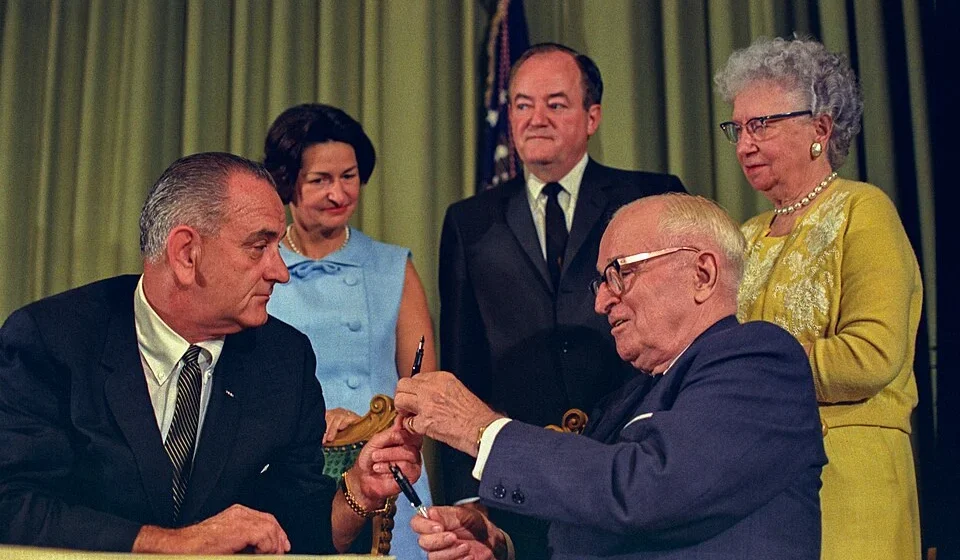

On July 30, 1965, President Lyndon B. Johnson stood at the Harry S. Truman Library in Independence, Missouri, and handed the first-ever Medicare card to the man who had long championed the idea: former President Harry S. Truman. It was a watershed moment in American history—the birth of a promise that the elderly and vulnerable would not be left to the whims of poverty when faced with illness.
Today, as the American political landscape navigates the contentious debate over "Medicare for All," proponents frequently point to Germany as the gold standard of universal, single-payer-adjacent coverage. It is a system where no one goes bankrupt from medical bills, and the concept of "debtor’s prison" for the sick is a relic of history. However, beneath the veneer of universal coverage lies a complex, often stifling reality that suggests the German model may not be the panacea American progressives envision.
The Patient’s Paradox: Quality vs. Coverage
The promise of universal healthcare is, at its core, a promise of equity. Yet, for those navigating the German system, that equity often feels like a race to the bottom. I am currently serving as the healthcare proxy for two elderly relatives, and their experiences have unveiled a systemic malaise that is as frustrating as it is dangerous.
Consider the case of a relative who began manifesting classic symptoms of Parkinson’s Disease—symptoms so recognizable that even a layperson could identify them. Despite the obvious indicators, her primary care physician and a private-practice neurologist showed zero interest in a clinical diagnosis. Instead, they focused on repetitive, low-value tests—endless blood panels and carotid ultrasounds—that provided no insight into the neurological condition.
The disconnect here is financial. A thorough clinical evaluation, which might take an hour, nets a doctor roughly $60 (50 euros) for a publicly insured patient. In contrast, an ultrasound—a procedure that takes a fraction of the time—generates upwards of 200 euros. Under the current incentive structure, diagnostic "efficiency" is prioritized over patient outcomes. When a friend, a hospital-based neurologist, finally stepped in to perform a manual clinical evaluation, he confirmed the diagnosis in minutes. He did not need a machine to see what the system was incentivized to ignore.
A System of "Self-Regulation" and the Boeing Parallel
The German medical establishment operates under a structure of intense self-governance. Most non-hospital doctors function as "solopreneurs," operating in silos with minimal communication between specialists. This professional isolation is protected by a remarkably powerful lobby in Berlin.
This model essentially outsources quality control to the physicians themselves and their professional associations. The lack of external oversight is troubling, particularly when viewed through the lens of other high-stakes industries. When the Federal Aviation Administration (FAA) allowed Boeing to self-certify the safety of the 737 MAX, the result was catastrophic: two fatal crashes and a harrowing mid-flight structural failure.
Is healthcare truly different? When an entire profession is shielded from competition and rigorous external auditing, the "passenger"—the patient—loses. In Germany, the lack of a robust malpractice culture further exacerbates this issue. Because lawyers are barred from the aggressive advertising common in the U.S., and the cultural barriers to litigation are high, there is little external pressure for providers to move beyond a "cavalier" approach to patient care.
The Two-Tiered Reality: Who Actually Wins?
Perhaps the most stinging critique of the German "Medicare for All" style system is its inherent classism. While the system is universal, it is undeniably bifurcated.
If you are a patient in the public statutory insurance pool, you are effectively a passenger in "Economy Class." You may wait months for a specialist appointment, only to be allotted five minutes of face-to-face time. However, if you are a high earner, you are granted the privilege of opting out of the statutory system in favor of private insurance.
This is not a theoretical divide; it is a structural feature of German life. While only about 5% of employees qualify to opt out, that small group enjoys a different reality: shorter wait times, access to premier facilities, and a level of service that their publicly insured counterparts are denied. It creates a cynical irony where the system designed to provide equality actually reinforces the stratification of society. Karl Marx would likely find the German healthcare system a perfect case study in the contradictions of a class society, where the "billionaire class" and the affluent navigate a system of luxury, while the masses navigate a system of scarcity.
Chronology: The Evolution of a Stalled System
- 1883: Chancellor Otto von Bismarck introduces the first national social health insurance legislation, the foundation for the current German model.
- 1965: The U.S. passes the Social Security Amendments, establishing Medicare.
- 1990s-2000s: Germany undergoes a series of reforms aimed at cost containment, which inadvertently deepened the divide between public and private insurance sectors.
- 2020s: Growing frustrations emerge regarding the "two-tier" nature of German care, with public discourse highlighting the disparities in access and wait times between statutory and private patients.
Supporting Data and The Economic Incentive
The fundamental issue is the misalignment of the fee-for-service structure. In a system where the government dictates reimbursement rates, doctors are forced to maximize volume to maintain their standard of living.
| Procedure | Reimbursement (Statutory) | Clinical Value/Effort |
|---|---|---|
| Manual Neurological Exam | ~$60 | High (Time Intensive) |
| Ultrasound (Routine) | ~$200+ | Low (Automated/Fast) |
This table illustrates the systemic "nudge" toward unnecessary or less-effective testing. When the financial reward for a simple scan outweighs the reward for a complex diagnosis, the patient’s health becomes a secondary concern to the physician’s bottom line.
Implications for the American Debate
As American progressives campaign on "Medicare for All," the German experience serves as a cautionary tale. The American focus on individual rights and litigation, while often criticized for its cost and inefficiency, acts as a necessary check on provider negligence.
If the United States were to adopt a single-payer system, it must address the "German trap": the danger of creating a bureaucratic monopoly where doctors are incentivized to perform the cheapest, fastest procedures rather than the most necessary ones. Furthermore, if a system is not carefully designed, it may inadvertently create a "private-tier" for the wealthy, effectively abandoning the promise of universal equality.
Official Responses and The Path Forward
German medical associations often defend the current system by pointing to its resilience during global health crises and its success in providing base-level coverage to the entire population. They argue that the focus on "solopreneur" practices maintains a level of patient-provider intimacy that large, corporate-owned clinics in the U.S. lack.
However, the reality for patients like my relatives remains stark. A system that prides itself on "universal coverage" must be judged by the quality of that coverage, not merely by the fact that everyone is enrolled.
For the United States, the lesson is clear: expanding access is only half the battle. Unless the reform includes a fundamental redesign of how providers are incentivized—moving away from volume-based reimbursements toward outcome-based care—and ensures a robust, transparent system of oversight, the U.S. risks importing the same "two-tier" mediocrity that currently plagues Germany.
True healthcare reform cannot be merely about the insurance card in one’s pocket; it must be about the quality of the care that follows. If we choose to follow the path of universal coverage, we must be vigilant enough to avoid the pitfalls of a system that prioritizes its own administrative convenience over the lives of those it was built to serve.
Henning Schroeder is a professor emeritus who taught in the College of Liberal Arts (German Studies) and the School of Pharmacy at the University of Minnesota. He continues to observe the intersection of public policy and clinical practice.