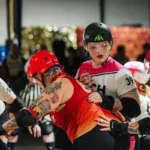
















































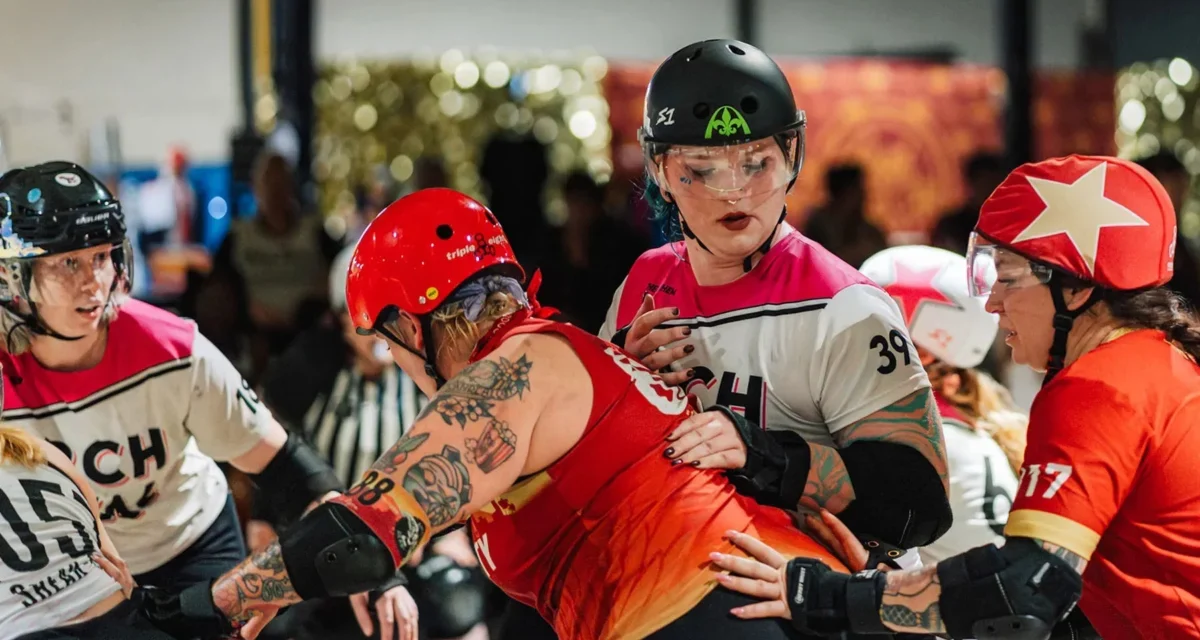






For Juniper Simonis, the memory of a summer evening in 2012 remains etched in vivid detail—a cinematic snapshot of liberation. Speeding through the streets of Ithaca, New York, with the wind whipping against her helmet and folk singer Mariee Siou pulsing through her headphones, Simonis felt a profound shift in her personal history. That afternoon, she had received an email that would change the trajectory of her life: The Ithaca League of Women Rollers had voted to welcome her onto their roster.
"As somebody who played sports and was queer, but those were two very separate parts of my life, the promise and the opportunity to integrate those was very hopeful for me," Simonis reflects. As a transgender woman, being accepted into an all-women’s athletic collective was more than a roster spot; it was a validation of her identity. "Getting a message that was like, ‘You are welcome,’ was very, obviously, very uplifting."
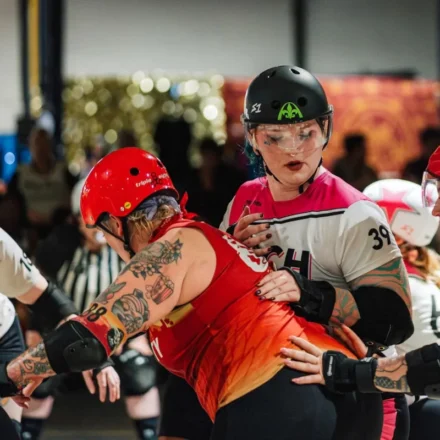
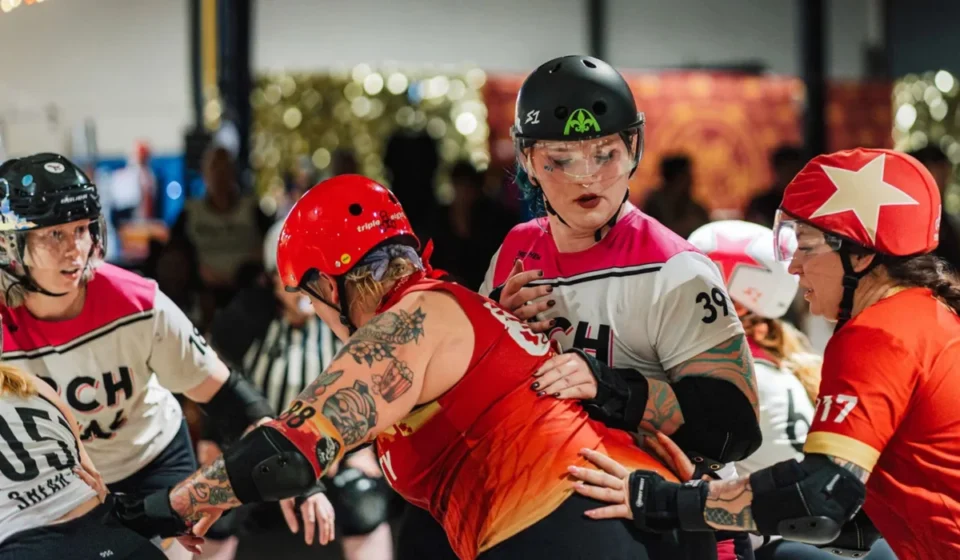
Years before the inclusion of transgender athletes became a flashpoint in national political discourse, roller derby—a high-contact, punk-rock-infused sport defined by aggressive hits and colorful pseudonyms—was already navigating the complexities of gender identity. While the sport’s journey has been far from flawless, its evolution offers a compelling case study on how athletic organizations can prioritize community and inclusion over rigid, binary structures.
A Legacy of Counter-Culture: The History of Derby
To understand the modern landscape of roller derby, one must look back to the 1930s. Sports promoter Leo Seltzer birthed the concept as an endurance race on a banked track. Interestingly, the sport was co-ed from its inception, though it remained marred by the era’s systemic pay gaps, where men were consistently compensated at higher rates than women.
As the sport transitioned from an endurance spectacle to the five-player contact sport recognized today, it began to cultivate a distinct, anti-establishment ethos. Rachel "Rotten" Johnston, a derby veteran and current director for the Angel City League, notes that the sport’s evolution was organic. "Over the course of these races, people started to run into each other. They got tired, they tried to sabotage each other," Johnston explains. "That’s the thing that people started to get really into."
By the early 2000s, a grassroots movement in Austin, Texas, sought to provide structure to this burgeoning subculture. The resulting renaissance was heavily influenced by the "riot grrrl" aesthetic—a direct, rebellious rebuttal to the polished, hyper-feminine pop culture of the time. It was a space for "tough, punk-rock chicks" who favored black eyes and bar fights over conventional athletic polish. This environment created a unique sanctuary: a sport built by women, for women, which inherently questioned traditional gender norms.
The Chronology of Inclusion: From Vague Policies to Explicit Protections
As the sport’s popularity exploded—with the Women’s Flat Track Derby Association (WFTDA) eventually overseeing over 400 leagues across six continents—the question of who could claim the title of "woman" on the track became increasingly central.
In the early 2000s, the WFTDA’s stance was largely reflective of the broader sports world, mirroring Olympic-style policies that required transgender women to undergo hormone replacement therapy (HRT) for two years. However, these policies were often applied with varying degrees of rigor. In practice, many leagues operated on a case-by-case basis, sometimes ignoring bureaucratic mandates in favor of personal character assessments.
Penelope "Fifi Nomenon" Nederlander’s experience in 2010 exemplifies this era of informal acceptance. After a successful tryout for the LA Derby Dolls, she disclosed her identity to a mentor. When the mentor asked if her driver’s license carried an "F" designation, a simple "yes" was sufficient to clear the path. "It was the first group of friends who I met who only knew me as Penny," Nederlander recalls, highlighting how the sport offered a rare, authentic community for trans athletes long before "cisgender" was common parlance.
The formal pivot occurred in 2015, when the WFTDA updated its mission statement to be explicitly inclusive of "marginalized genders." This policy change was a watershed moment, welcoming not only trans women but also athletes who were assigned female at birth (AFAB) who were in the process of transitioning, such as nonbinary skater Drew Flowers.
Supporting Data and the "LeBron James of Derby"
Nicole Williams, known to fans as "Bonnie Thunders," is widely regarded as the greatest skater in the history of the sport. With two decades of experience, she has witnessed the internal ideological shifts within the community firsthand. Williams argues that the apprehension some athletes initially felt toward trans inclusion was born of a lack of familiarity.

"When I see people say, ‘protect women’s spaces,’ that feels so repressive," Williams says. "I don’t want to discount that women’s spaces are important. They are, but I don’t really identify with that in the way that I used to."
The data on the track supports the notion that inclusion has not dismantled the sport’s integrity. Despite fears that trans athletes would create an inherent imbalance, the actual experience of league play has been largely uneventful in terms of competitive dominance. Instead, the sport has found that the skills required to excel in derby—agility, tactical awareness, and communication—are not strictly determined by biological sex.
Internal Realities: Challenges and Persistent Bias
Despite its progressive policy, roller derby is not a utopia. The very issues that plague society at large—racism, transphobia, and structural bias—still seep into the rink.
Donita "Blaxyl Rose" Green, a skater for Angel City Derby, points out that the experience of inclusion is not universal. Black trans skaters often report facing harsher officiating and increased scrutiny. "I’ve seen firsthand how much worse some of these microaggressions and problems happen when you are a dark-skinned Black skater," Green notes. "You add knowledge of trans identity, and it tends to be even worse."
Furthermore, the physical risks of the sport remain constant. Juniper Simonis, while grateful for the community, has spoken candidly about being assaulted by fellow players specifically due to her trans identity. These incidents serve as a stark reminder that policy alone cannot erase deep-seated prejudice.
Implications for the Future of Global Sports
The most significant implication of the roller derby model is the rejection of the Olympic framework. For years, the international sporting community pressured roller derby to conform to standardized gender rules in exchange for potential Olympic recognition. The WFTDA ultimately rejected this path, refusing to compromise its inclusive identity for the sake of mainstream institutional validation.
This decision reflects a broader, more honest conversation about fairness. As Penelope Nederlander suggests, the sports world needs a more nuanced dialogue. "I want to arrive at the same conclusion, but with honesty about it," she says. "In roller derby, there doesn’t seem to be an important difference. We really don’t have any complaints about trans skaters. So that’s awesome."
Rachel Johnston echoes this sentiment, arguing that the fixation on fairness in a full-contact sport is often a red herring for underlying exclusionary bias. "People who are concerned about people getting hurt are missing the fact that we’re playing a full-contact sport," Johnston asserts. "You’re going to get hurt no matter what. Life isn’t fair, and sports most certainly are not fair."
Conclusion: A Blueprint for Athletic Evolution
The history of roller derby serves as a radical proof-of-concept: it is possible to organize a high-stakes, competitive, and physically demanding sport that places the dignity of the individual above the rigid adherence to gender essentialism. While the community continues to grapple with internal systemic failures and the complexities of bias, it remains a rare space where the "freaky feminist" roots of the early 2000s have successfully transitioned into a modern, evolving, and inclusive reality.
For athletes like Simonis, Flowers, and Nederlander, the track is more than just a place to skate—it is a laboratory for how society might eventually treat trans people: not as an abstract political debate, but as teammates, friends, and integral members of the community. As the world of sports continues to debate the future of inclusion, roller derby stands as a testament that when a community chooses to open its doors, the sport itself does not fall apart—it grows.