



















































Minnesota State Board Approves Controversial $25 Million Internal Redistribution to Rescue Struggling Universities

In a move that has sparked intense debate regarding the fiscal health and future of public higher education in Minnesota, the Minnesota State Board of Trustees has authorized an emergency measure to transfer up to $25 million annually over the next four years to stabilize institutions facing acute financial crises. The decision, finalized on Wednesday, marks a significant turning point for the 33-institution system, as it shifts the burden of financial recovery from the state level to the shoulders of the system’s own member colleges and universities.
The funds, which will be drawn from the budgets of the 26 colleges and seven universities that comprise the system, are primarily intended to buoy St. Cloud State University and Bemidji State University. For the 2028 fiscal year alone, St. Cloud State is slated to receive $10 million, while Bemidji State will receive $4.8 million.
The Core Conflict: A System "Spread Too Thin"
The rationale behind the redistribution is, according to system officials, an attempt to prevent the collapse of institutions that have already exhausted their internal options. St. Cloud State, in particular, has become the poster child for the system’s volatility. Over the last 15 years, the university has slashed its workforce by 40% and, since 2023, has suspended admissions to nearly 200 academic programs, majors, and certificates. Having already secured a $2 million loan from the system office, the university is projected to deplete its reserve funding pool entirely by this summer—a stark contrast to the $19 million it held in savings a decade ago.
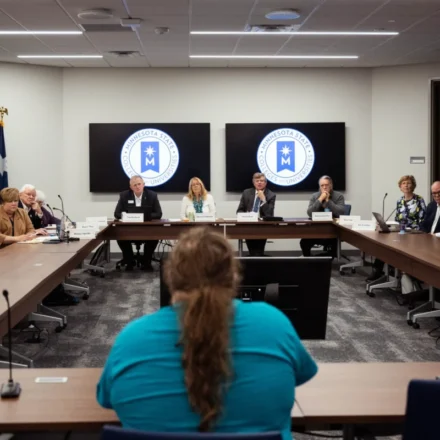
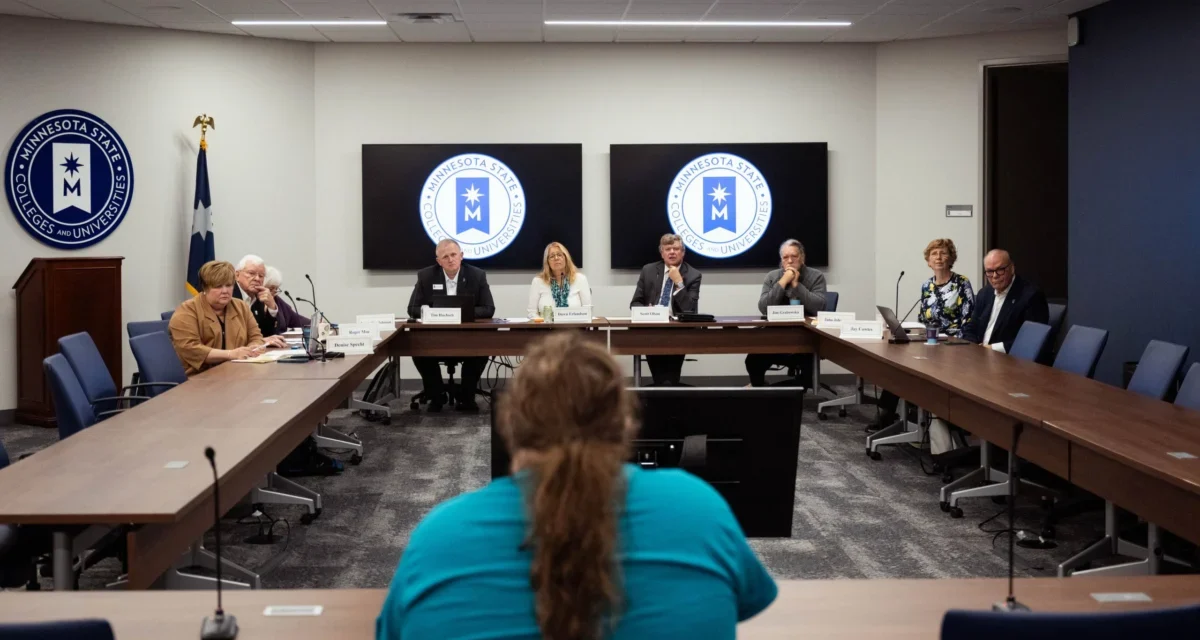
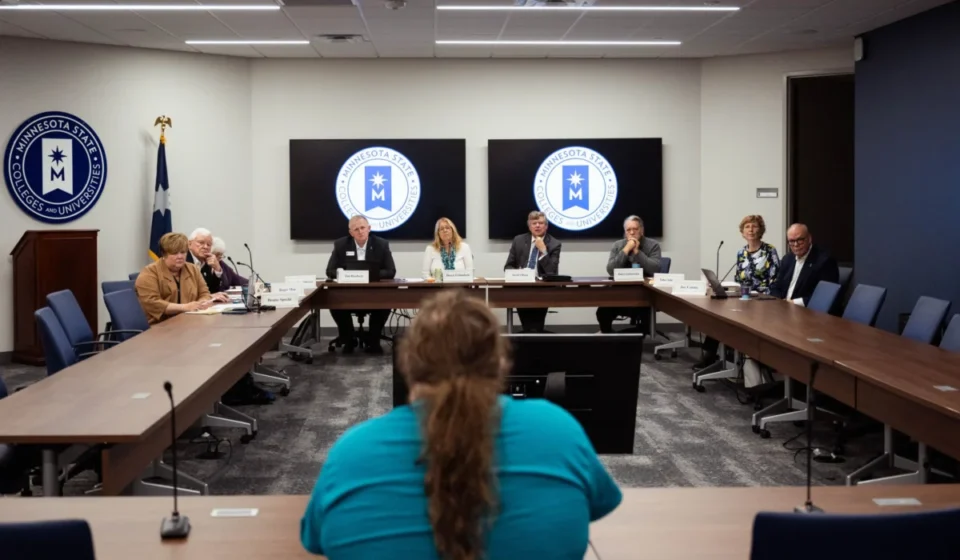
However, the decision to extract funds from healthier or more stable campuses has met with stiff resistance. During the board meeting, Michael Berndt, president of Dakota County Technical College and Inver Hills Community College, voiced the frustration felt by many across the system.
"It’s frankly demoralizing to our employees to see the outcome of our work significantly reduced by seeing our allocation dollars reduced," Berndt stated. He noted that the institutions he oversees—which serve approximately 6,600 students—have themselves been operating in a state of austerity for years, enduring frozen budgets, deferred maintenance, and increased class sizes. Despite this, his schools are expected to contribute over $747,000 to the emergency pool.
Chronology of a Crisis: How We Got Here
The path to this week’s vote has been paved with years of mounting financial pressure. The crisis is not an overnight development but the result of a long-term convergence of external and internal factors.
- 2016–2021: The Minnesota State system began experiencing a steady decline in student enrollment, a trend mirrored by public university systems across the Midwest. This decline, coupled with what officials describe as "constrained" state funding, began to erode the financial margins of smaller regional universities.
- 2023: St. Cloud State University initiated drastic measures to combat its deficit, including the suspension of hundreds of academic programs. The severity of these cuts signaled to the Board of Trustees that the institution was approaching a point of no return.
- 2026 (Early Year): As budget projections for fiscal year 2028 showed a potential $100 million shortfall, the System Office began drafting plans to stabilize the system. Initial proposals to move funds were met with immediate pushback from community college leaders.
- September 2026: The Board of Trustees revised the initial proposal. The new version included requirements for the struggling universities to produce comprehensive financial recovery plans and established a tiered contribution model to protect institutions with the lowest cash reserves.
- October 2026: The Board officially approved the $25 million annual transfer plan, alongside a separate measure to divest $24.3 million from equipment budgets to fund the demolition of unused, costly campus infrastructure.
Supporting Data and Financial Realities
The magnitude of the crisis is best understood through the lens of the system’s overarching financial data. Minnesota State is currently staring down a projected $100 million deficit by the summer of 2028. This figure is driven by the "triple threat" of declining demographics, inflation, and stagnant state legislative support.
Under the new funding formula, the burden of contribution varies by institution size and financial health. Minnesota State University-Mankato, as one of the larger and more stable institutions, will provide the largest single contribution: $1.8 million in the first year. Other institutions are expected to chip in amounts ranging from $121,000 to $1.8 million.
The system is also tackling the "hidden" costs of its footprint. By taking $24.3 million from equipment budgets through 2032, the system intends to clear out surplus campus buildings that are bleeding resources through utility and maintenance costs. This move, while necessary, further limits the capital investment available for classroom technology and updated vocational training equipment at schools that are already struggling to modernize.
Official Responses and Ethical Dilemmas
The tone of the board meeting was one of grim pragmatism. Edward Inch, president of Minnesota State University-Mankato, spoke on behalf of the university presidents, acknowledging that while the plan is unpopular, it is the least of several evils.

"It’s not a choice that gets made between a good idea or a bad idea," Inch told the board. "It’s competing choices of things that are damaging or less damaging." He argued that the system is currently "spread very thin" and that there is a collective price to be paid for the survival of the system’s smaller, more vulnerable campuses.
Bill Maki, the system’s vice chancellor for facilities and finance, offered a candid assessment of the board’s limited options. "It really indicates that we have a situation where we have significant financial challenges at a couple institutions, and we don’t have a lot of levers to deal with it," Maki admitted. He went on to concede that the plan is "not the most ideal," noting that a truly effective solution would require the Minnesota Legislature to step in with increased, one-time funding.
Trustee Roger Moe summarized the board’s perspective with a sobering analogy: "We take the tough medicine, and hopefully we can get this thing corrected over the years coming ahead."
Implications: The Long-Term Future of Minnesota State
The approval of this redistribution plan serves as a temporary tourniquet, but it does little to address the systemic hemorrhaging of the Minnesota State network. The implications of this decision are far-reaching and suggest a period of significant structural upheaval for the state’s higher education landscape.
1. The Looming Legislative Battle
The system is preparing a $65 million request for the upcoming legislative session, of which $25 million is earmarked specifically for the struggling schools. The success of this request is critical; if the Legislature declines to provide this support, the "temporary" transfer of funds from community colleges may become a permanent, and likely unsustainable, feature of the budget.
2. Potential for Consolidation
System officials have signaled that the status quo is untenable. Future discussions are expected to focus on the closure, merger, or consolidation of campuses. The focus on "reducing excess buildings" is likely just the precursor to a more aggressive strategy to reduce the number of physical locations the system operates.
3. Institutional Morale and Advocacy
For leaders like Michael Berndt, the challenge now lies in managing the fallout on their home campuses. Explaining to students, faculty, and local taxpayers why their funding is being siphoned off to support a distant university is a difficult political and administrative task. Berndt has called for greater transparency regarding the recovery plans for St. Cloud and Bemidji, noting that "more transparency… will enable me to be a better advocate."
4. A Shift in System Identity
The Minnesota State system is moving toward a more centralized model of fiscal control. By prioritizing the collective survival of the system over the autonomy of individual institutions, the Board of Trustees is signaling that the era of regional independence may be coming to a close. Whether this centralization can successfully stem the tide of enrollment declines and financial deficits remains the defining question for the system’s leadership in the coming decade.
As the 2028 fiscal year approaches, the eyes of the academic community remain fixed on St. Cloud and Bemidji. If the "tough medicine" of budget redistribution fails to turn these institutions around, the Board of Trustees may find themselves forced to make even more drastic choices—decisions that will permanently alter the landscape of public education in Minnesota.