















































The High-Stakes Collision: Inside the Trump Administration’s War on Tech Visas and the Case Against Microsoft

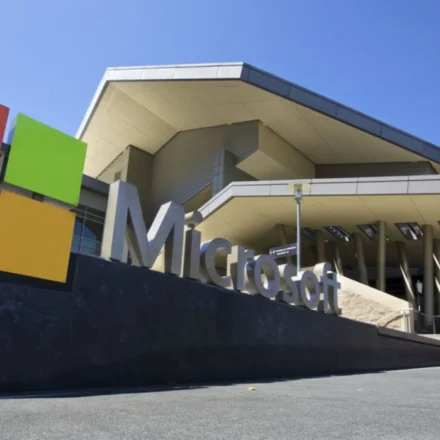
In the complex ecosystem of American innovation, few mechanisms have been as instrumental—and as polarizing—as the H-1B visa and the PERM green card certification programs. Designed decades ago to secure the United States’ position as a global technological hegemon, these pathways allow corporations to tap into a reservoir of specialized global talent. However, the current administration, led by President Donald Trump and Vice President J.D. Vance, has launched a sweeping offensive against these programs, with software giant Microsoft emerging as the administration’s primary antagonist.
The rhetoric from the White House is incendiary, characterizing these immigration pathways as conduits for "foreign indentured servitude" and accusing tech titans of displacing American workers. Yet, as the administration moves to dismantle these systems, a stark divide has emerged between political narrative and corporate reality.
The Chronology of Conflict: From Policy to Punishment
The current tension is not a sudden development but the culmination of years of escalating rhetoric regarding the "America First" labor agenda.
- 2024–2025: The administration begins signaling a more aggressive stance, proposing extreme fee hikes for H-1B filings, including a controversial $100,000 surcharge per visa—a policy later struck down by federal courts as illegal.
- August 2026: The Department of Homeland Security introduces a revised fee structure, seeking to levy over $103,000 per H-1B hire, while simultaneously proposing the elimination of work authorization for spouses and the revocation of the 60-day grace period for unemployed visa holders.
- October 2026: The administration formally suspends Microsoft, Adobe, and several prominent IT outsourcing firms from the PERM program, effectively freezing their ability to transition H-1B employees into permanent green card residents.
- The Press Conference: Vice President J.D. Vance addresses the media, alleging that Microsoft is the "most egregious abuser" of the system, claiming the company laid off 6,000 Americans to replace them with cheaper, foreign labor.
- The Contradiction: Within hours of Vance’s condemnation, President Trump appears at a science summit to award the National Medal of Technology and Innovation to Microsoft CEO Satya Nadella—a man whose own career trajectory was built upon the very H-1B and green card programs the administration is currently working to dismantle.
Anatomy of the Allegations: Fact vs. Rhetoric
At the heart of the administration’s case is the claim of "indentured servitude." Vice President Vance argued that for every American worker laid off, Microsoft replaced them with 1.5 foreign workers. To the administration, the math represents a "scandalous system" designed to suppress wages and undermine the domestic workforce.
However, an analysis of the data provided by Microsoft, coupled with labor department filings, suggests the administration’s numbers may be fundamentally misaligned with reality. Microsoft’s internal reporting clarifies that the vast majority of its H-1B filings are not, as suggested, an influx of new, cheaper labor.
According to the company, 80% of its approximately 6,000 H-1B applications in the last fiscal year were dedicated to the "extension or change of status" for existing employees. In the tech sector, this is a standard administrative procedure for staff who are already part of the corporate infrastructure. Furthermore, the company asserts that its recent layoffs—a trend mirrored across the entire technology sector due to post-pandemic market corrections—were entirely decoupled from its visa sponsorship programs.
The Institutional Critique: Does the H-1B System Need Reform?
While the administration’s specific attack on Microsoft appears to be built on shaky factual ground, the broader debate surrounding the H-1B program is not without merit. History has shown that the program can be, and has been, abused.
The most famous case remains the 2014 Disney incident, where hundreds of IT workers were laid off and forced to train their foreign replacements as a condition of their severance. Such instances fuel the narrative that the H-1B program is often used as a tool for cost-cutting rather than the pursuit of high-level, specialized talent that cannot be sourced domestically.
Furthermore, critics have long pointed to the "body shop" model of IT outsourcing, where firms leverage the H-1B program to bring in workers with generalized skill sets to perform tasks that are readily available in the U.S. labor market. The Biden administration had previously sought to "modernize" these requirements to ensure that only truly specialized roles qualify, yet the effectiveness of these regulations remains a subject of intense debate among labor economists.
The Paradox of Leadership: The "Foreign-Born" Tech Elite
Perhaps the most surreal element of this conflict is the administration’s simultaneous vilification and celebration of the very individuals the visa programs produced. During the same week that Vice President Vance denounced Microsoft’s hiring practices, President Trump stood on stage to honor the leaders of the modern American economy.
The list of honorees included:
- Satya Nadella (Microsoft): An Indian immigrant who utilized the H-1B and green card programs to enter the U.S. and eventually lead one of the world’s most valuable companies.
- Elon Musk (Tesla/SpaceX): A vocal supporter of the H-1B program, who has credited it with allowing him to build the companies that have made America a leader in space exploration and electric vehicles.
- Jensen Huang (Nvidia) and Lisa Su (AMD): Leaders of the semiconductor giants that are currently fueling the global Artificial Intelligence boom.
This cognitive dissonance presents a significant political challenge for the administration. By attacking the pipeline that supplies the "critical people who built… hundreds of other companies that made America strong," the administration risks stifling the very innovation it claims to protect.
Implications for the Future of American Tech
The fallout from the PERM suspension and the ongoing legal battles over H-1B fees could have profound long-term consequences for the U.S. technology sector.
1. Brain Drain and Offshoring: If companies find it impossible to retain their top global talent due to administrative roadblocks, the natural economic response is to move operations to regions with more favorable immigration environments, such as Canada or Europe. This "brain drain" could diminish the U.S.’s standing as the global center for R&D.
2. Increased Operational Costs: The proposed fees—exceeding $100,000 per worker—would effectively price out small-to-mid-sized companies, leaving only the largest tech conglomerates able to afford the "cost of entry" for foreign talent. This could ironically reduce competition and stifle the startup ecosystem.
3. Litigation and Uncertainty: With the administration’s previous fee-hike attempt already struck down by the courts, the current suspension of the PERM program is likely to face a protracted legal challenge. This creates a state of perpetual uncertainty for thousands of workers and their families, many of whom have lived, paid taxes, and raised families in the U.S. for years.
Conclusion: A Political Narrative or a Policy Shift?
The administration’s charges against Microsoft serve as a microcosm for the broader, often binary debate on immigration. While the desire to protect the American worker is a legitimate policy goal, the strategy of attacking specific companies with misleading metrics undermines the credibility of the entire effort.
If the goal is to reform the H-1B program to prevent the displacement of domestic workers, the administration has clear, evidence-based avenues to pursue, such as tightening the definition of "specialized skills" or closing loopholes used by outsourcing firms. Instead, by choosing to frame the issue as a scandal of "indentured servitude," the White House has turned a complex regulatory issue into a theatrical political battle.
As the legal cases move forward and the tech sector continues to grapple with the instability of its workforce, one thing remains clear: the path to maintaining American technological dominance requires a nuanced approach that balances domestic labor protections with the reality of a globalized economy. For now, the administration’s war on tech visas looks less like a strategic policy shift and more like a high-stakes gamble with the engines of the American economy.