

















































Otter’s Evolution: How AI "Work Mode" is Transforming Meetings from Passive Records into Actionable Engines

In the rapidly evolving landscape of workplace productivity, the definition of a "meeting assistant" is undergoing a radical metamorphosis. Otter, the AI-powered transcription leader, has officially signaled its pivot from a passive note-taking utility to an active, agentic workflow engine. With the launch of its new "Work mode," the company is empowering users to bridge the gap between spoken conversation and operational execution, effectively turning meetings into the starting point for cross-platform business processes.
This strategic update arrives on the heels of a massive $320 million growth investment led by General Catalyst, signaling that investors are betting heavily on the company’s vision to automate the administrative burden that plagues the modern professional.
The Core Innovation: What is "Work Mode"?
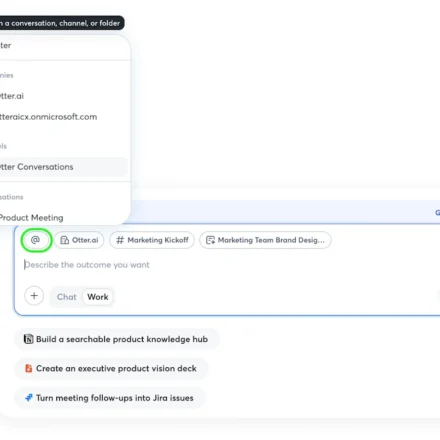
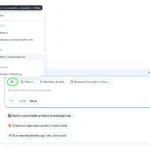
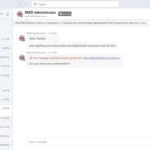
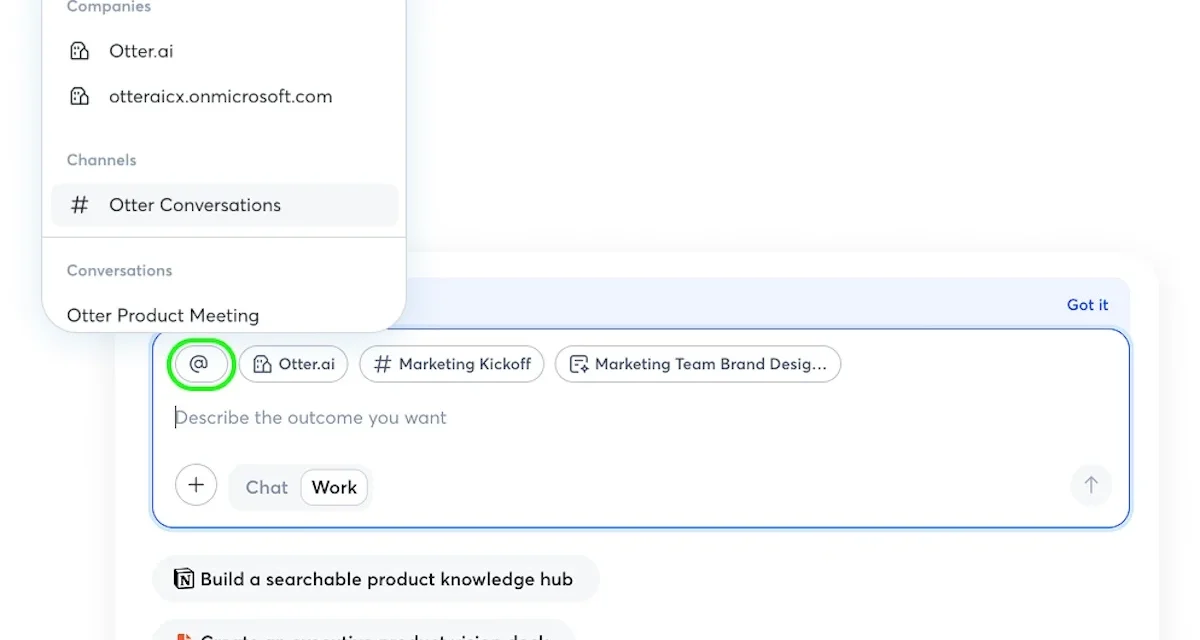
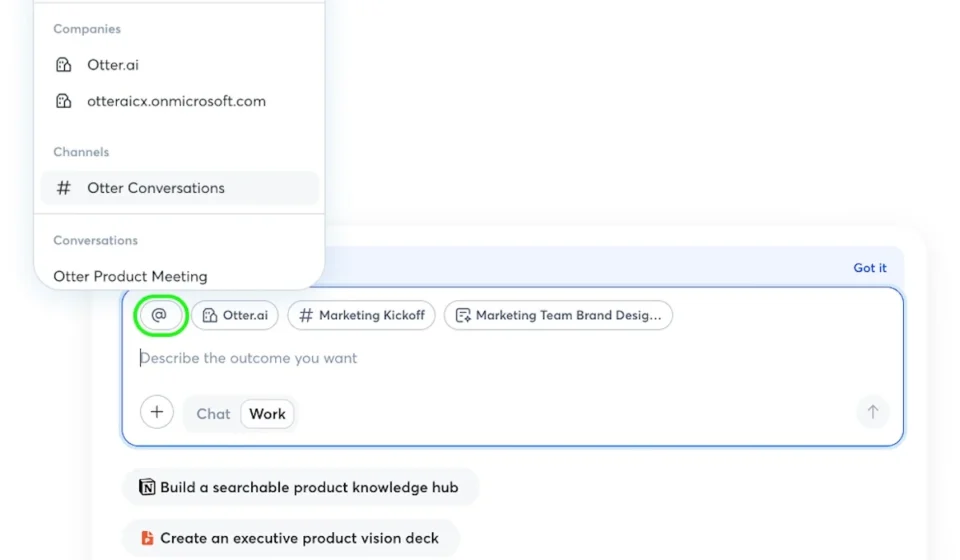
Otter’s new Work mode, accessible directly within the AI Chat interface, represents a departure from the simple query-and-response model of traditional chatbots. While the existing AI Chat function allows users to retrieve information or summarize discussions, Work mode is architected for "agentic" capabilities—the ability to perform multi-step, complex tasks across a variety of third-party applications.
By integrating directly with tools like Salesforce, Jira, and Gmail, Work mode allows users to offload the "pre-work" and "post-work" that typically occupies hours of a professional’s week. Before a meeting, users can leverage Work to synthesize briefing documents, pulling context from previous calls and integrated data silos to ensure participants are fully prepared.
Post-meeting, the transition is even more profound. The AI can draft follow-up emails, generate professional-grade documents in formats ranging from Notion and Word to PDFs and interactive web pages, and even push data updates directly into customer relationship management (CRM) systems like Salesforce. To maintain institutional oversight, Otter has implemented a "human-in-the-loop" requirement, ensuring that the AI presents its intended actions for approval before they are finalized or sent.
A Chronology of Growth: From Transcription to Automation
To understand the significance of this launch, one must look at the recent trajectory of Otter’s platform development.
- April 2027: Otter introduced "Live Assist," a real-time coaching agent designed to offer private guidance during active calls. By suggesting questions and monitoring meeting objectives in real-time, Live Assist moved the needle from retrospective note-taking to real-time performance optimization.
- Late October 2026: The company secured a landmark $320 million in growth funding. This capital infusion provided the runway necessary to transition from a consumer-facing transcription app to an enterprise-grade productivity suite.
- November 2026: The official announcement of "Work mode." This rollout sees the sunsetting of the legacy "Express" and "Advanced" options within the AI Chat interface, consolidating the platform’s intelligence into two distinct tracks: the informational "Chat" and the transactional "Work."
- Upcoming Weeks: Otter has confirmed that the Live Assist feature, previously restricted, will roll out to all paid account tiers, democratizing access to real-time meeting intelligence.
The Data-Driven Demand for Actionable Intelligence
The shift toward agentic AI is not merely a technological whim; it is a response to a critical demand from the global workforce. According to Metrigy’s Workplace Collaboration & Employee Experience: 2027 report, which surveyed 403 organizations, 91% of business users explicitly desire meeting note-takers that can interface with and act upon data from outside the meeting environment.
The current market environment suggests that the "meeting notes" category is effectively dead. In its place, we are seeing the rise of "Meeting Orchestration."
"Vendors are delivering solutions that allow meeting notes to be actionable, based on context both from within meetings, as well as from other connected platforms," explains Irwin Lazar, principal analyst at Metrigy.
The industry is responding in kind. Microsoft has been aggressively integrating its "facilitator" agent into Teams, while Cisco continues to iterate on its Webex meeting agent. Otter’s move to embrace this paradigm suggests that the company is aiming to position itself not as a tool that sits alongside the workflow, but as the connective tissue within the workflow.
Expert Analysis: Why "Work Mode" Matters
Industry observers have noted that while AI widgets are common in customer-facing support roles—where agents are prompted with "scripts" to handle incoming tickets—the application of these tools for internal productivity is a new frontier.
Thomas Randall, a research director at Infotech, highlights the uniqueness of Otter’s current approach. "I see this kind of widget assist a lot in external-facing customer support roles, but for internal productivity meetings, this is quite unique," he observes. By bringing agentic capabilities into the internal meeting room, Otter is attempting to solve the "context switching" problem—the mental fatigue caused by constantly jumping between meeting platforms, document editors, and project management software.
By centralizing these functions, Otter hopes to reduce the "administrative drag" that consumes an average of 30% of a knowledge worker’s day. The ability to update a Jira ticket or a Salesforce lead directly from an Otter transcript removes the need for manual data entry, a task that is notoriously prone to error and procrastination.
Official Responses and Strategic Implications
A spokesperson for Otter emphasized that the company’s focus remains on high-leverage utility. By removing the usage limits on the new Work mode for all paid users—a sharp contrast to the query-capped limits of the standard Chat mode—Otter is signaling its intent to make this a core pillar of its service offering.
The Competitive Landscape
The race to own the "AI meeting assistant" space is intensifying. Otter’s primary challenge lies in the "walled garden" ecosystems of major tech giants. Microsoft, Google, and Zoom all have their own AI agents baked into their respective platforms. Otter’s strategy—to be the agnostic, platform-agnostic layer that connects Salesforce, Notion, and Gmail—is a direct play for the "Best-of-Breed" segment of the market. Companies that do not rely solely on the Microsoft 365 or Google Workspace ecosystems are likely to find Otter’s cross-platform flexibility particularly attractive.
The Human-AI Partnership
A critical component of the announcement is the emphasis on "human approval." As enterprises become increasingly wary of "hallucinations" or accidental data deletion, the requirement for human verification acts as a necessary safeguard. It positions Otter’s Work mode as a "co-pilot" rather than an "autopilot." This distinction is vital for enterprise adoption, where security and accountability are the highest hurdles for AI implementation.
Looking Ahead: The Future of the Meeting
As we look toward 2028, the trajectory of Otter and its competitors suggests a future where the "meeting" itself is no longer a human-to-human discussion that leaves behind a static text file. Instead, it will be a dynamic, data-generating event that feeds into the heartbeat of an organization’s software stack.
If the 91% of workers surveyed by Metrigy are correct, the utility of a meeting will be measured not by the accuracy of its transcription, but by the efficiency of the actions it triggers. With the introduction of Work mode, Otter has firmly planted its flag in this new reality.
For the average user, this means that the "post-meeting blues"—the dread of summarizing, emailing, and updating databases—may soon become a relic of the past. As Otter continues to refine its ability to coach in real-time and execute with precision, the professional landscape is bracing for a fundamental change in how work is defined, executed, and completed. The meeting is no longer the end of the conversation; it is the beginning of the action.