















































Navigating Volatility: Chris Finch on the Timberwolves’ Evolution, Coaching Transitions, and the "Joan Beringer" Era

As the Minnesota Timberwolves stand on the precipice of a new NBA season, the air in Minneapolis is thick with a familiar blend of high expectations and existential uncertainty. Following an 80-minute deep dive with head coach Chris Finch, it becomes clear that the 2026-27 campaign will not be a simple continuation of the past. Instead, it represents a recalibration—a season defined by a reliance on raw, emerging talent and a coaching staff tasked with reinventing itself on the fly.
In the final installment of a comprehensive interview series, Finch addressed the critical components of the upcoming year: the integration of 19-year-old center Joan Beringer, the organizational response to the departure of top assistant Micah Nori, and a candid post-mortem of a 2025-26 season that, despite its deep playoff run, left the coaching staff feeling unfulfilled.
The Beringer Factor: A Raw Talent at the Hinge of the Season
The most intriguing narrative surrounding the Timberwolves this year is the rapid ascent of 19-year-old center Joan Beringer. With the organization’s front office—led by President of Basketball Operations Tim Connelly—vocally bullish on his potential, the pressure on the teenager to anchor the backup center rotation is immense.
Finch acknowledges the danger of over-hyping a player who has yet to turn 20, but he is quick to differentiate between "bad" inconsistency and "developmental" inconsistency. "You have to realize, as with all young players, there is going to be inconsistency," Finch noted. "He plays so hard, he’s got incredible balance and energy. He’s got to figure out the balance of retaining the effort while regulating wanting to go after everything all the time."

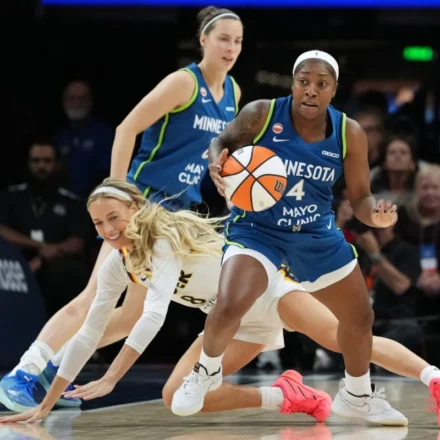
The primary concern for the coaching staff is Beringer’s penchant for finding himself on the floor, a byproduct of an aggressive, high-motor style that often leads to foul trouble. To mitigate this, Finch is emphasizing core strength, citing the development of Naz Reid as a blueprint for success. "The core strength is what gives you the ability to play in the air and land on your feet," Finch explained, emphasizing that a strong core prevents the "falling down" that often plagues young, over-eager big men.
The tactical reality is that Beringer is slated for consistent rotation minutes. Finch expects a turbulent trajectory: "If we get one game where he’s good, one where he isn’t, and one that is just ‘meh,’ that’s probably where he’s going to be. Anything that skews toward two good and one not-good is the path we have to push him toward."
A Coaching Staff in Transition: The Post-Nori Reality
The departure of long-time lead assistant Micah Nori—now the head coach in Portland—has sent ripples through the Timberwolves’ organization. Nori was more than just a bench presence; he was the primary architect of the team’s late-game management, clock logistics, and defensive nuance.
Finch is currently in the midst of a "granular" reorganization. Pablo Prigioni is stepping into the role of lead assistant, though Finch notes that his mandate will evolve. While Prigioni will continue to spearhead the offensive philosophy, the specialized duties once held by Nori are being redistributed.

"On late-game stuff, I’ll take some of it back," Finch revealed, signaling a more hands-on approach for the head coach. "I look at it the same as when we lose players: It is hard to replace a player straight-up. Coaching staff is no different."
This transition provides opportunities for other assistants like Nate Bubes and Kevin Hansen to step into larger roles. Finch’s philosophy remains rooted in identifying individual skill sets and building the staff’s responsibilities around those strengths, rather than forcing a square peg into a round hole. "I’ve always been a believer in ‘What are your best skill sets?’ and then I try to craft what you do around that," he said.
Learning from 2025-26: The "Continuity" Trap
The 2025-26 season is viewed by many as a success due to the team’s late-season surge, but for Finch, it remains a source of frustration. The team, constructed with a focus on "continuity," failed to meet the high bar of its own potential for long stretches of the regular season.
Finch was strikingly honest about the psychological toll of that year. "I’m not going to lie, it was a super-frustrating year. We underachieved throughout most of the year and then in the playoffs we finally kind of ended up where we should have ended up."

The coach highlighted two major points of introspection:
- The Starting Lineup Shake-up: Finch admitted to second-guessing the mid-season adjustment that moved Mike Conley out of the starting lineup to favor Donte DiVincenzo. While DiVincenzo thrived, the ripple effects on Anthony Edwards’ physical load and Julius Randle’s offensive responsibilities created unintended stresses.
- The "Boredom" Narrative: The team’s inability to maintain a high level of engagement throughout the 82-game grind became a persistent theme. Finch noted that at times, the team lacked "joy," a symptom of a squad that struggled to "get out of its own way."
Defining the Identity: Speed, Passing, and Structure
Looking forward, Finch is intent on re-establishing the core tenets of the Timberwolves’ identity: ball pressure, movement, and quick decision-making. He wants the team to play with "great freedom, but within a structure."
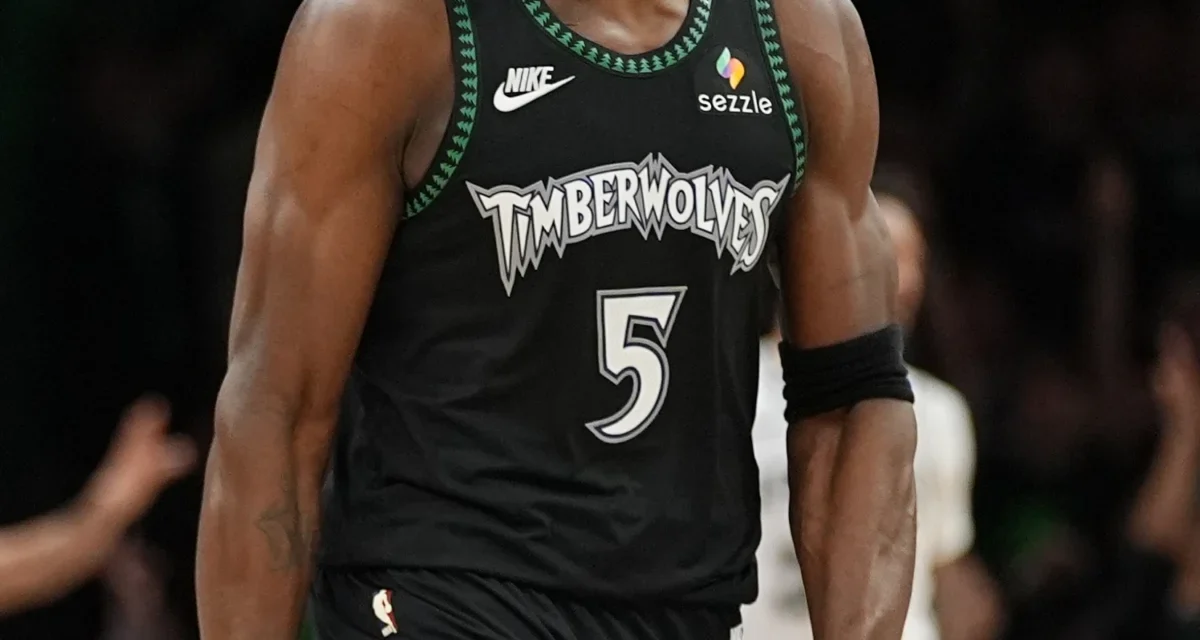
Crucially, the return of a reliable point guard presence will allow the coaching staff to use Anthony Edwards more strategically. "Putting Ant with people in a two-man game… having the point guard we have now gives us the chance to get back to using Anthony a little bit more strategically in certain situations that we couldn’t do last year."
Implications: A High-Ceiling, High-Volatility Future
When asked if the team’s floor has dropped while its ceiling has risen, Finch’s quiet affirmation speaks volumes. The 2026-27 Timberwolves are a team "dancing on a cliff."

The uncertainty regarding how new personnel will integrate with the existing roster is the defining variable of the season. Finch remains wary of the "60-win" expectations often projected by external media, acknowledging the brutal difficulty of the Western Conference.
However, there is a sense of liberation in the way Finch approaches this year. By moving away from the rigid expectation of "continuity" and embracing the necessity of constant, fluid reconfiguration, the coach feels more at home.
"I have learned to embrace it," Finch said, reflecting on his career origins in Europe, where volatility was a constant. "Sometimes the biggest disappointments might be when you have that expectation of continuity."
As the preseason begins, the message from the Timberwolves’ leadership is clear: the path to the championship is not through the comfort of the past, but through the rigorous, often painful process of constant adaptation. The 2026-27 season will test whether this iteration of the Timberwolves has the resilience to thrive in that volatility, or if they will fall victim to the very unpredictability they are trying to master.