














































A Stage in Limbo: The Cowles Center’s Uncertain Future and the Power of Community Resilience

By [Your Name/Journalistic Byline]
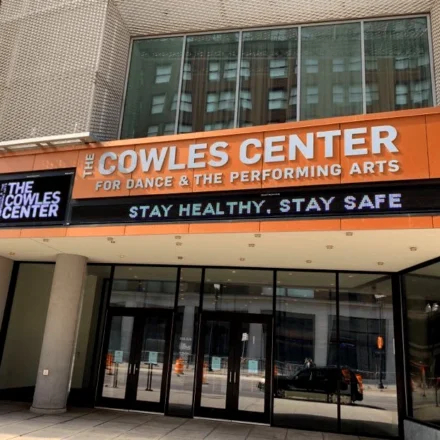
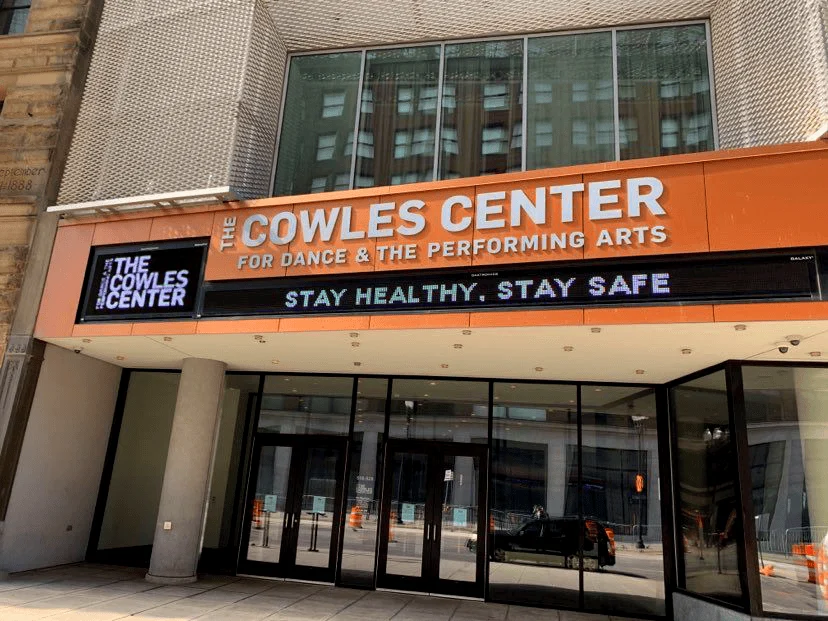
For a few fleeting hours this past weekend, the historic Cowles Center in downtown Minneapolis hummed with the electric vitality that has been conspicuously absent from its halls since 2024. As the South Asian Arts and Theater House (SAATH) debuted its production of "Made in INDIA," the 500-seat theater felt less like a shuttered relic and more like a beating heart, proving that the city’s cultural infrastructure remains desperate for connection even when the institutions themselves are in flux.
However, the jubilant atmosphere—marked by the scent of samosas in the lobby and the roar of a capacity-leaning crowd—masks a more somber reality. More than a year after the City of Minneapolis identified a successor to manage the facility, the future of the landmark venue remains in a bureaucratic holding pattern. As the Twin Cities arts scene faces a wave of closures and fire-sale auctions, the Cowles Center stands as a testament to both the fragility of our cultural institutions and the enduring power of grassroots persistence.
The Performance: A Glimpse of Potential
"Made in INDIA," written by Kristen Marx, serves as a poignant exploration of transracial adoption, following the divergent journeys of two Indian-born sisters raised by a white, single mother in the United States. Through a sophisticated synthesis of South Asian martial arts, classical Indian dance, Bollywood, and hip-hop, the production transcends traditional theater.
For Divya Maiya, SAATH’s executive director, the return to the Cowles Center was a milestone. Having performed at the venue in 2023 before the center’s abrupt closure the following year, Maiya described the experience as a vital step in the company’s evolution. "It was very exciting to have that access to so much more tech, staging, and options," Maiya said. "It felt like a big growth for us, so we were pretty sad when that access went away."
The production, which utilizes the full scale of the Cowles’ technical capabilities—including evocative lighting design by Surya Saathi—demonstrates exactly what the venue was built to achieve. When the group discovered earlier this year that the city was making the space available for rentals, the decision to return was instantaneous. "It’s really fun for [the cast] to see a big production being staged here after such a long time," Maiya noted. "Just going down to the basement and finding all those things that haven’t been used in a while—it’s a reminder of what this place is for."
A Storied Chronology: From Shubert to Cowles
To understand the current crisis, one must look at the building’s century-long endurance. Originally constructed in 1910 as the Shubert Theatre, the structure was a masterpiece of early 20th-century design by William Albert Swasey. Its interior, featuring two balconies and a massive stage-wide trap door, was a marvel of the era. Over the next hundred years, the venue underwent multiple identities: an Art Deco marquee redesign, three lobby remodels, and, most famously, a logistical feat in 1999 when the 5.8-million-pound building was physically rolled down Hennepin Avenue to its current location.
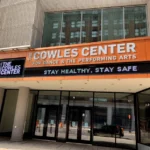
Reopening in 2011 as the Cowles Center, the project was bolstered by $12 million in state funding, intended to anchor the downtown arts district. But the post-pandemic landscape proved unforgiving. Financial instability eroded the center’s foundation, leading to its sudden closure in 2024. Today, the building serves as a haunting reminder of that instability; corporate sponsors’ names remain etched on the lobby walls, even as those entities have long since ceased their support.
The Twin Cities Arts Climate: A Regional Crisis
The struggle at the Cowles is not an isolated incident; it is a symptom of a broader, systemic contraction within the Twin Cities performing arts sector. The landscape is currently defined by "cautious optimism" at best and "desperate survival" at worst.
Perhaps the most visceral example of this decline is the fate of the Jungle Theater in Minneapolis. After canceling its entire season earlier this year, the organization opted to liquidate its assets, putting its Lyndale Avenue facility up for sale. The subsequent auction—which included everything from high-end set-shop tools to dressing-room furniture—sent shockwaves through the local creative community. When a pillar of the arts scene is forced to auction off the very items used to build a production, it signals to the public that the financial model for independent theater in Minnesota is under extreme duress.
Official Responses and the Bureaucratic Maze
The management of the Cowles Center is currently overseen by a "soft" arrangement. Although the City of Minneapolis selected Arts’ Nest, in partnership with Zenon Dance, to take the helm over a year ago, the formal lease agreement remains unsigned.
Currently, Arts’ Nest acts as a temporary liaison, managing bookings and covering technical costs using a portion of the rental revenue, while the remainder is funneled back to the city. This purgatory has necessitated a significant shift in expectations. While the venue initially hinted at a grand re-opening in the fall, that language has been scrubbed from official communications.
"We probably won’t have a grand opening," said Jenny Moeller, acting executive director of Arts’ Nest. "Mostly that has to do with the timeline of state approval and the next steps after that. Everything is taking longer. It’s like we’re having a very soft opening."
According to Moeller, the immediate hurdle is two-fold: finalizing the legal transition from the city and raising sufficient capital to sustain operations. "Arts’ Nest needs to do a little more fundraising," Moeller admitted. "We need a few more backers behind us to really make this work."
The Implications: What Does a "Soft Opening" Mean for the Future?
The implications of this delay are significant. As long as the Cowles remains in a state of limbo, it cannot operate as a true cultural hub. It can host rentals, but it cannot plan a coherent season, secure long-term resident companies, or attract the level of philanthropy required for major renovations.
However, the success of "Made in INDIA" offers a counter-narrative. It proves that there is an audience—and an artistic demand—for the space. When the community fills the seats, they are effectively subsidizing the theater’s survival, one ticket at a time. The enthusiasm seen this past weekend suggests that if the city and its partners can navigate the final hurdles of the lease and funding, the appetite for the Cowles’ return is already there.
For now, the venue exists as a ghost of its former self, waiting for the ink to dry on a contract that will either revitalize the district or leave another historic building vulnerable to the same market forces that claimed the Jungle Theater.
How to Support
"Made in INDIA" continues its run on August 28 and 29 at 7 p.m. at the Cowles Center, 528 Hennepin Ave. S., Minneapolis. Tickets range from $25 to $40, with $15 tickets available for students and free admission for children under five. The performances offer more than just entertainment; they serve as a critical lifeline for the venue’s continued usage. For more information, visit saathmn.org.