





















































By [Your Name/Journalistic Staff], based on reporting by Kate Sosin for The 19th.
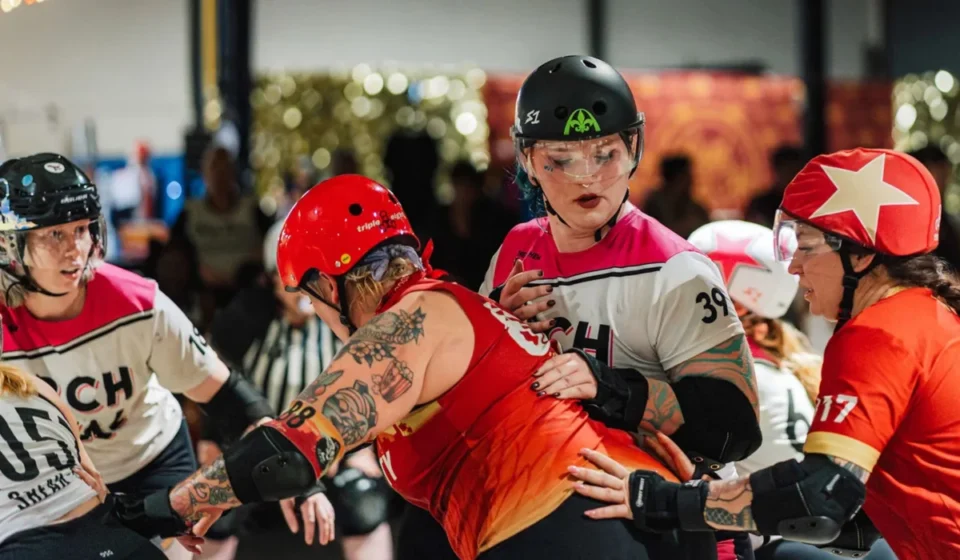
For many, the world of competitive sports is viewed through a lens of rigid categories and binary expectations. However, tucked away in the high-contact, punk-rock-infused world of roller derby, a different narrative has been unfolding for decades. While national discourse surrounding transgender athletes has become increasingly polarized, the roller derby community has spent years navigating—and often pioneering—a model of radical inclusion that prioritizes human connection over traditional, exclusionary mandates.
For Juniper Simonis, the transformative power of this community remains vivid. Recalling a summer evening in 2012 in Ithaca, New York, Simonis remembers the profound sense of liberation that washed over her upon receiving an email from the Ithaca League of Women Rollers. The team had voted to welcome her to the track.
"As somebody who played sports and was queer, but those were two very separate parts of my life, the promise and the opportunity to integrate those was very hopeful for me," Simonis reflects. For a transgender athlete, receiving a clear message of belonging in an all-women’s sport was not just a bureaucratic approval; it was an act of life-affirming validation.
A History Rooted in Counter-Culture
To understand the unique gender landscape of modern roller derby, one must look back to its origins. The sport traces its lineage to the 1930s, birthed from the mind of promoter Leo Seltzer. Initially conceived as a roller-skating endurance race, it was—remarkably—co-ed from the start, though economic disparities between male and female skaters were starkly present even then.
As the sport evolved from the 1960s to the 1980s, it transitioned into a highly produced, televised spectacle defined by its theatricality and raw physical intensity. However, the modern iteration of the sport, as we recognize it today, took shape in the early 2000s. Driven by a "do-it-yourself" ethos, women in Austin, Texas, began to formalize the sport, creating a culture that functioned as a deliberate rebellion against mainstream societal norms.
Rachel "Rotten" Johnston, a derby veteran and director at Angel City League Derby, describes the era as a "post-riot grrrl" explosion. "It was like, I get to wear this badass outfit that’s also kind of sexy," Johnston notes. "It was a direct rebuttal of the pop culture that was happening." This environment, populated by skaters with punk-inspired nicknames and a shared commitment to grit, naturally attracted those who lived outside the lines of traditional femininity.
Chronology of Inclusion: From Ambiguity to Policy
For much of the 2000s, the inclusion of trans athletes in roller derby was handled with a mixture of grassroots warmth and bureaucratic uncertainty. The Women’s Flat Track Derby Association (WFTDA), which grew to house over 400 leagues across six continents, initially lacked formal policies regarding transgender participation.
In the early aughts, the movement was primarily focused on creating a "cis-free" space—a sanctuary for women to compete away from the influence of men. As Penelope "Fifi Nomenon" Nederlander recalls from her 2010 tryouts with the LA Derby Dolls, the process was often informal. When she disclosed her status as a trans woman, the response was one of casual acceptance rather than rigid scrutiny. "It was the first group of friends who I met who only knew me as Penny, and that was huge," she says.
However, informal acceptance was insufficient for a growing sport. In the 2010s, pressure mounted to formalize these practices. Following a period where some leagues applied Olympic-style hormone requirements—policies later criticized as uneven and exclusionary—the WFTDA made a watershed decision. In 2015, they updated their policy to state that anyone of a "marginalized gender" is welcome to skate, regardless of transition status.

This shift was not merely symbolic; it provided a vital support system for nonbinary and trans athletes, such as Drew Flowers (known on the track as "OMG WTF"). For Flowers, who had built a life and a business within the derby community, the official policy shift provided the security needed to live authentically while remaining part of the sport they loved.
Supporting Data: The Reality of the Track
The evolution of roller derby has not been without its friction. While the WFTDA’s stance is arguably the most inclusive in professional sports, the internal culture of the sport remains a work in progress.
Interviews with prominent skaters, including Nicole "Bonnie Thunders" Williams—widely regarded as the greatest skater in the sport’s history—reveal that the learning curve for the community was steep. "There was a time when we knew less about trans women and what it might mean to skate with them," Williams acknowledges. However, she notes that the lived experience of sharing the track with trans teammates proved to be the most effective tool for overcoming bias.
Despite this, the community is honest about its ongoing failures. Donita "Blaxyl Rose" Green points to the intersection of race and gender identity, noting that Black, trans, and gender-diverse skaters often face systemic biases, including harsher officiating and microaggressions. Furthermore, the threat of violence remains a reality; Simonis reports having been assaulted by fellow players specifically because of her transgender identity. These incidents serve as a sobering reminder that policy alone cannot eradicate prejudice.
Implications for the World of Sports
Roller derby’s approach to inclusion has profound implications for the wider world of athletics. For several years, the sport was considered for Olympic inclusion, but WFTDA skaters and leadership ultimately withdrew their interest. The primary reason? A refusal to comply with international governing bodies that would have necessitated the implementation of restrictive, binary-focused gender policies.
By prioritizing the integrity of their community over the "legitimacy" afforded by the Olympic Committee, roller derby has carved out a unique space. It challenges the common argument that inclusion compromises fairness. As Rachel Johnston notes, "People who are concerned about people getting hurt are missing the fact that we’re playing a full contact sport. You’re going to get hurt no matter what."
Penelope Nederlander argues that the way forward lies in radical honesty. She advocates for a discourse that acknowledges physical differences without using them as a weapon to exclude. "In roller derby, there doesn’t seem to be an important difference," she says. "We really don’t have any complaints about trans skaters. So that’s awesome."
The Path Ahead
The roller derby experience suggests that the "fairness" debate in sports is often a proxy for deeper anxieties about gender roles. By refusing to treat transgender women as a threat, the derby community has maintained a high level of competition while fostering an environment of mutual respect.
As the national debate over gender in sports intensifies, the lessons from the flat track are clear: inclusion does not necessitate the destruction of competition. Instead, it expands the definition of who belongs in the arena. While roller derby is not a utopia—as evidenced by the reports of discrimination and assault—it remains a laboratory for a different kind of athletic culture. It is a sport where, for the past two decades, the primary goal has been to ensure that when a skater hits the track, they are judged by the strength of their stride, the sharpness of their turns, and their commitment to their teammates, rather than by the boxes checked on a form.
In a world that seems increasingly intent on building walls, the community of roller derby continues to prioritize the open door, proving that a sport can be both fiercely competitive and fundamentally human.