












































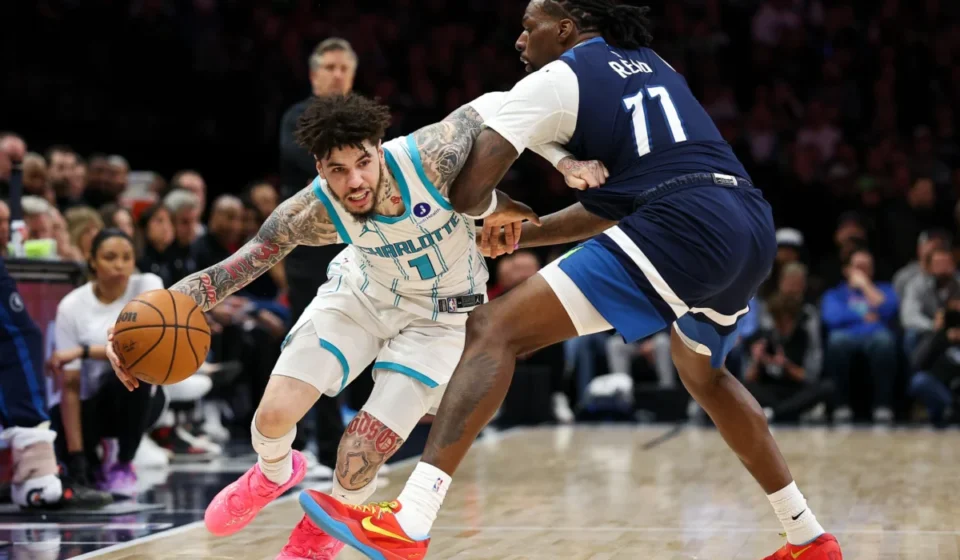

In the high-stakes world of NBA front-office maneuvering, Tim Connelly has earned a reputation as an artist who prefers a wide-bristled brush to a scalpel. As the President of Basketball Operations for the Minnesota Timberwolves, Connelly has spent his tenure orchestrating roster shake-ups that oscillate between visionary genius and reckless abandonment.
This week, the Timberwolves’ landscape underwent a seismic shift. LaMelo Ball is now the centerpiece of the Minnesota backcourt, while Naz Reid—the team’s longest-tenured player and a bona fide folk hero—has been shipped to Charlotte. The move, coming on the heels of the departure of Julius Randle, signals a total commitment to an "Anthony Edwards-first" offensive philosophy, even at the cost of the team’s future draft autonomy and its most beloved bench anchor.
A Chronology of the "Summer Jubilee"
The volatility of the past week began with a calculated attempt at salary-cap flexibility. On Tuesday, Connelly dealt Julius Randle and his $33-million contract, a move that initially suggested the team was clearing space for internal growth. Fans and analysts alike spent forty-eight hours operating under the assumption that Naz Reid, after seven years of faithful service and incremental improvement, would finally be elevated to the starting power forward position.
That optimism was short-lived. By Thursday, the narrative shifted from one of roster refinement to wholesale transformation. In a move that echoed the 2024 trade of Karl-Anthony Towns, Connelly parted ways with Reid. The decision hit the fanbase hard; Reid is not merely a player in Minnesota, but a cultural institution. From the hundreds of supporters sporting "Naz Reid" tattoos to the secondary-market gold mine that his promotional beach towels have become, his departure marks the end of an era.
The trade package is historic in its depletion of draft capital. To secure Ball and backup wing Josh Green, Connelly surrendered a 2033 first-round pick—the earliest available under league rules—and granted the Hornets the right to swap first-round positions in 2028, 2029, and 2030. Additionally, the Hornets acquired Minnesota’s second-round picks in 2029, 2032, and 2033. For Connelly, it is a "loud" move, consistent with his philosophy: he would rather be fired for an aggressive pursuit of a championship than languish in the stagnation of job-survival mode.
The Logic of the Backcourt: Why LaMelo?
The primary impetus for this blockbuster was a singular organizational goal: optimizing Anthony Edwards. Despite being only 25, LaMelo Ball is already among the elite playmakers in the NBA. His career assist percentage ranks fourth among active players, trailing only the likes of Trae Young, Luka Doncic, and Russell Westbrook.
The analytical case for Ball rests on his ability to shift Edwards into an off-ball role. According to data from NBA.com’s John Schuhmann, Edwards was the most accurate catch-and-shoot three-point threat in the league last season, hitting 49.6% of his shots (69-for-139). Conversely, his efficiency plummeted to 35.3% on pull-up jumpers. Currently, Edwards is forced to shoulder the heavy burden of primary ball-handling, limiting his capacity for high-efficiency catch-and-shoot opportunities. By contrast, players like Paolo Banchero and Quentin Grimes see nearly double the frequency of catch-and-shoot attempts relative to their total shot mix. Ball’s arrival is designed to liberate Edwards from the grind of initiation, allowing the superstar to capitalize on his elite shooting efficiency.
Furthermore, Ball’s performance in the 2025-26 season offered a compelling look at his maturation. As his usage rate dropped from an NBA-high 35.9% to 32%, his assist-to-turnover ratio improved, suggesting he is capable of flourishing within a more talent-dense environment. When Ball was on the floor for Charlotte last season, the team’s offensive rating surged to 123.2, compared to 110.6 when he was sidelined.
Defensive Synergy and the Gobert Factor
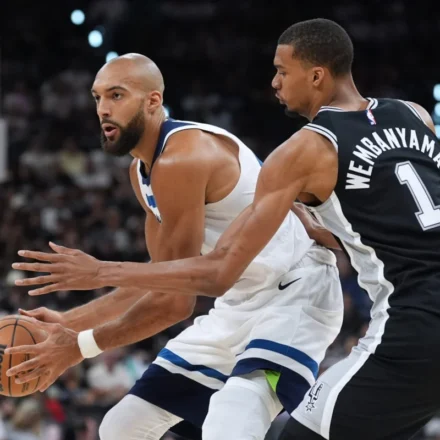
The pairing of LaMelo Ball with Rudy Gobert presents an intriguing "best-case scenario" for Minnesota’s defense. Ball has often been criticized for his lack of defensive rigor, yet his 6-foot-7 frame offers significant potential. While the Hornets struggled defensively during his tenure, Ball has never played behind a rim protector of Gobert’s caliber.
The relationship works both ways. For Gobert, the arrival of a premier lob initiator and pick-and-roll general could be the catalyst for a more engaged offensive season. Historical trends show that when Gobert is involved early and effectively in the offense, the entire team’s defensive intensity and focus increase. By bridging the gap between an elite playmaker and an elite rim protector, Connelly hopes to create a symbiotic relationship that elevates both players’ ceilings.
Supporting Data and Risks
While the upside is clear, the risks are equally neon-lit. Ball’s durability is a legitimate concern. Having played over 70 games in a season only twice in his six-year career, his availability is the greatest variable in this equation. The Timberwolves are betting that Minnesota’s medical staff and a more balanced workload will mitigate the injury concerns that plagued his time in Charlotte.
Furthermore, Ball’s shot selection remains a point of contention. Leading the league in three-point attempts (740) while shooting a respectable but not elite 36.8% suggests a player who is prone to forcing shots early in the clock. He will need to defer to Edwards—the heartbeat of the franchise—when the situation demands it, a discipline he has yet to demonstrate consistently.
Implications for the Future
Connelly’s vision has effectively pinned the franchise’s future to the timeline of Anthony Edwards. With the draft cupboard now largely barren, the team is relying on a young core of eleven players aged 26 or younger, including Jaden McDaniels, Josh Green, Bones Hyland, and rookie Isaiah Evans.
This model mirrors the "high-ceiling" approach of teams like the Oklahoma City Thunder or the New York Knicks, though without the safety net of future draft capital. The shift also leaves immediate questions: Who will step into the void left by Reid and Randle? Will Jaden McDaniels absorb the heavy minutes at power forward, or will the front office look for a bargain-bin veteran? Can Joan Beringer provide the necessary production as a backup center?
The most critical question remains internal: the character and consistency of the team. The 2025-26 season was marred by moments of defensive apathy and a lack of collective cohesion. Connelly’s "finger painting" is an attempt to address these issues by providing Edwards with the tools to succeed, but no amount of roster engineering can compensate for a lack of defensive urgency.
As the Timberwolves prepare for the upcoming campaign, the pressure is squarely on the shoulders of the front office and the coaching staff. If the team fails to show the grit required to compete at the highest level, the departure of a beloved figure like Naz Reid and the reckless trade of future draft picks will be remembered as the defining "loud mistake" of the Connelly era.
Ultimately, this trade is a bet that in the modern NBA, elite offensive orchestration and the potential for a transformative partnership between an elite point guard and a generational wing outweigh the cost of depth and long-term asset security. For better or worse, Tim Connelly has swung for the fences, and the trajectory of the Timberwolves for the next half-decade will be defined by where this ball lands.