























































MINNEAPOLIS — The landscape of professional football as it exists today—a multi-billion-dollar enterprise defined by competitive parity, marquee free-agency signings, and complex labor-management relations—is fundamentally a product of the courtroom of the late U.S. District Judge David Doty.
Judge Doty, a jurist whose career spanned nearly four decades of federal service, passed away this past Saturday at the age of 96. His death, confirmed by officials in the District of Minnesota just three days before what would have been his 97th birthday, marks the end of a singular era in American sports law. While his docket included thousands of civil and criminal cases, it was his persistent, nuanced oversight of the National Football League (NFL) that cemented his legacy, fundamentally altering the trajectory of the most popular sport in the United States.
A Legacy Built on Public Service
Born in 1929, David Doty’s life was defined by a commitment to the institutions of his country. Before donning the black robe, he served six years in the United States Marine Corps, an experience that instilled in him a brand of discipline and steady resolve that would later become his judicial hallmark. After earning his law degree from the University of Minnesota in 1961, Doty spent 26 years in private practice, honing the legal acumen that would eventually catch the eye of the Reagan administration.
Appointed to the federal bench in 1987, Doty quickly established a reputation as a pragmatic, down-to-earth jurist. Colleagues often described him as a man of profound humility who treated everyone—from the custodial staff in his chambers to the Supreme Court Justices he interacted with—with the same degree of dignity.
"Judge Doty devoted his entire professional life to serving others," said Chief U.S. District Judge Patrick Schiltz. "He was a genuinely humble man who treated everyone with kindness and compassion and a sincere interest in their lives. I will particularly miss his sense of humor. He always had a smile on his face."
Chronology of a Legal Titan
Judge Doty’s intersection with the NFL began in the late 1980s, a period of profound turbulence for the league. Following the 1987 player strike, the relationship between the NFL Players Association (NFLPA) and team owners had reached a breaking point. The league operated under restrictive, antiquated rules that kept players tethered to their original teams, effectively preventing a free market for talent.
The Landmark Rulings
In 1990, Doty made his first major mark on the league by granting players the right to pursue individual antitrust lawsuits against the NFL. This was a seismic shift in judicial philosophy regarding sports. Prior to this, the league had operated under the "Plan B" system, a limited free agency model that allowed teams to protect up to 37 players from the open market.
In 1992, the dam finally broke. A jury of eight women, presiding over a trial overseen by Doty, struck down the restrictive Plan B system. Doty followed this with a decisive ruling in favor of players seeking unrestricted free agency. The legal pressure forced the NFL and the union to the negotiating table, culminating in the 1993 Collective Bargaining Agreement (CBA). This agreement, which paved the way for superstar Reggie White to leave the Philadelphia Eagles for the Green Bay Packers, essentially birthed the modern era of the NFL.
Decades of Oversight
Judge Doty’s jurisdiction over the league did not end with the 1993 agreement. For the next thirty years, he acted as the "permanent overseer" of the labor agreement. When the NFL and the union reached impasses that could not be settled through internal arbitration, it was Doty’s court that served as the final arbiter.
The Intersection of Law and Athletics: High-Profile Cases
Judge Doty’s courtroom often became the stage for the most sensitive disciplinary and financial disputes in the league. His rulings demonstrated a consistent adherence to the text of the CBA, regardless of the star power involved.
- The Michael Vick Case (2008): Following quarterback Michael Vick’s incarceration for his role in a dogfighting operation, the Atlanta Falcons attempted to recoup over $16 million in bonus money. Doty ruled against the league and the team, upholding the player’s right to keep the funds under the specific language of the contract.
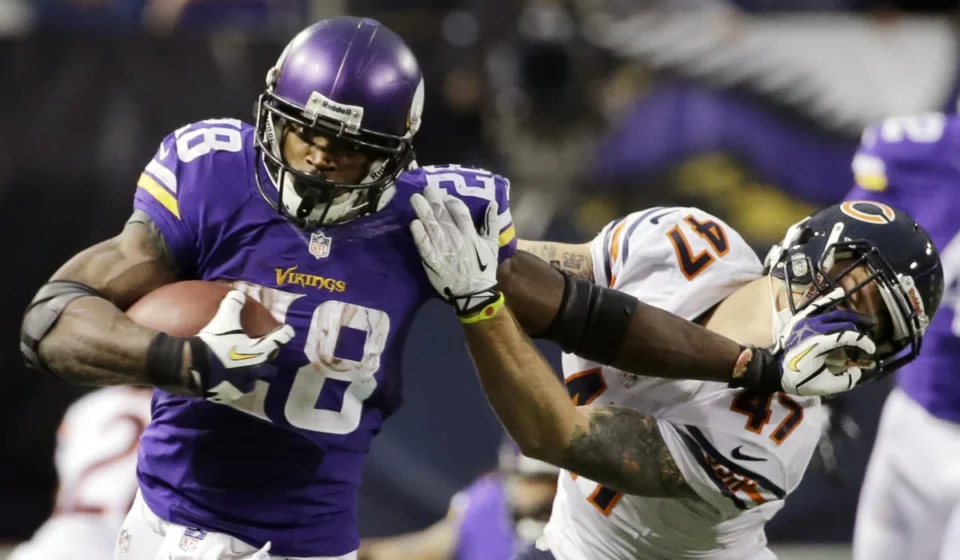
- The Adrian Peterson Appeal (2015): When the NFL moved to suspend Minnesota Vikings running back Adrian Peterson following a highly publicized child abuse case, the NFLPA challenged the length and nature of the suspension. Judge Doty sided with the union, vacating the league’s discipline and forcing a re-evaluation of the commissioner’s disciplinary reach.
- The Collusion Claims (2012–2014): In a rare instance where he denied the union’s motion, Doty refused to reopen the 1993 White agreement in a collusion case involving a secret 2010 salary cap. While he eventually recused himself from the case in 2014, the case highlighted his refusal to be swayed by external political pressures or the changing tides of public opinion.
Supporting Data: The Impact on Competitive Parity
The financial and competitive structures that define the modern NFL—a league that generates over $19 billion in annual revenue—are inextricably linked to the mechanisms Doty helped install.
Before the 1993 CBA and Doty’s court rulings, the league lacked a true salary cap and a consistent, fair free agency system. By forcing both sides to agree to a framework that balanced player freedom with owner financial stability, Doty helped foster an environment of "parity."
Today, the "any given Sunday" nature of the NFL, where small-market teams can consistently compete for Super Bowl titles, is a direct result of the salary cap and free agency rules established in the wake of the 1993 settlement. Without the judicial intervention provided by Doty, the league risked becoming a fragmented entity of "have and have-not" franchises, potentially stalling the meteoric rise in popularity the sport has experienced since the early 1990s.
Official Responses and Reflections
The NFL, an entity that often found itself on the losing side of Doty’s gavel, issued a statement acknowledging his immense contribution to the sport.
"Judge Doty devoted his life to public service and the law, presiding over NFL-related litigation for many years during his distinguished career," the league said. "We express our sincere condolences to his family, friends, and colleagues."
Legal scholars and colleagues have noted that Doty’s brilliance was not just in his knowledge of antitrust law, but in his temperament. He was known for being "stern when necessary," particularly when lawyers attempted to obfuscate the issues or drag out proceedings. He was a firm believer in the efficiency of the judicial process, often urging parties to negotiate in good faith rather than relying on the court to resolve every minor grievance.
Implications for the Future of Sports Law
As the legal world mourns the loss of Judge Doty, many are reflecting on what his absence means for the future of sports labor relations. For thirty-three years, he provided a "North Star" for the NFL, offering a predictable, steady hand that kept the league’s complex machinery running.
His tenure serves as a blueprint for how a federal judge can influence an entire industry without overstepping the bounds of the judiciary. By focusing on the sanctity of the contract and the importance of fair, transparent negotiations, he prevented catastrophic labor stoppages that could have crippled the league.
As the NFL continues to evolve in the era of streaming rights, international expansion, and changing player safety standards, the legal precedents set by David Doty will continue to serve as the foundation upon which the league stands. He was, in every sense, the architect of the modern game—a man who understood that the true strength of a sport lies not in its stars on the field, but in the fairness of the rules that govern them.
Judge Doty’s life of service—from the Marine Corps to the federal bench—stands as a testament to the idea that the law is not merely a set of static rules, but a living instrument that, when wielded with wisdom and humanity, can shape the culture of an entire nation. He leaves behind a court, a league, and a country that were fundamentally improved by his presence.