


























































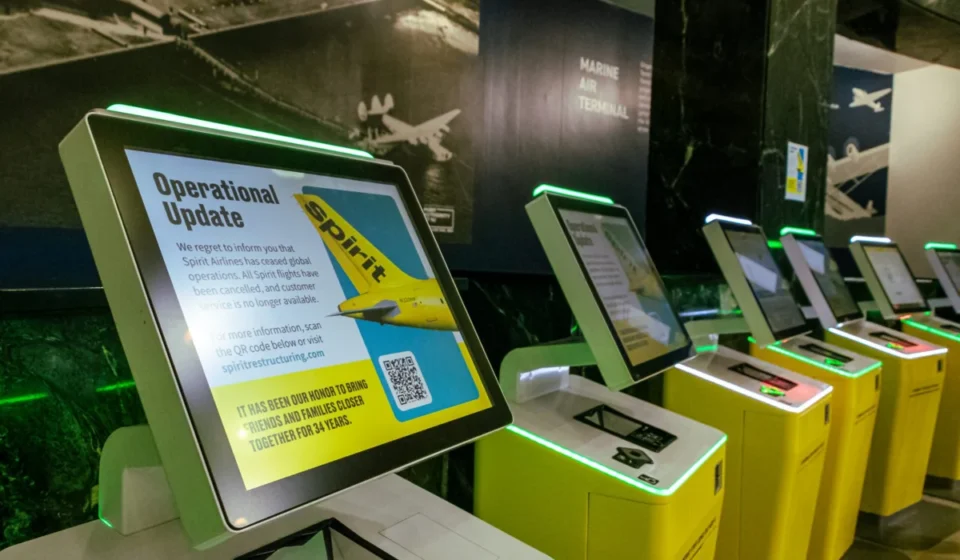

As the wreckage of Spirit Airlines settles following the carrier’s collapse into bankruptcy, a new and highly controversial form of asset liquidation has emerged. While creditors typically scramble for tangible assets—aircraft, ground equipment, and airport slots—a burgeoning "digital gold rush" has placed the spotlight on a massive, sensitive repository of human interaction. Former employees, represented by powerful unions, are currently locked in a fierce legal battle to prevent their private communications and professional records from being harvested to train artificial intelligence models.
The conflict pits the privacy rights of 17,000 former staff members against the insatiable appetite of big tech companies like Google, which view this "data graveyard" not as a collection of sensitive human records, but as a high-fidelity training set for the next generation of Large Language Models (LLMs).
The Anatomy of the Digital Trove
The scale of the data in question is staggering. According to court filings and industry reports, the defunct airline’s servers contain a digital history of the company’s internal operations, spanning decades. The cache includes:
- 600 million email and Teams chat records.
- 17 million OneDrive files containing internal documentation, policy drafts, and personal workflows.
- 20.5 million SharePoint items.
- 30 million recorded customer service interactions.
For AI developers, this represents a "holy grail" of data. Unlike the scraped content of the public internet, which is often riddled with bot-generated noise and low-quality discourse, this repository reflects authentic, high-stakes human communication. It captures the nuance of workplace problem-solving, the cadence of professional conflict resolution, and the specific vernacular of the aviation industry. To an AI model, this data is invaluable for learning how to simulate realistic, professional, and complex human interactions.
A Chronology of the Bidding War
The situation reached a flashpoint when the bankruptcy court began soliciting bids for the airline’s intellectual property and data assets.
Early Bidding and Initial Interest
As Spirit moved through bankruptcy proceedings, its data was appraised as a distinct, liquidatable asset. Initially, AI-focused firms identified the data’s potential, leading to a competitive environment. AI training firms such as Mercor entered the fray, placing an initial bid of $7.5 million, recognizing that the sheer volume of "operational reality" within the files could significantly accelerate the development of LLMs.
The Google Acquisition
In a surprise move that signaled the gravity of the market, Google entered the auction and successfully acquired the rights to the data with a $10 million bid. The acquisition sent shockwaves through the labor community, as it moved the data from the possession of a bankrupt carrier into the hands of one of the world’s most dominant AI developers.
The Emergence of Micro1
The drama did not end with the gavel drop. In a subsequent twist, the AI data firm Micro1 launched a counter-offensive, offering $12.5 million to acquire the same trove. This move has highlighted the escalating valuation of personal data in the AI era, suggesting that the initial sale price may have significantly undervalued the long-term utility of the employee information.
Current Legal Standstill
Last week, the Association of Flight Attendants-CWA (AFA-CWA) took formal legal action to block the transfer of the data. Representing more than 5,500 flight attendants, the union has argued that the sale constitutes a breach of privacy and an ethical violation, particularly given that the airline has yet to fulfill its financial obligations to its former workforce.
The Ethical and Financial Grievance
The legal challenge is not merely about privacy; it is rooted in a profound sense of economic injustice. Sara Nelson, the international president of the AFA-CWA, has become the public face of the opposition. Her critique of the situation is twofold: ethical and fiduciary.
The "Cashing In" Accusation
Nelson has publicly excoriated the bankrupt airline for attempting to monetize the sensitive private communications of its employees while simultaneously failing to pay those same employees their accrued vacation time, sick leave, and final paychecks. For the staff, the sale feels like a "final insult"—a move where the company is selling off their personal digital history to pay creditors, while the individuals who created that data are left with nothing.
Privacy and Consent
Beyond the financial aspect, there is the issue of consent. When these employees sent emails or recorded customer service calls, they were operating under the assumption that their communications were internal to the airline. They never consented to their private discourse being fed into a machine-learning algorithm to be processed, analyzed, and repurposed for commercial AI gain. The potential for these datasets to reveal sensitive personal information—or even to be used in ways that could eventually impact the future employability of these staff members—is a primary concern for the unions.
Implications for the Future of Data Ownership
This case serves as a harbinger for a broader legal and ethical crisis regarding the ownership of workplace data. As companies fail or pivot in the digital age, the "intellectual property" of their employees is increasingly being treated as a sellable commodity.
The Anonymization Debate
One of the technical avenues being explored to resolve the impasse is "anonymization." If Google or any other buyer can strip the data of personally identifiable information (PII) before it is used for training, proponents argue that the privacy concerns could be mitigated. However, critics in the cybersecurity field argue that "de-anonymizing" data is increasingly trivial for sophisticated AI models, meaning that even "anonymized" datasets may remain fundamentally unsafe.
A Precedent for Labor Law
The outcome of the Spirit Airlines case will likely set a major legal precedent. If the court allows the sale to proceed, it will effectively establish that employee-generated content is the sole property of the employer, fully alienable in bankruptcy, and exempt from the privacy expectations typically afforded to individual workers. This would fundamentally alter the relationship between labor and technology in the modern workplace.
Conversely, if the unions succeed in blocking the sale, it could usher in a new era of "Data Labor Rights," where employees maintain a say in how their digital footprints are utilized after a company collapses. This would force companies to reckon with the "human cost" of their data assets during bankruptcy proceedings.
Conclusion: The Human Cost of AI Training
The struggle over Spirit Airlines’ data is a microcosm of a much larger societal reckoning. As we move further into the age of generative AI, the distinction between "data" and "human experience" is blurring. The 17,000 employees of Spirit Airlines are currently fighting to ensure that they are not reduced to mere fuel for a machine.
For tech giants, the data is a gold mine. For the former employees, it is a digital diary of their careers, their frustrations, and their hard work. As the bankruptcy court weighs the $12.5 million offer against the privacy of thousands of individuals, the world is watching. This case is not just about a defunct airline; it is about who owns the digital output of our lives and whether that output can be stripped away and sold when the economy turns sour.
The final verdict will not only determine the fate of the Spirit Airlines archive but will define the rules of engagement for the next generation of data-driven commerce. As it stands, the battle is far from over, and the digital liquidation of the workforce remains a contentious, unresolved, and profoundly human tragedy.